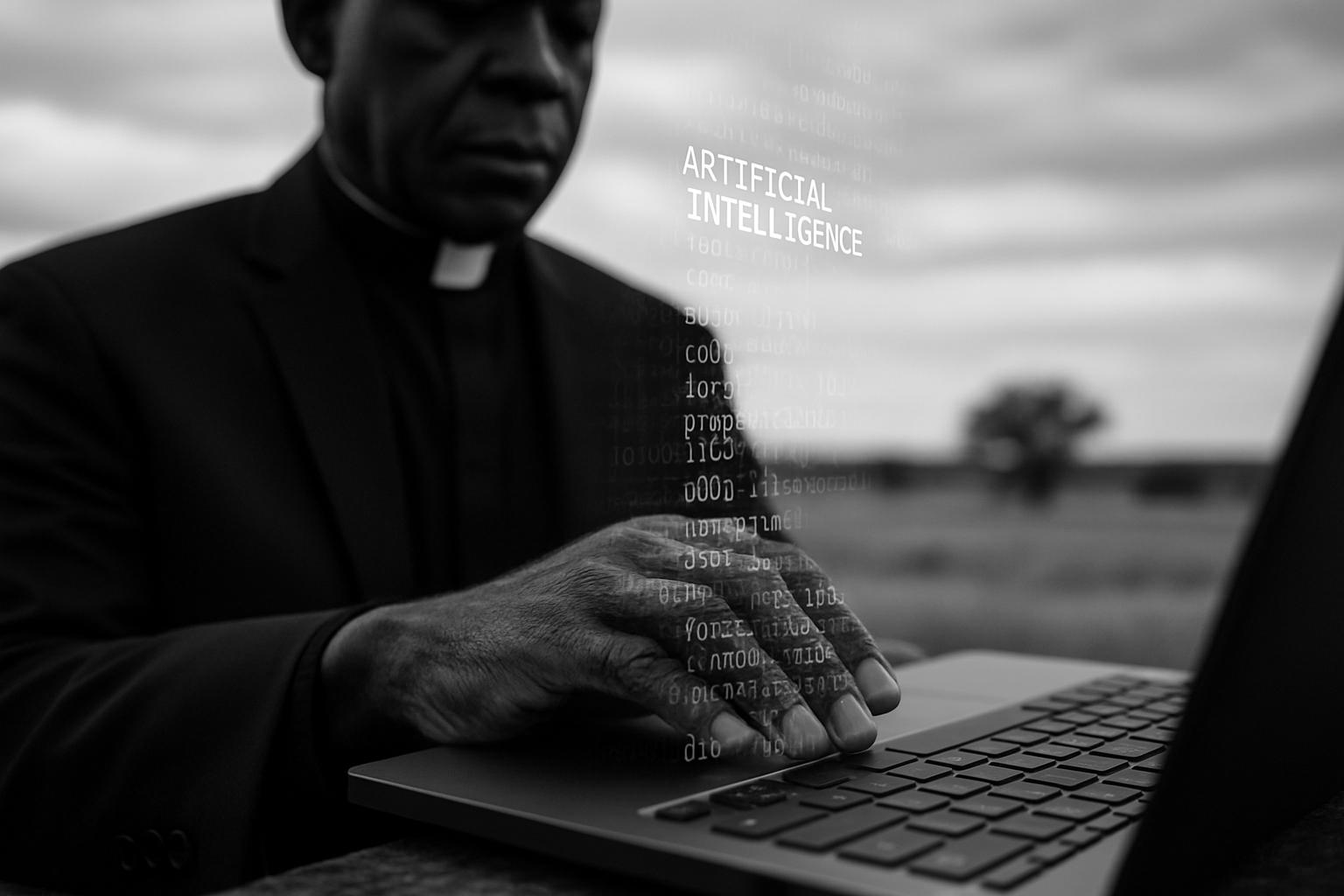
The integration of artificial intelligence (AI) into religious practice and church operations is rapidly transforming how faith communities function, sparking both optimism and caution among religious leaders worldwide. In California, the Rev. Justin Lester of Friendship Baptist Church in Vallejo uses AI to handle administrative tasks such as responding to emails, scheduling meetings, and managing finances. Trained on hundreds of his sermons and writings, an AI responder can imitate his voice to answer calls, freeing up approximately five hours a week for him to focus on pastoral care and preaching. He candidly acknowledges that while AI improves efficiency and enables him to better serve his congregation, it does not deepen his spiritual relationship or understanding of God. For Rev. Lester, true spiritual growth remains rooted in human experience, prayer, and solitude, resisting the temptation to outsource theological depth to technology.
This practical application of AI aligns with a broader shift seen across churches worldwide. Initial skepticism about AI in worship and ministry, prevalent in 2023, has significantly waned. Recent surveys indicate that nearly 90% of church leaders now support some form of AI use, with over 60% leveraging AI tools daily or weekly. Among preachers, 64% employ AI to aid sermon preparation—an increase of nearly 20 points in just one year. The rise of faith-focused AI apps such as Bible Chat and Hallow exemplifies how technology is meeting contemporary spiritual needs, enabling congregations to access religious content and community engagement in new, digital formats. Kenny Jahng, founder of AiForChurchLeaders.com, highlights the rapid embrace of AI, challenging the notion that churches lag behind in technological adoption.
Globally, this trend extends beyond the United States. In Taiwan, for instance, an initiative called the 'Church AI Bootcamp' was launched by GOOD TV in partnership with AI coaches to equip over 1,000 participants from more than 100 churches with AI tools. The bootcamp emphasised safeguarding spiritual wisdom while integrating technological advancements, ensuring that the core values of faith remain central. Similarly, in Colorado, Timberline Church adopted AI-powered real-time translation services to provide inclusivity for worshippers speaking over 60 different languages, demonstrating AI's potential to foster accessibility in diverse congregations. However, some experts caution that such reliance on AI translation might unintentionally diminish the preservation of native languages among migrant and Indigenous communities.
Despite these advances, ethical and theological concerns are prominent in AI's growing role in religious settings. Leaders from multiple faiths gathered at the Vatican’s Rome Summit on Ethics and Artificial Intelligence in 2025 to deliberate on AI's moral compass and religious implications. Pope Leo XIV notably declined to endorse creating an AI version of himself, warning of the technology’s inability to manifest the presence of God and the risk of losing human essence. Elder Gerrit W. Gong of The Church of Jesus Christ of Latter-day Saints announced the formation of a multifaith task force to develop tools for evaluating AI’s faithfulness in representing religious teachings. He emphasised that AI cannot provide inspired divine truth or independent moral guidance, asserting that humanity’s divine nature is fundamentally beyond what AI can replicate.
Concerns over "theological misalignment" also surface as congregants increasingly use AI and online resources to seek religious interpretations potentially divergent from their pastors' guidance. Such fragmentation may enrich dialogue but also challenge unity within faith communities. Additionally, data privacy and the ethical use of personal information processed by AI remain pressing issues. Critics like Neylan McBaine, who advises AI and Faith initiatives, caution that AI bears risks to human dignity and agency by streamlining decision-making in ways that might undermine critical thinking and personal spiritual struggle, essential elements of religious growth.
In response, some churches and faith organisations are proactively establishing frameworks to integrate AI responsibly. The Southern Baptist Convention adopted a resolution urging discernment in AI use, recognising its utility while cautioning against elevating it beyond a mere tool. The Church of Jesus Christ of Latter-day Saints issued guiding principles emphasising that AI can support seekers of truth but does not replace divinely appointed spiritual authorities.
On the commercial front, companies such as Gloo in Boulder, Colorado, are pioneering faith-based AI technologies, with former Intel CEO Pat Gelsinger joining to lead development of AI tools rooted in Christian values. Platforms like AI Church are also emerging to support ministries with affordable AI-powered tools designed to enhance operational efficiency and community engagement. These initiatives aim to balance technological benefits with adherence to spiritual principles.
Looking ahead, experts foresee a redefinition of pastoral roles. With AI providing abundant information and spiritual content, pastors may shift from knowledge dispensers to curators and teachers of discernment. Helping congregations navigate AI-generated theological insights critically and ethically will become a vital pastoral skill.
Rev. Lester remains cautious about the increasing role of AI in spiritual matters, wary of any tendency to deify or overly depend on AI for guidance. He advocates for maintaining the inherent difficulty and personal involvement in sermon preparation and theological wrestling, asserting that people shape AI tools, not the reverse. As AI becomes a permanent fixture in ecclesiastical contexts, the challenge lies in harnessing its capabilities to enrich faith while preserving the irreplaceable human elements of spirituality and community.
📌 Reference Map:
- Paragraph 1 – [1] (Deseret News)
- Paragraph 2 – [1] (Deseret News), [7] (Hartford International Blog)
- Paragraph 3 – [2] (Gospel Herald), [6] (ChurchTechNews)
- Paragraph 4 – [1] (Deseret News)
- Paragraph 5 – [1] (Deseret News), [4] (AP News)
- Paragraph 6 – [1] (Deseret News), [7] (Hartford International Blog)
- Paragraph 7 – [1] (Deseret News)
- Paragraph 8 – [1] (Deseret News), [3] (Reuters), [5] (AI Church)
- Paragraph 9 – [1] (Deseret News)
Source: Noah Wire Services