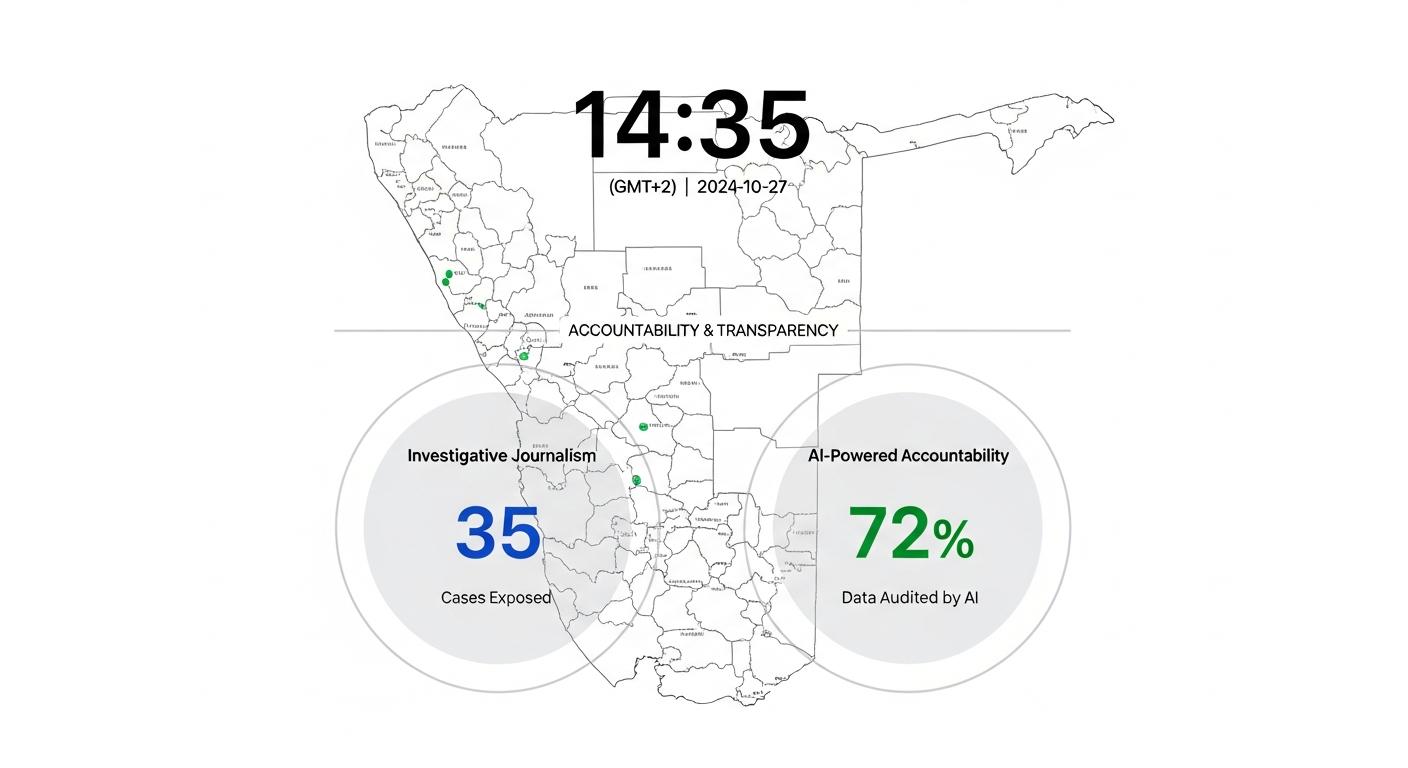
For months a sharp thread has run through public debate in Namibia: a frustration that deference to power and the protection of elites have become obstacles to accountability and good governance. According to reporting in The Namibian, that sentiment sits alongside the paper’s decision to expand its morning briefing and to deploy AI tools to bolster reporting, a sign that editors see strengthened journalism as part of the remedy. [4],[6]
The country’s roster of high-profile scandals has given substance to those concerns. Investigations and commentary have focused on allegations that senior officials accepted lavish benefits and favours, with critics pointing to instances such as the Fishrot affair and state-funded perks enjoyed by former leaders as emblematic of a wider problem. These episodes have fed public outrage and questions about the lines between public service and private enrichment. [5],[2]
Surveys underline the scale of the trust deficit. A recent Afrobarometer poll found a majority of Namibians believe corruption is increasing and that reporting wrongdoing carries risks of retaliation, while many express dissatisfaction with official anti-corruption efforts. International indices and analysis chart a similar picture of entrenched malfeasance that has proved difficult to dislodge. [6],[7]
Those patterns help explain criticism that political connections too often determine appointments and access to state resources, rather than merit or transparent process. Opinion writers warn that, unless checks are strengthened and impunity addressed, the country risks being labelled by its governance failures rather than its achievements. Speaking in public fora, commentators have described the trend as a moral and administrative crisis that requires systemic reform. [3],[2]
Against that backdrop, media outlets say they are adapting. The Namibian’s expanded briefing and use of editorial oversight alongside AI tools is presented by the paper as an attempt to deliver more timely, accurate coverage and to keep ethical standards in place. Industry observers suggest better-resourced, independent journalism can help expose wrongdoing and sustain pressure for prosecutions and policy change. [4],[6]
Addressing the problem will demand more than headlines. Experts and civil-society figures point to a package of measures: stronger investigative capacity, legal protections for whistleblowers, transparent procurement and appointments, and sustained public pressure for prosecutions where evidence exists. Without those reforms, analysts warn, public cynicism will continue to grow and the cycle of favouritism and impunity will be harder to break. [6],[7]
Source Reference Map
Inspired by headline at: [1]
Sources by paragraph:
- Paragraph 1: [4],[6]
- Paragraph 2: [5],[2]
- Paragraph 3: [6],[7]
- Paragraph 4: [3],[2]
- Paragraph 5: [4],[6]
- Paragraph 6: [6],[7]
Source: Noah Wire Services