Politics Copy RSS link Link copied to clipboard!
Nexon wins trade secret ruling against Ironmace in South Korea
South Korea's Supreme Court has ruled in favor of Nexon regarding a trade secret dispute with competitor Ironmace. The court found that Ironmace CEO Choi Joo-hyun used Nexon trade secrets to develop the game Dark and Darker. However, the court did not rule on copyright infringement, stating similar game elements are not protected. Separately, Japan's Liberal Democratic Party proposed new legislation to hold AI companies accountable for copyright violations and deepfakes. Additionally, Databricks faces a class action lawsuit in the US alleging its AI model was trained on a dataset containing pirated content.
South African home affairs suspends officials over fake AI references
The South African Department of Home Affairs has suspended two senior officials following the discovery of AI-generated hallucinations in a reference list attached to a revised white paper on citizenship and immigration. This incident marks the second occurrence in less than a week where a cabinet-approved policy document contained fabricated sources. The department has appointed independent law firms to manage disciplinary actions and review all policy documents produced since November 2022. Minister Leon Schreiber stated the core document remains accurate but apologised for the oversight, while committing to new internal AI checks.
Journalists in Cuba discuss ethical use of AI for disaster reporting
A workshop on using AI tools for climate and disaster news coverage was held on 29 April at the UNESCO Regional Office in Havana, Cuba. Carolina Pichardo, director of the environmental newspaper Raíz Climática, and María de los Ángeles Ramírez, a Venezuelan journalist, emphasised that while AI aids in data processing and translation, it must not replace human verification. They warned against using AI for sensitive topics or unverified sources due to risks of hallucination and ethical concerns. The event, organised by the Institute of Information and Social Communication and UNESCO, highlighted tools like Perplexity and Notebook LM while stressing the need to protect journalistic values such as truth and transparency.
Australia proposes tax on Meta Google and TikTok to fund newsrooms
Australia has proposed draft legislation to tax Meta, Google, and TikTok on 2.25% of their Australian revenue if they fail to strike commercial deals with news publishers. The government aims to raise between 200 to 250 million Australian dollars annually to distribute among news organisations based on journalist employment numbers. Prime Minister Anthony Albanese stated the measure is critical for democracy, while the targeted platforms argue it constitutes an unfair digital services tax that ignores existing commercial agreements and market changes. The proposal seeks to replace the previous News Media Bargaining Code mechanism which platforms avoided by removing news content.
Experts use verification procedures to authenticate visuals amid deepfake spread
Following military strikes on Iran, online platforms have seen a surge in images and videos, many of which are old, manipulated, or AI-generated. Reputable digital investigators like The New York Times, Indicator, and Bellingcat employ extensive verification procedures to avoid publishing synthetic content. Charlie Stadtlander of The New York Times emphasises the importance of trusting independent news organisations that authenticate visuals and explain sourcing, despite the lack of foolproof deepfake detection tools.
South Africa withdraws AI policy after discovery of fabricated research references
South Africa's Department of Communications and Digital Technologies withdrew its draft National Artificial Intelligence Policy 16 days after publication. The withdrawal followed the discovery that the document contained hallucinated references generated by AI, including non-existent journals and unpublished articles. Communications Minister attributed the error to a failure of oversight rather than a technical glitch, acknowledging that generative AI was used without proper human verification. The incident highlights critical gaps in epistemic and information integrity within public policy production.
Microsoft confirms Bing reaches 1 billion monthly active users
Microsoft confirmed on its Q3 FY2026 earnings call that Bing has reached 1 billion monthly active users, marking a tenfold increase from 2023 levels. While global market share remains around 5%, the milestone highlights significant growth driven by Edge and Windows integrations. Concurrently, Google reported 19% year-on-year growth in search revenue for Q1 2026, attributing the rise to AI experiences. Google also expanded its AI Max campaign suite to include Shopping and Travel, introducing a new natural-language interface called AI Brief. Meanwhile, data indicates OpenAI's crawl activity has tripled since the GPT-5 launch, with OAI-SearchBot now generating more events than GPTBot.
Young Canadians urge government to regulate addictive AI chatbot design
A report by McGill University's Centre for Media, Technology and Democracy, based on consultations with 100 young Canadians aged 17 to 23, recommends that the government mandate AI companies to reduce addictive features in chatbots. Participants argue that current designs foster dependency through sycophancy and emotional reliance. The report calls for content filters, optional data deletion, user control over responsiveness, and a new government body to audit algorithms. Organizers plan to present these findings to Parliament Hill on Thursday, 30 April 2026, amidst ongoing federal discussions on online privacy and AI strategy legislation.
AndroidGuys publishes guide on scraping phone prices without getting blocked
AndroidGuys has published a promoted guide detailing strategies for scraping Android phone price and stock data from retail sites. The article addresses challenges such as bot detection, dynamic content loading, and session management. It recommends using headless browsers for JavaScript-heavy pages, static residential IPs for stable cart flows, and hybrid crawling approaches to reduce block rates. The guide also advises on respecting robots.txt, implementing rate limits, and normalizing data to ensure reliability for deal tracking tools.
Instagram algorithm to penalise unoriginal photo and carousel posts
Meta is updating Instagram's recommendation algorithm to prioritise original content and penalise accounts that reshare photos or carousels without material edits. Accounts primarily posting unoriginal content may see reduced reach to new audiences. The change targets aggregator accounts, though Meta warns it may impact meme and commentary accounts, requiring unique edits beyond simple watermarks or credits.
Spotify launches Verified by Spotify badge to distinguish human artists from AI-generated content
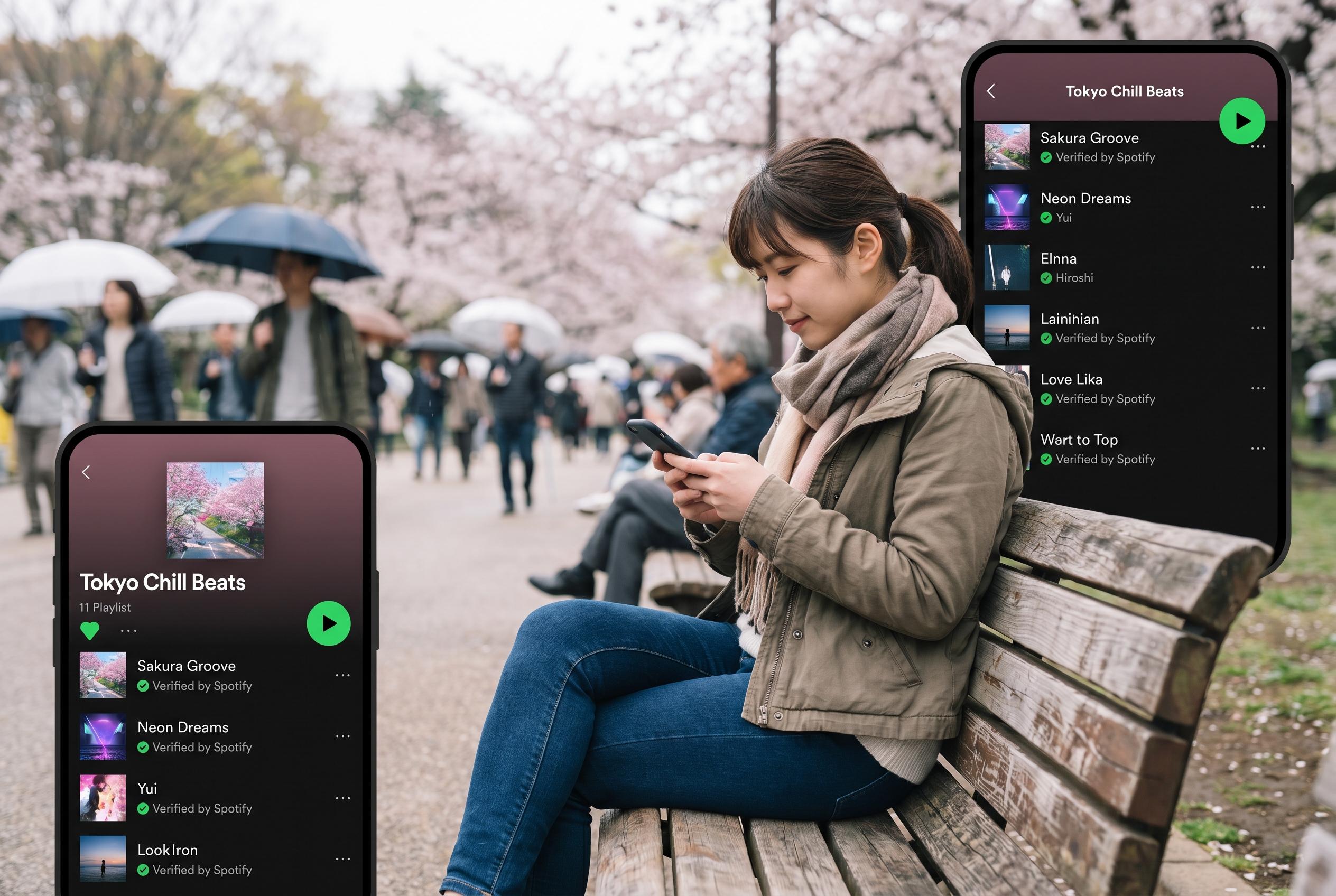
Spotify introduces a new 'Verified by Spotify' badge to help listeners identify human artists amidst rising AI-generated music uploads, which account for 44 percent of daily content. The badge is reserved for artists in good standing who demonstrate consistent engagement and adhere to platform policies, explicitly excluding AI-generated or AI-persona profiles. Over 99 percent of actively sought artists will receive verification at launch. The feature, appearing as a light green checkmark, builds on existing anti-fraud tools like Artist Profile Protection and SongDNA. Additionally, Spotify rolls out a new 'About' context section for all artist profiles, providing career milestones and activity data similar to nutrition facts.