International Intelligence Copy RSS link Link copied to clipboard!
FBI warns of cybercriminals using fake companies to hijack cargo shipments
The FBI has issued a warning regarding a surge in cyber-enabled cargo theft where criminal groups impersonate legitimate businesses to hijack freight. In 2025, losses in the United States and Canada rose by 60% to nearly $725 million. Attackers exploit communication systems and identity verification by using fake business identities, stolen credentials, and manipulated documentation to redirect high-value shipments. The agency advises logistics companies to enforce two-factor authentication, use multi-channel verification, and report incidents to the Internet Crime Complaint Center (IC3).
Australian retailers warned of triple shock from Middle East conflict
Australian retailers face a 'triple shock' from the Middle East conflict, impacting energy, logistics, and essential materials over the next 12 to 18 months. Kearney modelling indicates rising operating costs and unstable supply timing could risk $16 million to $18 million in earnings for every $1 billion in revenue. The Australian Retail Council (ARC) reports worsening supply chain conditions, with shipping costs up over 10 per cent for many businesses. Consequently, retailers anticipate price increases of approximately five per cent to offset rising costs, threatening consumer margins.
Dubai to evolve from port-centric model to integrated network logistics system
Strategy& Middle East analysts Maha Raad and Hamza El Mounhi state that Gulf states must shift logistics focus from efficiency to resilience due to Strait of Hormuz disruptions. Dubai is positioned to transition from a port-centric model to an integrated network system by scaling east-coast gateways like Fujairah and Khor Fakkan, developing virtual terminals, and strengthening hinterland integration via Etihad Rail. Saudi Arabia and Oman are also advised to expand roles through alternative corridors and multi-port systems to de-risk regional trade flows.
Hong Kong records widest trade deficit since 1952 amid AI trade surge
Hong Kong recorded its widest visible trade deficit since 1952 in March 2026, reaching HK$89.1 billion as imports outpaced exports. Driven by demand for artificial intelligence electronics and high-value technology, exports rose 35.8% year-on-year to HK$618.4 billion, while imports jumped 41.2% to HK$707.5 billion. The deficit, equivalent to 12.6% of import value, reflects front-loaded purchases and supply-chain repositioning. While exports to Asia and the US grew, geopolitical tensions and energy costs added volatility to the city's re-export hub economy.
Trump urges Iran to sign deal as naval blockade strains talks
US President Donald Trump has pressured Iran to conclude a nuclear agreement, warning Tehran to 'get smart soon' as diplomatic efforts remain stalled. Washington maintains a naval blockade on Iranian ports, citing concerns over nuclear proliferation, while the White House assesses the impact on global oil markets. Traffic through the Strait of Hormuz has dropped significantly due to fears of escalation and sanctions. A gap persists between US demands for nuclear restrictions and Iran's insistence on retaining enrichment rights, complicating any potential settlement.
China's lead in AI patent applications casts shadow over Trump-Xi summit
A World Intellectual Property Organisation report reveals China holds over 60% of global AI patent applications and two-thirds of robot-related patents, unnerving the US administration ahead of a Trump-Xi summit in Beijing. While the US remains ahead in high-tech capability and model performance, China has narrowed the gap in AI bot performance and industrial robot installations. US advisers are concerned about Chinese cost advantages and the loss of AI talent to China due to immigration turmoil, impacting US bargaining power for a potential trade deal.
Fuel scarcity and power outages slow Malawi economy
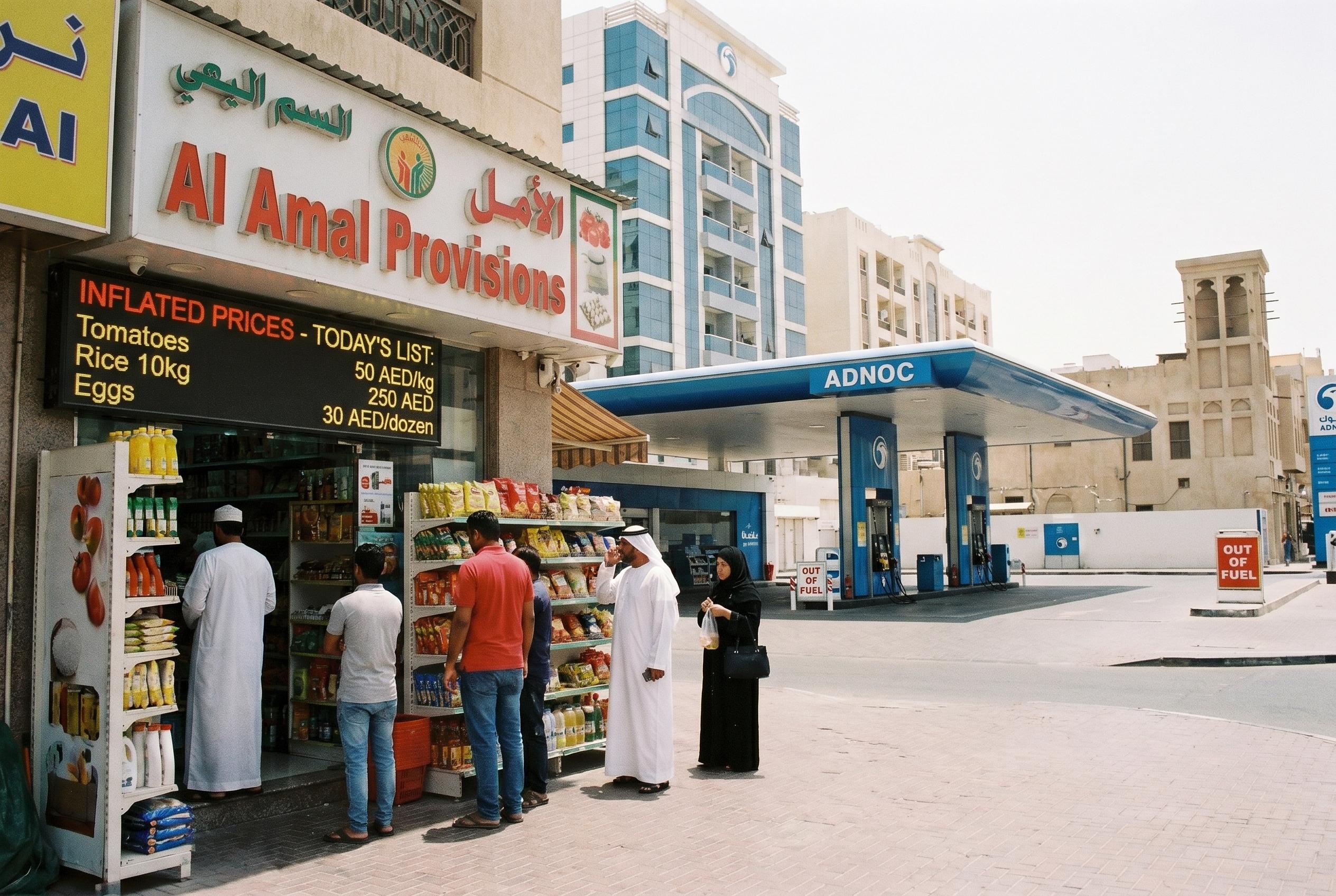
Severe fuel shortages and rising prices in Malawi are disrupting transport, supply chains, and energy production. Black market prices have surged to K20,000 for petrol and K25,000 for diesel, causing minibus fares to more than double. The crisis has led to widespread load shedding as diesel backup generators fail, further reducing business productivity. Government officials attribute the supply issues to forex scarcity and global disruptions in the Strait of Hormuz linked to regional conflicts.
US-Iran standoff keeps Strait of Hormuz closed driving oil prices above $120
Nearly two months into the 2026 Iran conflict, the Strait of Hormuz remains effectively closed to most commercial traffic due to a US naval blockade and Iranian threats. This disruption has driven oil prices above $120 per barrel and stranded thousands of seafarers. US President Donald Trump maintains the blockade until safe passage is guaranteed, while Iran refuses to cede sovereignty. The closure, affecting roughly 20% of global oil and LNG flow, has caused severe economic fallout, skyrocketing insurance premiums and straining global supply chains. Despite diplomatic efforts, including Pakistan-mediated talks, mutual distrust and military posturing have stalled progress, leaving energy security in jeopardy.
Germany expects US to maintain military bases despite Trump threat
German Foreign Minister Wadephul stated that Germany expects the United States to maintain key military installations in Europe, including Ramstein Air Base and Stuttgart headquarters, despite President Trump's threats to withdraw troops. During a visit to Morocco, Wadephul emphasised the strategic value of these bases for NATO operations. He discussed these matters with US Secretary of State Marco Rubio ahead of the NATO summit in Ankara, noting that while political tensions exist regarding US policy, fundamental security cooperation structures remain intact.
Trump briefed on final blow military options against Iran
US Central Command commander Brad Cooper briefed President Donald Trump on potential military options against Iran, including a possible final blow scenario involving short, intense strikes. The Pentagon is evaluating advanced weaponry, such as the Dark Eagle hypersonic missile. Meanwhile, France announced a strictly defensive maritime mission in the Strait of Hormuz but will not join a US-led coalition. Tensions remain high as Iran demands reparations from Arab states and warns of painful responses to further US strikes.
UK manufacturers face higher costs and delivery delays due to Iran war
UK manufacturing cost pressures rose in April, with delivery delays reaching their highest level since mid-2022. The S&P Global UK Manufacturing Purchasing Managers' Index increased to 53.7, driven by input costs jumping at the fastest pace since June 2022. Disruptions in the Strait of Hormuz and Red Sea have choked global oil and gas supplies, forcing longer shipping routes and increasing costs. While output and new orders grew, business optimism fell to a yearly low, and inflationary pressures are expected to remain high.
Airlines face financial crisis due to dwindling global jet fuel supplies
The war in Iran has triggered a severe jet fuel shortage and price spike, unlike previous crises, causing major refineries in the Middle East to be damaged and the Strait of Hormuz to remain closed. Airlines globally, including Air Canada and Vietnam Airlines, are cutting flights and raising prices, while smaller carriers in Nigeria and Europe face potential collapse. Experts warn that Europe may have only six weeks of fuel left, with limited supply chains and export restrictions from Asia exacerbating the situation.
Russia imports over 90% of sanctioned technologies via China
Russia imports more than 90% of sanctioned technologies through China, an increase from approximately 80% last year, according to Bloomberg. This shift indicates growing Moscow's dependence on Beijing as the European Union tightens restrictions on supply routes. Sources state Russia relies on Chinese support to increase production of weapon systems, including missiles and drones. While the EU has sanctioned Chinese companies aiding Moscow, most EU nations hesitate to impose stricter measures due to fears of retaliatory actions from Beijing.
Aid organisations call for humanitarian corridor through strait of Hormuz as war disrupts global supply
Aid organisations are calling for a humanitarian corridor through the strait of Hormuz due to rising oil prices and shipping disruptions caused by the conflict between the US, Israel, and Iran. The International Rescue Committee, International Federation of Red Cross, Save the Children, and the World Food Programme report that increased fuel costs are blocking food and medical supplies, raising transportation expenses, and threatening the lives of millions in Sudan, Nigeria, Ethiopia, Yemen, Somalia, Myanmar, and Afghanistan. The WFP estimates 45 million more people could go hungry, while other agencies face budget deficits and operational limitations.
US Army simulates AI-driven cyberattacks in Indo-Pacific exercise
The US Army and industry partners conducted tabletop exercises simulating enemy AI agents attacking communications and data networks in a hypothetical Indo-Pacific conflict. The simulated AI conducted repeated probing waves and adapted in real time, arriving faster than a human adversary. This was the Army's second AI-focused session, following an inaugural event last September that included 15 CEOs of major AI firms. Questions remain regarding the role of autonomous AI agents in offensive and defensive cyberspace operations and the transfer of lessons from industry.
Iran war tensions reshape global trade routes with Africa as pivot
Tensions in the Red Sea and the Strait of Hormuz are forcing a major shift in global shipping, with Africa becoming a central hub for container traffic. Ships are rerouting around the Cape of Good Hope, increasing transport times by two weeks and costs by 14 percent. Simultaneously, land corridors via Jeddah, Oman, and the UAE are being used to bypass the Gulf blockade, though port congestion is emerging. Egypt lost $7 billion in Suez Canal revenues in 2024 due to reduced traffic.
Columbia Sportswear warns of supply chain risks from Middle East conflict
Columbia Sportswear Co CEO Timothy Boyle warned that the ongoing conflict in the Middle East has triggered order cancellations and forecasted reductions for certain distributor markets. While the full-year financial outlook remains unchanged, the company faces prolonged risks including potential softening of consumer demand due to rising energy prices and inflation. Additionally, the conflict poses threats to global supply chains, potentially causing late inventory arrivals, increased freight costs, and further order cancellations.
Middle East conflict revives clean power as national security priority
The Middle East conflict and subsequent blockade of the Strait of Hormuz have triggered a major global energy supply disruption, causing fuel prices to surge. In response, governments are accelerating the transition to renewable energy and reconsidering nuclear power to reduce dependence on imported fossil fuels. Analysts and policymakers increasingly view energy security and sovereignty as critical national imperatives, framing the shift to domestic renewables not just as a climate necessity but as a strategic requirement to mitigate geopolitical vulnerability. While short-term measures like restarting coal plants may temporarily increase emissions, the crisis is reshaping long-term policy frameworks towards electrification and energy independence.
Ukraine strikes cut Russian refining to 2009 lows
Coordinated strikes by Ukraine in April targeted Russian oil infrastructure, including refineries, pipelines, and export terminals. These attacks pushed Russian refining volumes to 4.69 million barrels per day, the lowest level since December 2009. At least 21 strikes were recorded, with nine directly affecting refining capacities. The assaults impacted facilities such as Rosneft's Tuapse refinery and Transneft stations in Perm. This decline heightens pressure on domestic and global diesel markets and limits Russia's ability to meet OPEC+ production quotas.