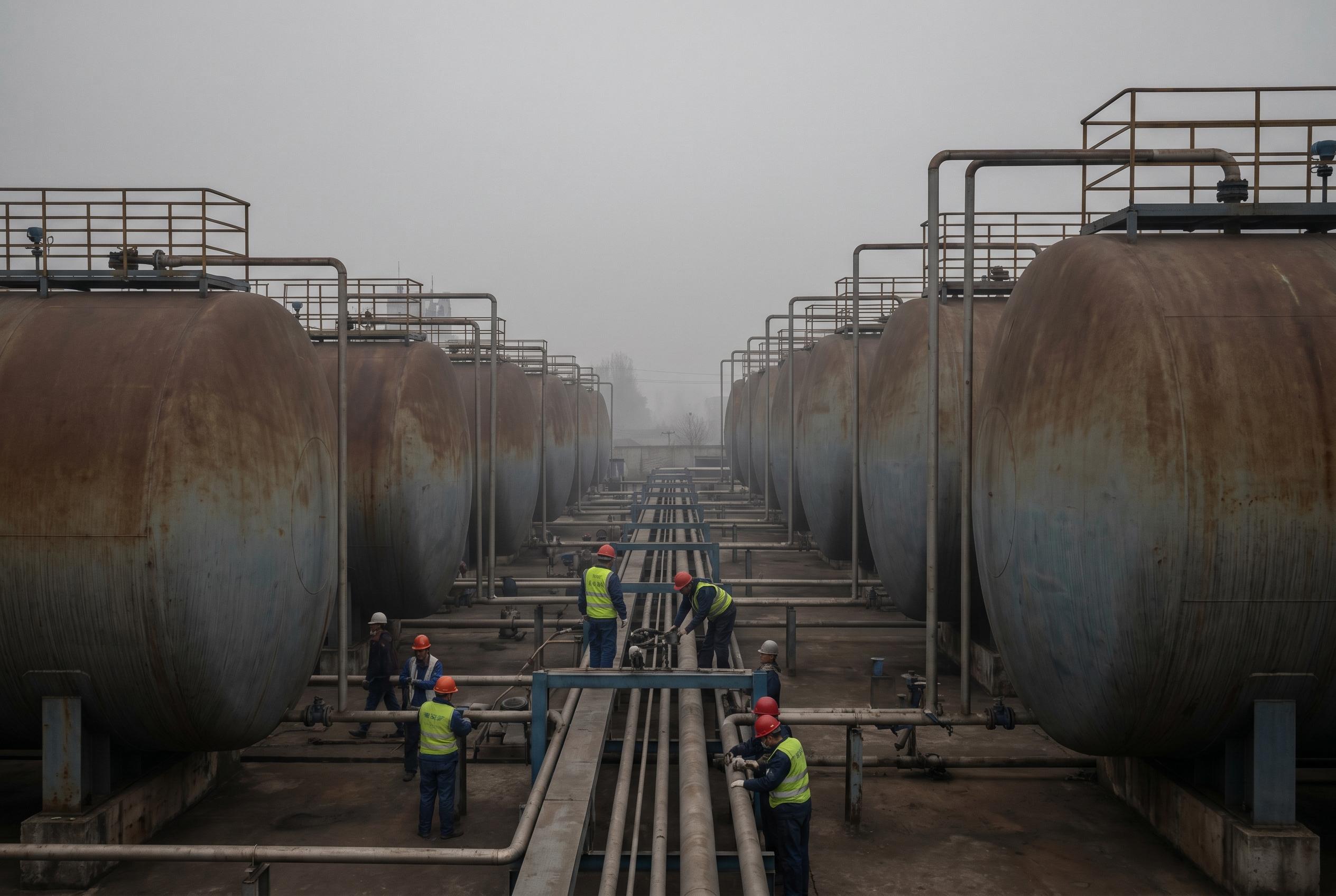
China’s clean-energy rise is not just a story of scale. It is also a story of structure. Unlike the West, where climate investment tends to move through layered private capital, Beijing’s model begins with the state, which sets direction, absorbs risk and then pulls private money in behind it. That architecture helps explain why China now dominates manufacturing in solar, batteries and electric vehicles, and why its clean-energy spending in 2025 reached roughly $1 trillion, equal to about 11% of GDP, according to Carbon Brief.
The system works because industrial policy and capital deployment are closely fused. Once Beijing identifies a priority, grants, guidance funds, local equity, state lending and procurement can all move at once, rather than in sequence. Reuters reported in March 2025 that China launched a $138 billion National Guidance Fund with a 20-year horizon and a mandate to direct at least 70% of capital into seed and early-stage companies in areas such as quantum computing and robotics. The fund is designed to funnel money through regional innovation hubs, reinforcing the country’s most important technology corridors.
Most of the practical muscle sits below the centre, where provincial and municipal governments use industry funds to back strategic sectors. These vehicles often take first-loss positions, with local state capital anchoring deals and private or corporate money filling the rest. The model resembles a hybrid of public finance and corporate venture capital, but with a political objective: jobs, supply chains and long-term industrial capacity. The result is that Chinese startups can often find both capital and a buyer before they have fully proven commercial demand.
Hefei has become the best-known example. When NIO was close to collapse in 2020, the city’s industry fund stepped in with a multibillion-yuan investment and later exited much of the stake at a substantial gain. The bigger payoff, however, was strategic. NIO shifted its headquarters to Hefei, suppliers followed, and the city emerged as a hub for electric-vehicle manufacturing. Similar local-government playbooks are now being used in places such as Hangzhou, Suzhou, Changzhou and Yibin, where officials map supply chains and back selected “chain leader” companies.
China also uses state-built infrastructure as part of the financing package. In some cases, local authorities provide land, shell buildings, utilities and access roads, allowing companies to move from plans to production far faster than is common in the West. Clean Investment Monitor’s 2025 China report highlights the scale of this deployment-and-manufacturing push, while also warning that overcapacity is increasingly a problem in sectors such as solar, batteries and EVs. The same machinery that accelerates growth can also drive excess supply and brutal price competition.
State-owned enterprises are another crucial layer. They are often able to borrow at extremely low rates and act both as financiers and as first customers for new technologies. China’s major national SOEs, including grid operators, power generators and industrial groups, sit on enormous balance sheets and are central to the country’s clean-energy buildout. They can provide cheap debt, take equity stakes or guarantee demand, making projects bankable in ways private capital alone would struggle to match.
Private capital has not disappeared, but it has changed character. International dollar funds have retreated, pushed back by China’s tech crackdown, pandemic disruption and worsening geopolitical tensions. Domestic venture firms, state-backed general partners and corporate investors have stepped into the gap. The most active money is increasingly flowing into what Beijing calls hard tech: AI, robotics, advanced batteries, semiconductors and energy infrastructure. That shift reflects both policy priorities and the reality that consumer internet is no longer the main engine of Chinese venture returns.
The consequence is a system that is fast, coherent and often brutally competitive. It has produced world-leading manufacturers, but also overbuild, thin margins and intense churn. For Western investors and founders, the lesson is not to try to outmuscle China in commoditised hardware. It is to focus on areas where the country is not yet dominant, and to build the policy and market infrastructure needed to scale those bets quickly before the window closes.
Source Reference Map
Inspired by headline at: [1]
Sources by paragraph:
- Paragraph 1: [4], [3]
- Paragraph 2: [5]
- Paragraph 3: [1]
- Paragraph 4: [1]
- Paragraph 5: [2], [3]
- Paragraph 6: [1]
- Paragraph 7: [1], [2]
Source: Noah Wire Services