Political Risk Copy RSS link Link copied to clipboard!
Trump signs bill ending DHS shutdown after three funding lapses
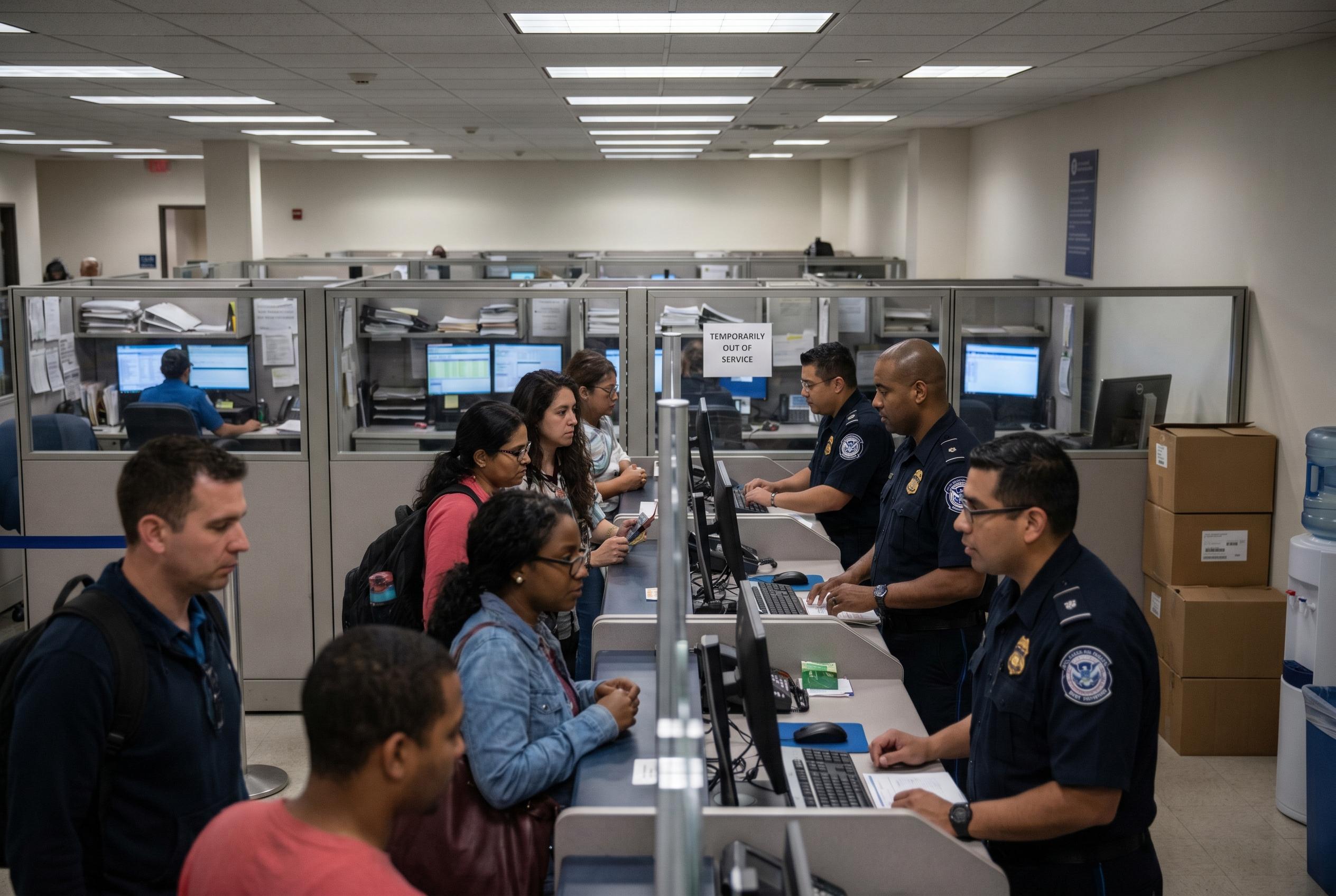
President Donald Trump signed a bill on Thursday funding the Department of Homeland Security for five months, ending a shutdown that began in mid-February. This marks the third funding lapse in the last year, stalling paychecks for federal employees. The bill excludes additional spending for Immigration and Customs Enforcement and the Border Patrol. Republicans plan to use budget reconciliation to fund these agencies separately for the rest of the term without new immigration guardrails. Another impasse looms before the November midterm elections.
Orban's departure disrupts China's strategy to divide the EU
Viktor Orban's electoral defeat in Hungary removes a key node in China's strategy to exploit internal EU divisions. Under Orban, Hungary blocked or softened EU actions against China, including on human rights and trade tariffs, while serving as a gateway for Chinese investments via the Belt and Road Initiative. With Orban gone and a more EU-aligned successor likely, the EU may achieve greater policy cohesion toward China, reducing Beijing's ability to dilute collective responses through veto power.
Speaker Hoyle's vote move increases pressure on UK PM Starmer
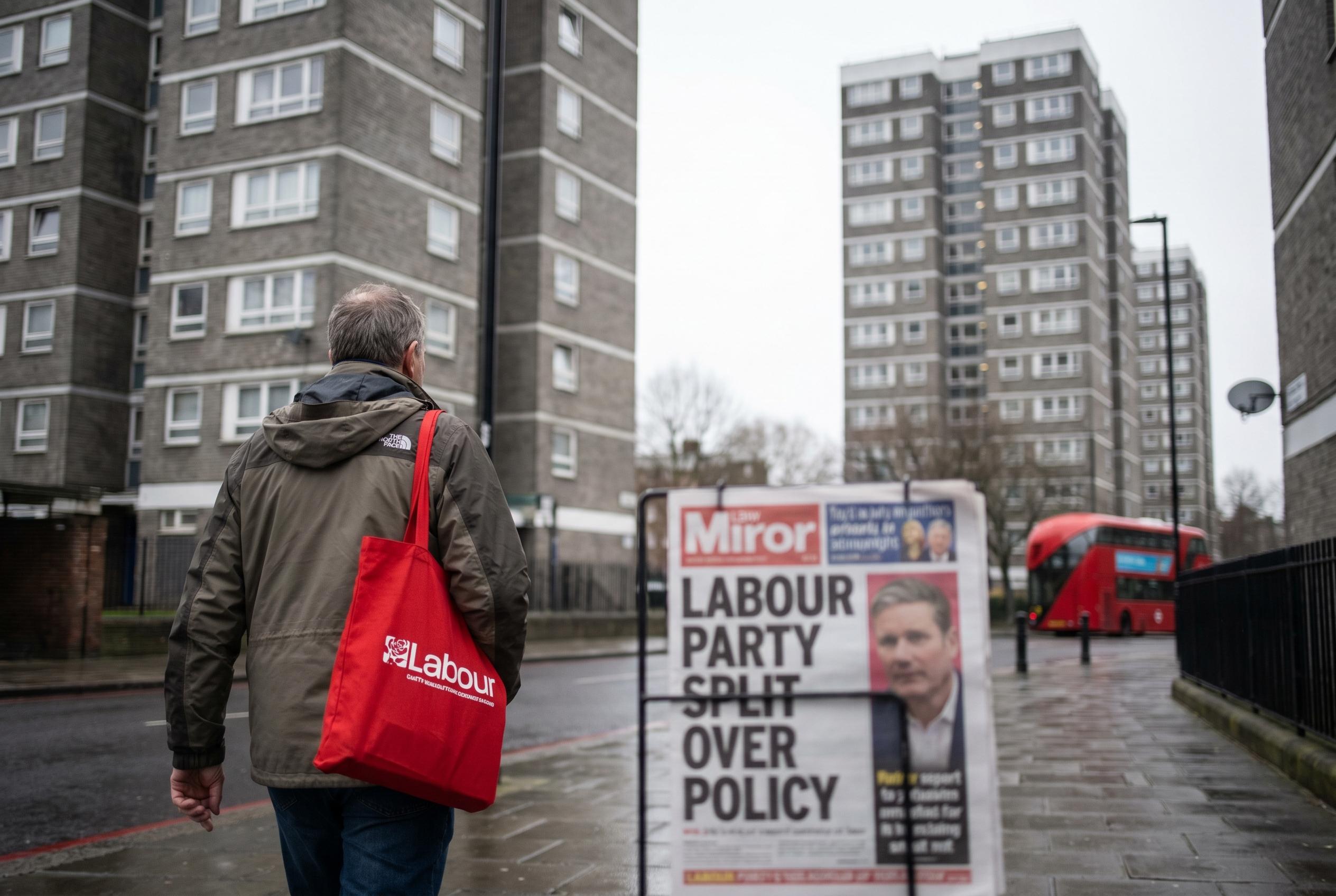
Speaker Lindsay Hoyle allowed a Commons vote, increasing political pressure on UK Prime Minister Keir Starmer. Trading odds for Starmer leaving office by June 30, 2026, fell to 39%, while December 31, 2026, odds rose to 68%. Market volatility suggests traders anticipate a catalyst in the second half of the year. The move exposes instability within the Labour party and ahead of significant Commons votes.
Traders pour millions into 2028 presidential race as Democrats hold early edge
Traders have invested over $500 million in notional volume on prediction markets for the 2028 US presidential election, with Vice President J.D. Vance and California Governor Gavin Newsom leading the odds. Despite Trump's low approval ratings, markets price Republicans as top contenders for the party nomination, while party-level contracts favor Democrats to win the presidency at 60.5%. The 2026 midterms remain unresolved, with Democrats favored to retake the House but the Senate viewed as a toss-up.
House Republicans face tight deadline to pass border funding bill amid political gridlock
House Republicans must align with the Senate to pass a budget framework funding ICE and Border Patrol before FISA expires. Speaker Mike Johnson and other GOP leaders warn of a difficult week involving the farm bill and potential government shutdowns. Democrats oppose the funding without reforms, citing recent border incidents. President Trump urges unified Republican support for a bill by June 1. Internal GOP disagreements persist over reconciliation tactics and additional policy riders.
Trump demands passage of SAVE America Act in Truth Social post
President Donald Trump urged Republicans to pass the SAVE America Act, declaring US elections rigged and demanding mandatory voter ID, proof of citizenship, and strict limits on mail-in ballots. The legislation remains stalled in the Senate despite House approval. Opponents argue the bill creates hurdles for eligible voters, while supporters claim it restores public confidence. The debate intensifies ahead of the 2026 midterms.
James Telarico surges past Jasmine Crockett in Texas Senate primary poll
New polling data indicates James Telarico has overtaken Jasmine Crockett among likely voters in the Texas Democratic U.S. Senate primary. The shift occurs as both candidates intensify campaign strategies targeting Latino and white demographics. A significant portion of the electorate remains undecided, keeping the race competitive as the primary approaches.
White House shooting intensifies debate over Department of Homeland Security funding and security measures
A shooting at the White House Correspondents' Association dinner has heightened tensions in Washington, prompting lawmakers to push for reopening the Department of Homeland Security, which has been closed for 72 days. President Donald Trump and Cabinet members were evacuated during the incident. Concurrently, Congress prepares to host King Charles III, with increased security expected. Lawmakers also face deadlines to fund DHS and extend surveillance powers under Section 702 of the Foreign Intelligence Surveillance Act before expiration.
Hungary incoming prime minister seeks unfreezing of EU funds
Péter Magyar, Hungary's incoming prime minister, has arrived in Brussels to meet Commission President Ursula von der Leyen. The objective is to unlock billions in EU funds previously frozen due to rule-of-law concerns. This early engagement bypasses the typical waiting period for a new government. The article also notes separate discussions in the European Parliament regarding Russia's participation in global sports and a scientific assessment indicating above-average temperatures across Europe last year.
European Commission proposes 2026 reform to streamline EU rulebook
The European Commission published a Communication on 28 April 2026 outlining a structural reform of EU policymaking. The initiative extends the Better Regulation agenda to cover the review and enforcement of existing laws, aiming to increase speed and agility. Key changes include tiered impact assessments, formalised urgency procedures that may bypass standard consultations, and a new 'Regulatory Deep Cleaning' action plan targeting twelve priority areas. The reform also commits to more assertive enforcement powers and a shift towards regulations over directives. The analysis notes these measures risk transforming procedural obligations into discretionary choices.
Supreme Court weakens Voting Rights Act provision
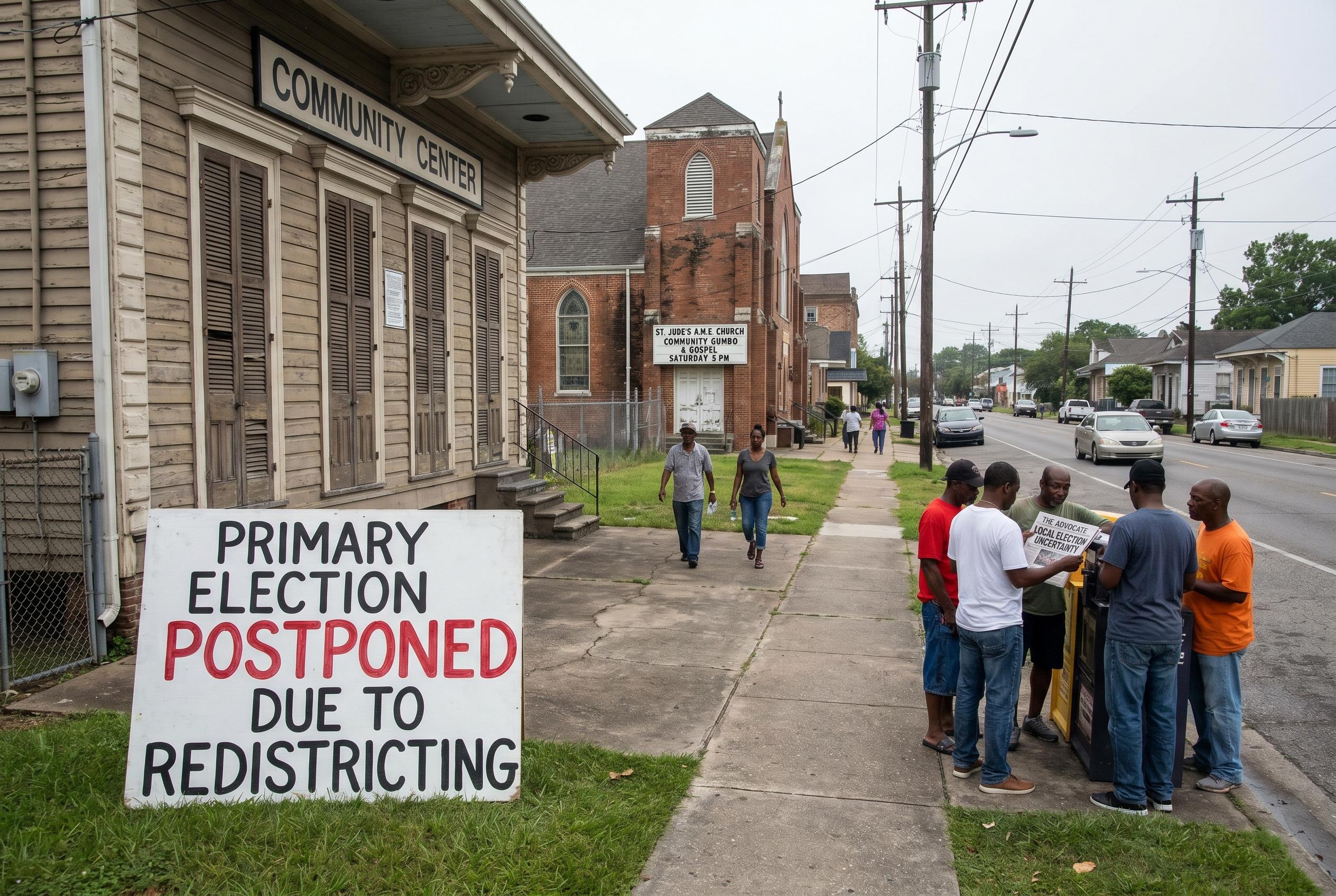
In a 6-3 ruling, the Supreme Court limited Section 2 of the Voting Rights Act, raising the bar for using race in congressional redistricting. The decision, authored by Justice Samuel A. Alito Jr., allows states to draw maps that may dilute minority voting power without violating the Constitution, provided they do not explicitly target racial groups. This shift could enable Republicans to redraw districts to gain House seats, potentially imperiling Black Democrats. The ruling marks a significant rollback of race-conscious redistricting efforts, following previous decisions restricting affirmative action and Section 5 of the VRA. Critics, including the NAACP, describe the move as a devastating blow to minority political power.
Deutsche Bank analysts flag upside risks to Bank Rate amid UK political uncertainty
Deutsche Bank analysts Shreyas Gopal and Sanjay Raja state that the EUR/GBP exchange rate trades above levels implied by Bank of England and European Central Bank rate differentials, indicating a risk premium in the Pound. They attribute this to ongoing UK political uncertainty and higher gilt yields following an energy shock. While the base case assumes no change to the Bank Rate, the analysts highlight significant upside risks to rate hikes potentially crystallising in late Q2 2026 or early Q3 2026.
Congressional Republicans struggle to pass essential legislation amid slim majority
With midterm elections approaching, Congressional Republicans are failing to pass essential legislation. The House floor was frozen for several hours as Republican leaders attempted to secure votes and negotiate side deals. Rank-and-file lawmakers are using the party's slim margin of control as leverage, halting routine debate procedures.
Democratic strategist argues GOP cannot win 2026 midterms on turnout alone
A Democratic strategist challenges the Republican belief that base mobilization alone will secure victory in the 2026 midterms. Citing Virginia's gerrymandering vote and polling data, the author argues that Democrats are winning through swing voter persuasion rather than just base turnout. While Republicans possess a financial advantage, polls indicate Democrats hold a significant lead in voter enthusiasm and plans to vote. The analysis suggests Republicans must adopt a swing-voter persuasion strategy to avoid electoral disaster in November.
Mounting political and economic risks threaten UK pound amid volatility
The UK pound faces increasing pressure as political scandals involving Prime Minister Keir Starmer and leadership uncertainty mount alongside economic challenges. Inflation rose to 3.3% in March, and energy prices have increased due to the conflict in the Middle East. Markets are also nervous about potential election outcomes on May 7 and fears of a shift towards more left-leaning fiscal policies. Analysts warn that these factors could lead to a decline in sterling value into May.
Jeffries bets on candidate quality for midterms after Callais ruling
House Minority Leader Hakeem Jeffries (D-N.Y.) states Democrats will win the 2026 House majority by fielding high-quality candidates recruited in 2025, focusing on economic stability and community leadership. Following the Supreme Court's Louisiana v. Callais decision, which weakened Section 2 of the Voting Rights Act, the Congressional Black Caucus shifts strategy to grassroots mobilisation. Senate Minority Leader Chuck Schumer (D-N.Y.) launches a task force to counter election threats from the Trump administration, including citizenship verification orders and voter-roll data requests, though federal legislative protection remains unlikely.
US Treasury sanctions six Chinese companies linked to Iranian oil network
The US Treasury sanctioned six Chinese chemical-component companies on April 30, 2026, for their links to Iran's oil network. This action targets Beijing's implicit support for Tehran's energy revenue during stalled negotiations. The sanctions test whether secondary measures can constrain Iran's economic resilience. Concurrently, the Iran-US conflict enters its 61st day with a dual-blockade on the Hormuz Strait, while the UAE exits OPEC effective May 1. Brent crude surpassed $120, and the US is reviewing troop reductions in Germany.
US Supreme Court strikes down central safeguard of Voting Rights Act
The US Supreme Court ruled against a Louisiana redistricting plan, striking down Section 2 of the Voting Rights Act of 1965. The decision, written by Justice Samuel Alito, states the law addresses intentional discrimination rather than race-conscious districting outcomes. This ruling weakens protections against racial discrimination in elections and reverses a 2023 precedent. Legal analysts warn this could allow states to redraw districts in ways that dilute minority voter influence, potentially returning communities to eras of limited representation.
US Supreme Court navigates high-stakes cases on voting rights and presidential authority
The US Supreme Court is hearing high-stakes cases during the current term that could redefine legal frameworks regarding voting rights, presidential authority, immigration, and economic policies. Key issues include the potential weakening of the Voting Rights Act, limitations on birthright citizenship, federal agency powers, and regulations on firearms and campaign finance. Rulings on gender, LGBTQ+ rights, and global trade consequences are also under scrutiny.
US Supreme Court ruling curbs minority voter protections and reignites redistricting battle
A US Supreme Court ruling has weakened protections for minority voters under the 1965 Voting Rights Act, prompting Republicans in states like Alabama, Tennessee, and South Carolina to seek new congressional district maps. While the decision is seen as a strategic advantage for Republicans, particularly in the South, analysts suggest its immediate impact on the 2026 midterm elections will be limited due to tight timelines and legal hurdles. Democrats may respond by redrawing districts in liberal states, but the ruling is expected to have more significant long-term consequences for future elections and minority representation.