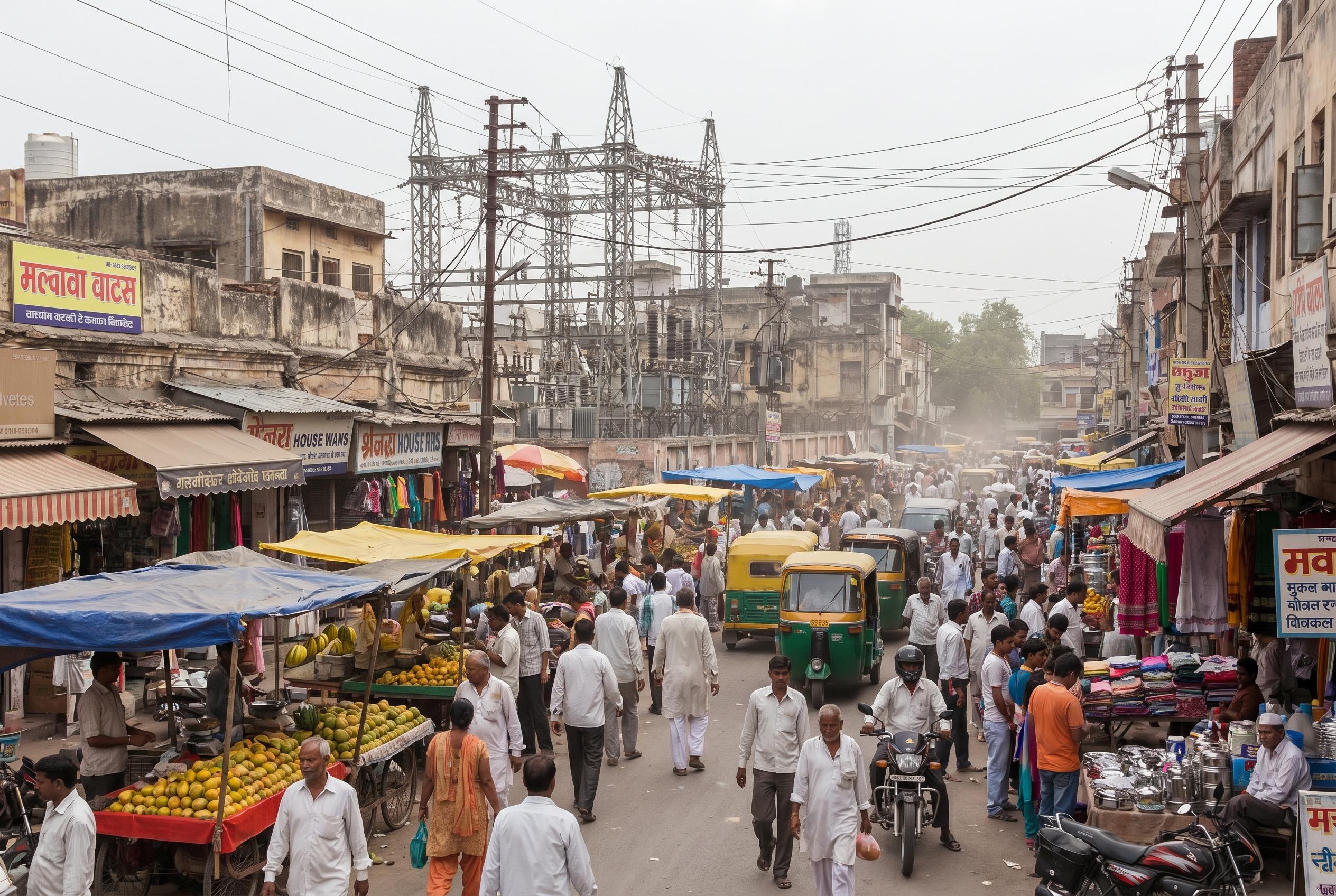
India’s power system is feeling the strain of an unusually early summer surge, with demand climbing to record levels and the pressure becoming most acute after sunset. As solar generation drops away in the evening, the grid must rely far more heavily on coal, gas, hydro, nuclear and wind to bridge the gap, and that is precisely when the shortfalls have been appearing. Officials cited by The Indian Express said the problem has been most visible during non-solar hours, when demand remains high but nearly 150 GW of solar capacity is no longer available.
The crunch has been sharpest at night. Grid Controller of India data cited by The Indian Express showed a shortfall of about 5.4 GW at 10:34pm on Friday, when peak demand reached 240 GW, and around 4.2 GW at 10:39pm on Saturday, when demand rose to a record 256 GW. The same pattern was seen around the evening peak at 8pm, with shortages of 3.9 GW on Friday and 3.5 GW on Saturday. By contrast, the day’s highest load, which came in the afternoon, was met without disruption.
According to officials quoted by the newspaper, the immediate cause was a surge in forced and partial outages at generating stations. Planned outages were expected to stay near 3 GW, but unplanned disruptions rose to almost 26 GW, while another senior official put forced outages at roughly 18 GW and partial outages at around 3-4 GW. The official said extreme heat was worsening operating conditions at coal-fired plants, reducing availability just as demand was peaking. The thermal fleet was generating about 184-187 GW over the two days, against an installed capacity of 227 GW.
The stress is also showing up in electricity prices. Data from the Indian Energy Exchange, the country’s biggest power trading platform, indicates that spot prices in the day-ahead market hit the regulatory ceiling of Rs 10 per kilowatt hour at night before easing to about Rs 1.5 during the day, a sign of how tightly supply is being stretched after dark. The India Meteorological Department has said some relief from heatwave conditions is expected from Tuesday, but the timing of this year’s demand spike is already unusual. Peak electricity use in India usually arrives in June-July or in early autumn, yet this year it has hit record levels in April.
That shift matters because it comes against a backdrop of repeated heat-driven stress on the grid. Reuters-linked coverage of last year’s summer power crunch noted that a severe heatwave pushed demand above forecasts and caused widespread blackouts, while energy analysis from the International Energy Agency and Ember has pointed to air-conditioning use as a major factor behind rising peak demand in India. The latest figures suggest the country is once again confronting the same underlying challenge: how to keep supply steady as hotter weather pushes evening electricity use ever higher.
Source Reference Map
Inspired by headline at: [1]
Sources by paragraph:
- Paragraph 1: [1], [2], [4]
- Paragraph 2: [1]
- Paragraph 3: [1], [3]
- Paragraph 4: [1], [2]
- Paragraph 5: [3], [5], [6], [7]
Source: Noah Wire Services