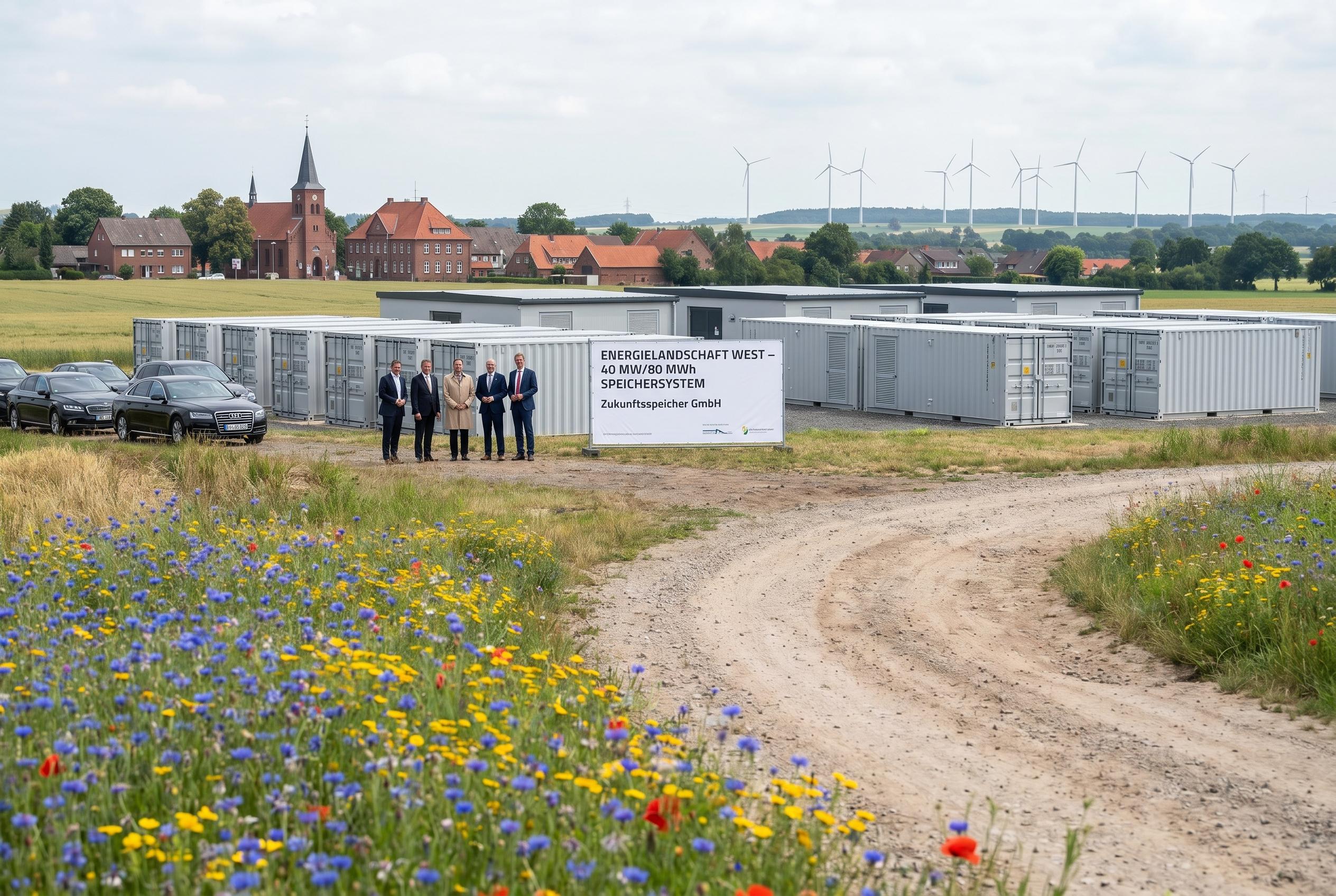
Shoppers and policymakers alike are watching as Green Flexibility opens a major battery storage facility in Balzhausen, Germany , a 40 MW/80 MWh plant that promises grid stability, local jobs and smarter use of existing grid connections in a region dense with solar power.
Essential Takeaways
- Capacity and size: The Balzhausen site delivers 40 MW output with 80 MWh of storage, the largest battery storage facility in Swabia and a major regional asset.
- Investment: Green Flexibility has invested around €35 million in the project, underlining commercial confidence in storage.
- Grid innovation: The plant is the first to connect to LEW’s new ‘feed‑in socket’, a pilot for grid‑oriented integration of generation and storage.
- Local impact: More than 80 guests from politics, industry and local communities attended the opening, signalling broad regional support.
- Pipeline: Green Flexibility plans at least five more storage projects in 2026, expanding grid‑supporting capacity across Germany.
Why Balzhausen matters: a big battery in a sunny region
The opening in Balzhausen feels like a practical answer to a familiar sight , rooftops full of PV panels and no easy place to put surplus generation. The 40 MW/80 MWh installation gives operators muscle to time-shift solar output, smoothing peaks and filling troughs when the sun isn’t shining. According to local reports, the plant’s size makes it the largest in Swabia and a tangible sign that storage is moving from pilot phase to everyday infrastructure.
That matters because renewable build-out can stall without ways to store and release electricity. Politicians at the launch emphasised the point: storage isn’t just an engineering puzzle, it’s a security‑of‑supply tool in a more uncertain geopolitical era, and it feeds local economic benefits too.
The feed‑in socket pilot: using grid points smarter
What sets Balzhausen apart is its technical tie‑in to LEW’s so‑called feed‑in socket, a new approach to managing grid connections. Instead of creating bespoke connections for every plant, the feed‑in socket lets generation and storage share and be orchestrated through a grid‑oriented interface. LEW’s project manager called it a way to use the existing distribution network more efficiently, especially where photovoltaic density is high.
For grid operators and project developers, that’s important because connection capacity is often the bottleneck. The pilot could show how to squeeze more value from current infrastructure, minimise reinforcements and speed up deployment of new assets.
Politics, community and the case for collaboration
More than 80 guests from government, industry and local communities turned up for the opening, which sent a clear message: these projects need buy‑in beyond the boardroom. Speakers at the event framed the battery as a regional win , securing electricity supply, supporting grid stability and creating jobs , and praised the cooperative approach between network operators, municipalities, landowners and the developer.
One executive summed it up neatly: projects like this don’t succeed because everything is easy, but because people are willing to break new ground together. That collaborative tone will be crucial as Green Flexibility rolls out further sites next year.
Money, scale and what to expect next
With roughly €35 million invested in Balzhausen, Green Flexibility is signalling that battery storage is a bankable business. The company has committed to commissioning at least five more storage facilities during 2026, pointing to a steady programme of scaling and replication across Germany.
For planners and investors, that pipeline reduces risk: repeatable designs, proven grid integration via the feed‑in socket and local stakeholder experience make subsequent projects easier to permit and build. For residents, it means more local infrastructure that can stabilise prices and improve power quality.
Choosing storage near you: quick practical tips
If you’re a local authority, landowner or network manager looking at storage, start with three basics: 1) check available grid connection options and whether a feed‑in socket or shared connection could cut costs; 2) weigh storage power (MW) against energy (MWh) needs , bigger MWh suits longer shifting of solar surplus; 3) engage communities early to turn concerns into partnerships and local benefits. Small design choices now save headaches later.
It's a small change that can make every kilowatt hour more useful.
Source Reference Map
Story idea inspired by: [1]
Sources by paragraph: