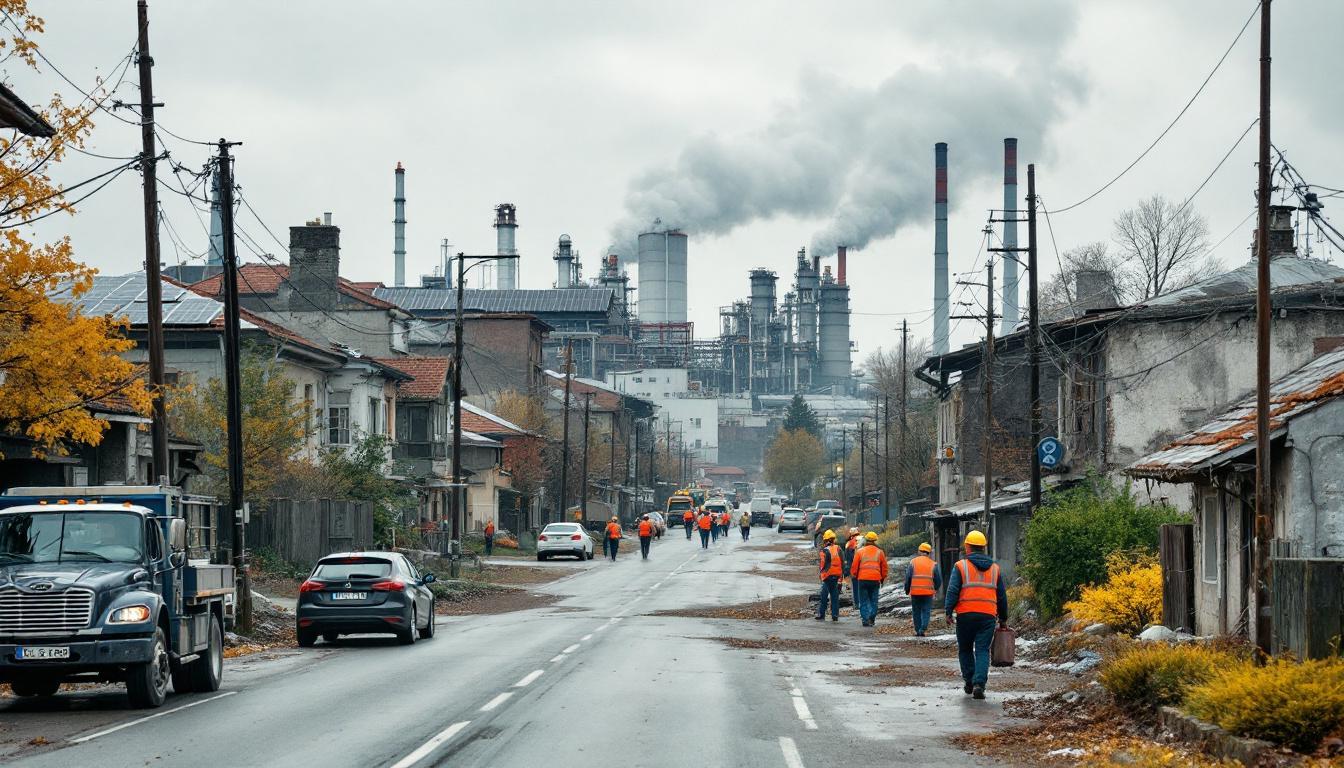
Shoppers of policy and investors alike are watching Romania as it eyes a green-industrial moment: a new Energy Policy Group analysis maps where the country can grow low‑carbon industries, why geography and existing know‑how matter, and what gaps must be fixed if Romania wants to turn transition talk into export wins.
Essential Takeaways
- Strategic advantage: Romania has hardware and services strengths , precision machinery, electronics and IT , that can be pivoted to low‑carbon products and exports.
- Energy assets matter: Domestic energy sources, notably nuclear and gas, are seen as strategic for short‑term security while supporting longer‑term decarbonisation.
- Supply‑chain risk: Heavy reliance on imports for critical tech components creates vulnerability amid rising protectionism.
- Workforce challenge: Skills mismatch and migration risk mean targeted retraining and retention programmes are urgent.
- Infrastructure need: Modernised grids and integrated planning can lower transition costs and support investment.
Why this moment feels different for Romania’s green industries
The Energy Policy Group’s new study lands at a tense geopolitical juncture, and you can almost feel the stakes: energy security has nudged climate goals into sharper industrial planning. The paper points out a mild, but tangible, smell of urgency , policymakers must balance decarbonisation with keeping factories competitive and the lights on. According to broader EU discussions, the bloc is shifting emphasis to security and industrial strength as it chases climate targets, and Romania finds itself rethinking which domestic assets it should lean on next.
Where Romania already has a head start , and why that helps
There’s a practical, boots‑on‑the‑ground advantage here. Romania’s existing competencies in electronics, precision measuring devices and mechanical equipment give it a credible runway to pivot towards low‑carbon manufacturing. Add a sizable, export‑capable IT sector and some seasoned nuclear expertise, and you’ve got a recipe for services and components that other EU countries might prefer to source regionally. Industry insiders say that pairing software skills with precision manufacturing could produce higher‑value exports rather than commodity assembly.
The geopolitics and the supply‑chain reality
Global trade is wobblier than a few years ago: forecasts in the paper suggest trade volumes could dip before recovering, driven by protective measures and onshoring trends. That matters because Romania imports several critical inputs from outside the EU, exposing manufacturers to shocks. The practical takeaway is simple: diversify suppliers, build regional supplier clusters and prioritise domestic capabilities where possible. Policymakers will need to weigh incentives for reshoring against realistic timelines and costs.
People, skills and the clock on reform
Even the best factory can’t run without skilled hands. The analysis flags Romania’s labour market pressures , migration, ageing cohorts and a skills mismatch , as brakes on scaling green industries. The fix isn’t mysterious: targeted retraining, apprenticeships linked to industry hubs and retention incentives can help. Think fast‑track retraining for technicians to work on wind turbines or battery assembly, plus university‑industry partnerships to keep graduates local. If policymakers back clear, funded programmes, companies will be far likelier to invest.
Infrastructure, climate risk and the social dimension
Modern energy infrastructure is more than convenience; it’s a cost‑reduction tool for the whole transition. The study argues for integrated planning , coordinating grids, storage, and industrial siting , to keep costs down. Climate impacts also complicate the picture: network reliability matters when storms or heatwaves threaten production. Finally, social fairness counts. Addressing energy poverty and distributional effects head‑on will keep public support for green change, which is essential for long projects and big investments.
Closing line Small, strategic moves now , from skills programmes to supply‑chain diversification , could position Romania as a practical, competitive supplier in Europe’s green industrial future.
Source Reference Map
Story idea inspired by: [1]
Sources by paragraph: