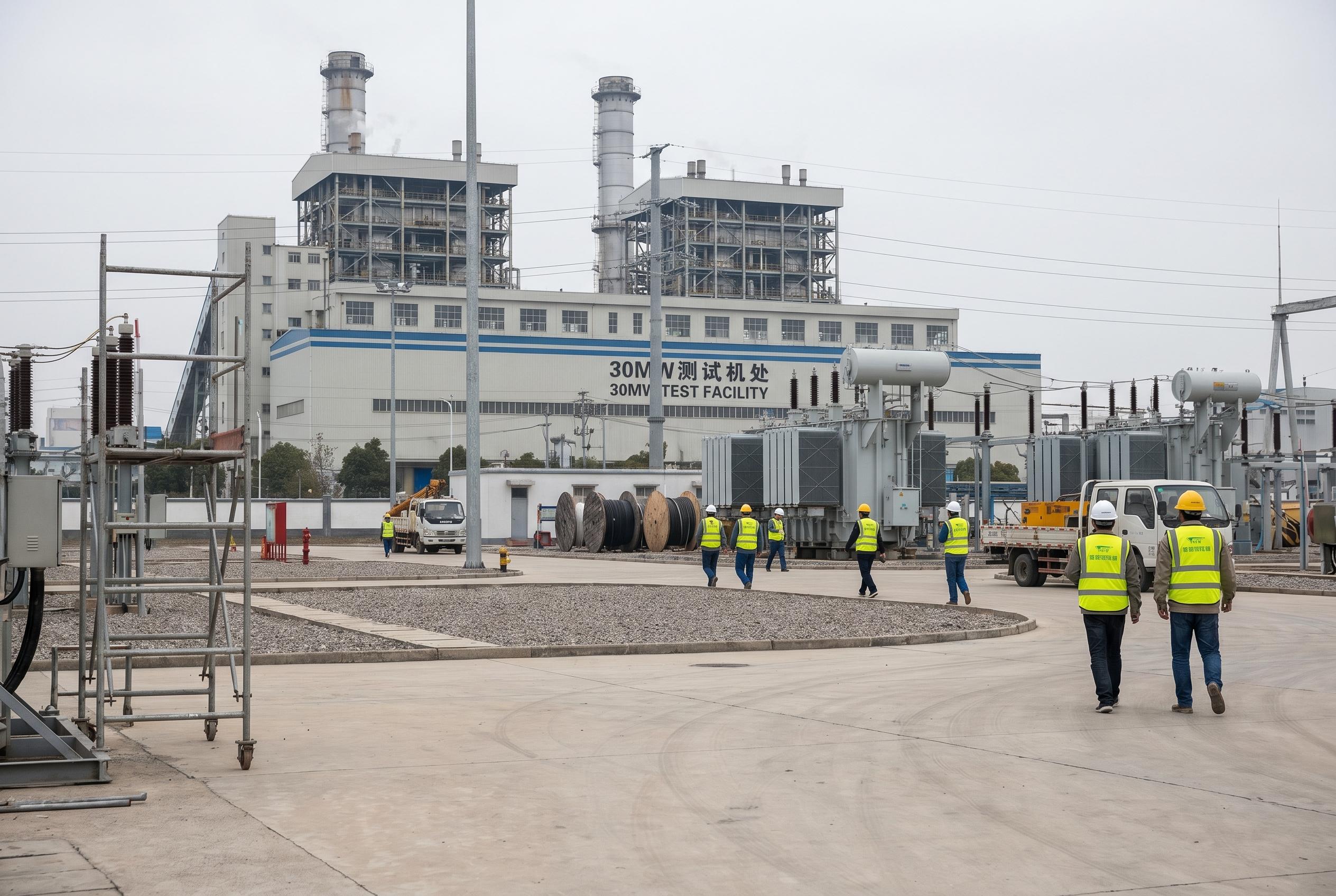
Shoppers in the energy sector are watching test labs, not just product specs , Sungrow’s 30MW facility in Hefei proved a PCS black‑start in 19 seconds, a clear signal for utilities and developers worried about resilience as renewables rise. The demonstration was witnessed by TÜV Rheinland and ties into growing demand for grid‑forming inverters worldwide.
Essential Takeaways
- 19‑second black start: Sungrow’s PCS established system voltage and restored loads within 19 seconds after a blackout, verified on video by TÜV Rheinland.
- Full‑condition test bed: The company used what it calls the world’s first 30MW grid‑forming test platform to run 138 hours of trials including on/off‑grid switching and oscillation damping.
- Scalable performance: Sungrow says response times stayed broadly consistent as the platform scaled, though they rise with system size.
- Market alignment: Tests are claimed to meet grid codes across Europe, Australia and China, addressing stability needs as renewable share grows.
- Product roll‑out: Sungrow plans to ship its Power Matrix system to Europe from 2027; Power Titan family already shows progressive grid‑forming capability.
Why that 19‑second figure matters now
Nineteen seconds sounds specific because it is , and because speed matters when the lights go out. A system that can re‑establish voltage and pick up loads in under half a minute reduces the risk of cascading failures and gives operators breathing space. The demonstration was staged at Sungrow’s new 30MW platform in Hefei and filmed for independent verification, which makes the claim more credible than a lab note or simulation.
Grid operators and project owners are increasingly thinking in seconds, not hours. According to industry reporting, this sort of rapid black‑start capability is exactly what grids with high renewable penetration will need to avoid long outages.
The test programme: full‑condition, third‑party witnessed
Sungrow didn’t just run a single stunt; it ran 138 hours of tests that included black‑start, on/off‑grid switching, load switching and oscillation damping. TÜV Rheinland witnessed and verified video evidence, and the company presented the footage at its Global Renewable Energy Summit in Hefei. That third‑party attendance and broad test scope helps move the result from marketing claim to an engineering milestone.
For buyers and specifiers that’s useful , it’s one thing to see a bench test, another to watch a full scenario with independent eyes. If you’re assessing kit for a large BESS or co‑located solar + storage project, those details tend to swing procurement conversations.
Grid‑forming: from niche feature to code requirement
The industry is shifting fast: grid‑forming used to be a specialist add‑on, now it’s edging toward mainstream necessity. Sungrow’s team argues that any system with more than about 20% renewables benefits from grid‑forming. That aligns with market signals , in Australia’s NEM, for instance, a large share of pipeline projects are already confirmed to include grid‑forming inverters.
Why? Because inverters that can create voltage and inertia-like responses replace the stabilising role once provided by big spinning machines. In plain terms, grid‑forming tech helps keep frequency and voltage steady when conventional plants aren’t there to do the job.
Products and rollout: what buyers should note
Sungrow’s Power Titan line has evolved from offering grid‑forming functionality to embedding more comprehensive capability, and the company plans to make its Power Matrix inverter system available in Europe from 2027 after regulatory approvals. That matters if you’re planning projects in regulated markets: availability and certification windows dictate how soon you can deploy advanced inverters at scale.
When comparing vendors, look at independent test evidence, compliance with regional grid codes, and whether the vendor demonstrates scalability. Sungrow says its 30MW results scale predictably, but buyers should still ask for performance data at the specific sizes they intend to deploy.
Practical tips for project owners specifying grid‑forming systems
If you’re tendering or evaluating equipment, start with three basics: ask for third‑party verification of black‑start and islanding behaviour; request performance figures for the system size you’ll run, because response times can grow with scale; and check compliance with the grid codes relevant to your market. Also, consider operations , how will control systems hand back to the broader grid, and what protections are in place for fast reconnection?
A live demonstration video is great, but insist on test reports and on‑site commissioning plans. That way you’re buying capability, not just a good clip.
Outlook: resilience as a selling point
The Hefei tests underline a wider shift: energy storage is no longer just about energy shifting or peak shaving, it’s a resilience tool. As grids accept more PV and wind, technologies that can form the grid and recover quickly from faults will be valued by network operators and developers alike. Sungrow’s demonstration won’t be the final word, but it does push the bar higher for other suppliers to show comparable, independently witnessed performance.
It’s a small change that can make every blackout recovery measurably faster.
Source Reference Map
Story idea inspired by: [1]
Sources by paragraph: