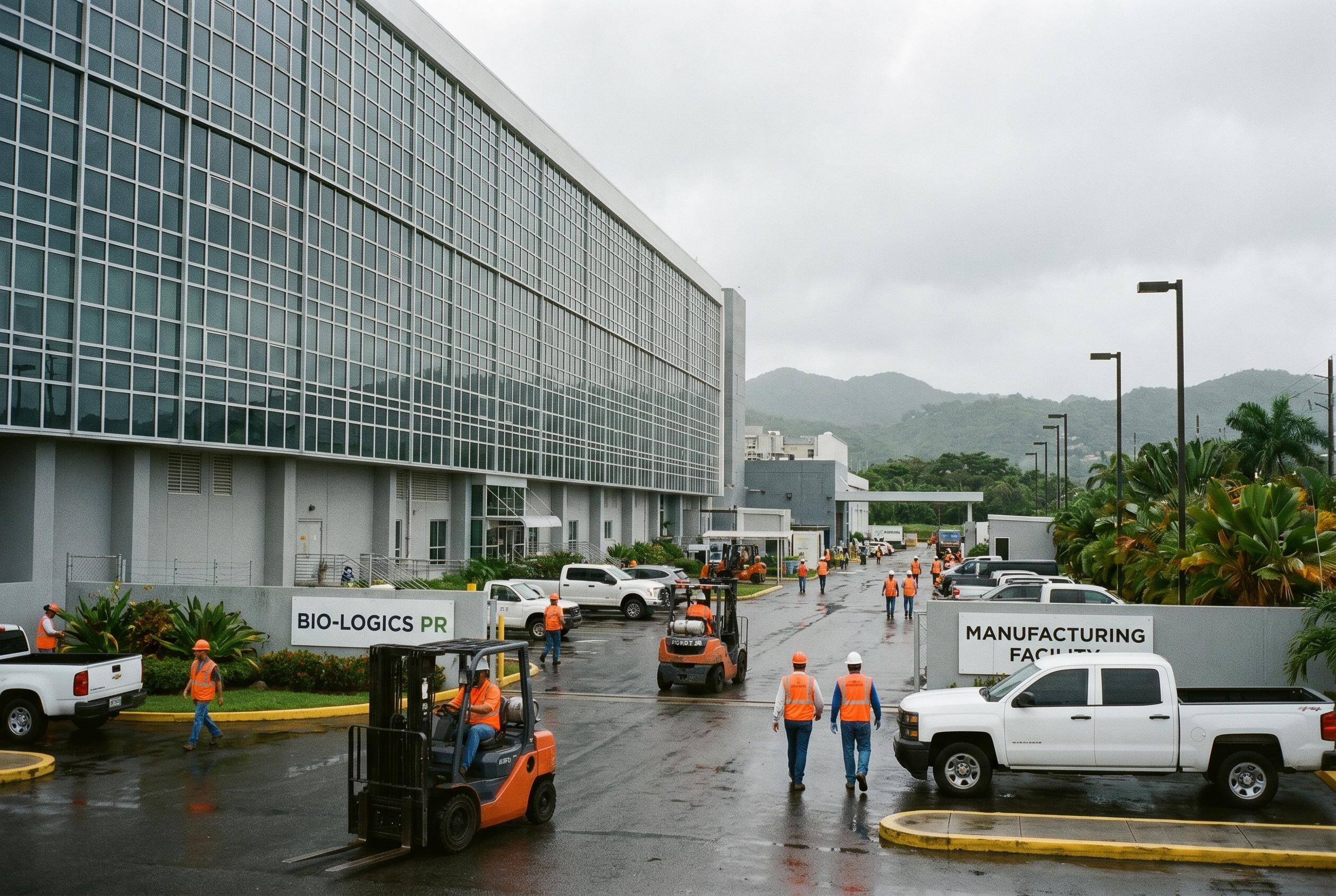
Shoppers of talent and capacity are watching big pharmas double down in North America: Amgen is ploughing another $300m into its Puerto Rico biologics plant while Sanofi is committing $294m to grow an AI centre in Toronto , moves that aim to secure supply chains and speed drug development.
Essential Takeaways
- Amgen boost: $300m extra for Puerto Rico expands biologics capacity, modernises tech and supports workforce training.
- Sanofi focus: $294m for Toronto funds an AI centre of excellence, adding about 50 specialised roles for data and manufacturing tools.
- Jobs and skills: Amgen’s year-long push lifts regional pharma investment above $2bn; Sanofi’s spend increases the number of tech-savvy life‑science positions locally.
- Why it matters: The investments strengthen domestic production resilience and inject digital tools into drug manufacturing, improving predictability and supply reliability.
Why Amgen is betting on Puerto Rico’s labs again
Amgen’s fresh $300m commitment follows a larger expansion it announced last year, and it’s as much about politics as production , the White House has been urging reshoring of critical drug manufacturing. The cash will beef up biologics production capacity, introduce next‑generation manufacturing technologies and fund workforce development on the island. Puerto Rico has a long pharmaceutical pedigree and, according to Amgen, this new tranche adds to almost $2bn of investments there in the past year, signalling renewed confidence after decades of industry churn. For companies eyeing supply resilience, the lesson is obvious: proximity and upgraded facilities matter when demand spikes or geopolitics shifts. If you’re tracking manufacturing jobs, expect construction roles first and a slower roll‑out of permanent lab positions.
Sanofi’s Toronto play is about smarter manufacturing, not just headcount
Sanofi’s $294m will enlarge an AI “centre of excellence” opened in 2022, with roughly 50 new hires focused on developing AI tools for manufacturing and supply chain decision‑making. The site already created more than 150 roles over four years, so this is a scaling rather than a start‑up sprint. The French group sees digital simulation, real‑time monitoring and predictive systems as the future of pharma production, which could reduce waste and speed up batch troubleshooting. For life‑sciences regions, the headline is clear: tech talent is now as strategic as factory floors. If you want a job in pharma tech, look at data science, software engineering and applied AI in manufacturing contexts.
What these moves say about a wider industry trend
Between large capital builds and digital centres, the sector is split between hard infrastructure and soft, high‑skill capability. Amgen’s plant expansion adds tangible capacity to produce biologics; Sanofi’s investment adds intangible but crucial digital muscle. Together they embody a twin strategy that other firms are copying: secure where medicines are made while making production smarter. This hybrid approach also mirrors government priorities , regional officials in Puerto Rico and Ontario have both welcomed the investments as job creators and economic stabilisers. For regional economies, these contracts are lifelines that can attract suppliers and training programmes for years.
Practical advice for local workers and policymakers
If you live near these sites, now’s a good time to refresh technical skills or pursue short courses in biotech manufacturing, quality systems or industrial AI tools. Employers will need people who can bridge lab know‑how and data literacy. Policymakers, meanwhile, should keep aligning incentives, training funds and infrastructure upgrades so that promised jobs translate into local hires. For investors or procurement teams, the takeaway is that diversified supply , combining onshore biologics capacity with AI‑driven process reliability , reduces risk. Ask prospective suppliers how they’re using digital twins or predictive maintenance before committing to long‑term contracts.
What to watch next: delivery, jobs and tech transfer
The real test isn’t the headlines but execution: how quickly will factories scale up, how many permanent roles materialise, and how effectively will AI tools move from pilot to plant floor? Amgen’s earlier projection suggested nearly 750 jobs from its previous investment; the firm hasn’t given an immediate job count for this latest outlay. Sanofi’s hiring is more explicit but small in number, reflecting specialised skills rather than mass production roles. Expect updates on construction milestones, recruitment drives and early case studies of AI preventing downtime. These will determine whether the dollar amounts translate into more reliable medicines and smarter manufacturing , and that’s what patients and taxpayers ultimately want.
It's a small change that can make supply chains steadier and manufacturing smarter.
Source Reference Map
Story idea inspired by: [1]
Sources by paragraph: