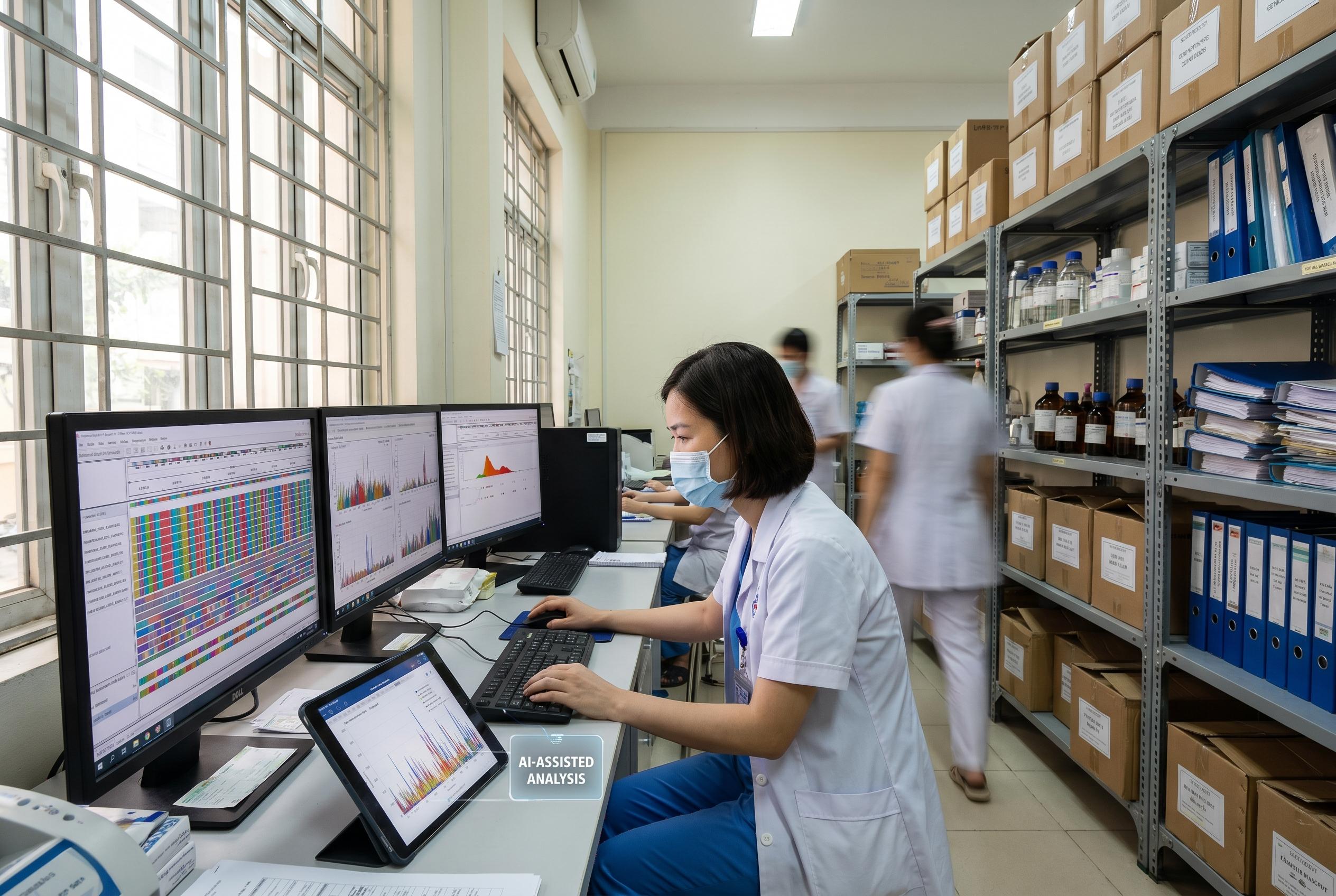
Shoppers of public health tech are turning to sovereign-by-design platforms like PathGen to balance data privacy and rapid outbreak intelligence, helping health ministries in Asia and beyond detect pathogens faster while keeping sensitive genomic data inside national borders. This matters for countries with limited bioinformatics teams and those cautious about sharing raw health data.
Essential Takeaways
- Sovereign-first design: PathGen runs analyses in-country so raw genomic data never leaves national control, helping build trust.
- AI-enabled insights: Large language models and AI summarisation speed up decision-making, offering readable reports for non-experts.
- Accessible tooling: Open-source pipelines and harmonisers lower the bar for labs without dedicated bioinformatics staff.
- Real-world rollout: Pilots and partnerships across Asia involve public health institutes and universities, with practical deployments due in 2026.
Why PathGen feels different: privacy with punchy analytics
PathGen’s biggest sell is a tactile one: it keeps data local but still helps teams act fast. That local-first setup means ministries can run genomic analyses on national infrastructure and receive AI-generated summaries, without shipping raw sequences abroad. Medical labs report a calmer, more cooperative atmosphere when sovereignty concerns are removed, and that trust translates into faster sharing of insights that matter in an outbreak.
Origins matter too. The platform grew out of regional collaborations and research hubs that saw how the COVID-19 era both helped and exposed gaps in surveillance. So rather than reinventing the wheel, PathGen stitches together secure cloud services, GPUs for heavy lifting and AI layers that turn complex outputs into plain-language guidance for decision-makers.
How the tech actually works: AI, GPUs and in-country compute
Under the bonnet, PathGen uses large language models and GPU-powered compute to turn raw sequences into usable intelligence. That combination speeds variant detection and risk assessment, and the real-time feel comes from optimised instances that can run analysis quickly when an outbreak is suspected. According to public previews and technical notes, the architecture balances encryption, local control and interoperable APIs so countries can plug in existing lab systems.
That technical recipe matters if you’re a small public health lab. Instead of buying expensive on-prem kit or hiring scarce bioinformaticians, labs can leverage pre-configured pipelines that have been tuned for pathogen work. For planners, it’s a practical way to access heavy compute without losing sovereign control.
Making complex genomics usable for non-experts
A persistent barrier to global surveillance has been the skills gap: many public health officials aren’t trained in bioinformatics. That’s where open-source solutions come in. Tools like Easy Genomics provide pre-set analysis workflows so a lab technician can upload sequence files and get actionable reports, rather than wrestling with code or command lines.
There’s also work on standardisation. Generative AI can harmonise inconsistent file formats, extract metadata automatically and flag quality issues, which speeds collaboration across labs that use different instruments and protocols. For the user, this means fewer manual checks, fewer formatting headaches and quicker time-to-action during a suspected outbreak.
Partnerships and pilots: where PathGen is being tested
PathGen didn’t appear overnight. It’s the product of regional initiatives, university collaborations and funding partners that want early-warning systems to be inclusive. Initial previews and media releases show multiple Asian countries involved in the early rollout, with academic partners offering technical validation and training.
These pilots are a bellwether: they test not just the code but also governance, user experience and legal frameworks. If these pilots succeed, expect broader adoption and more countries to demand sovereign-by-design options in their public health tech stacks.
Why this matters for global health and equity
Democratising genomic surveillance isn’t a nice-to-have, it's a public good. When more countries can detect variants early without fearing data misuse, the whole world benefits. Platforms that combine local control with shared insight change the incentives: governments are likelier to participate actively in networks that respect their laws and privacy.
Looking ahead, the big questions are about sustainability and training. Tech can lower technical barriers today, but long-term impact needs funding, workforce development and ongoing partnerships between public health labs, universities and technology providers.
It's a small change that can make every outbreak response quicker and fairer.
Source Reference Map
Story idea inspired by: [1]
Sources by paragraph: