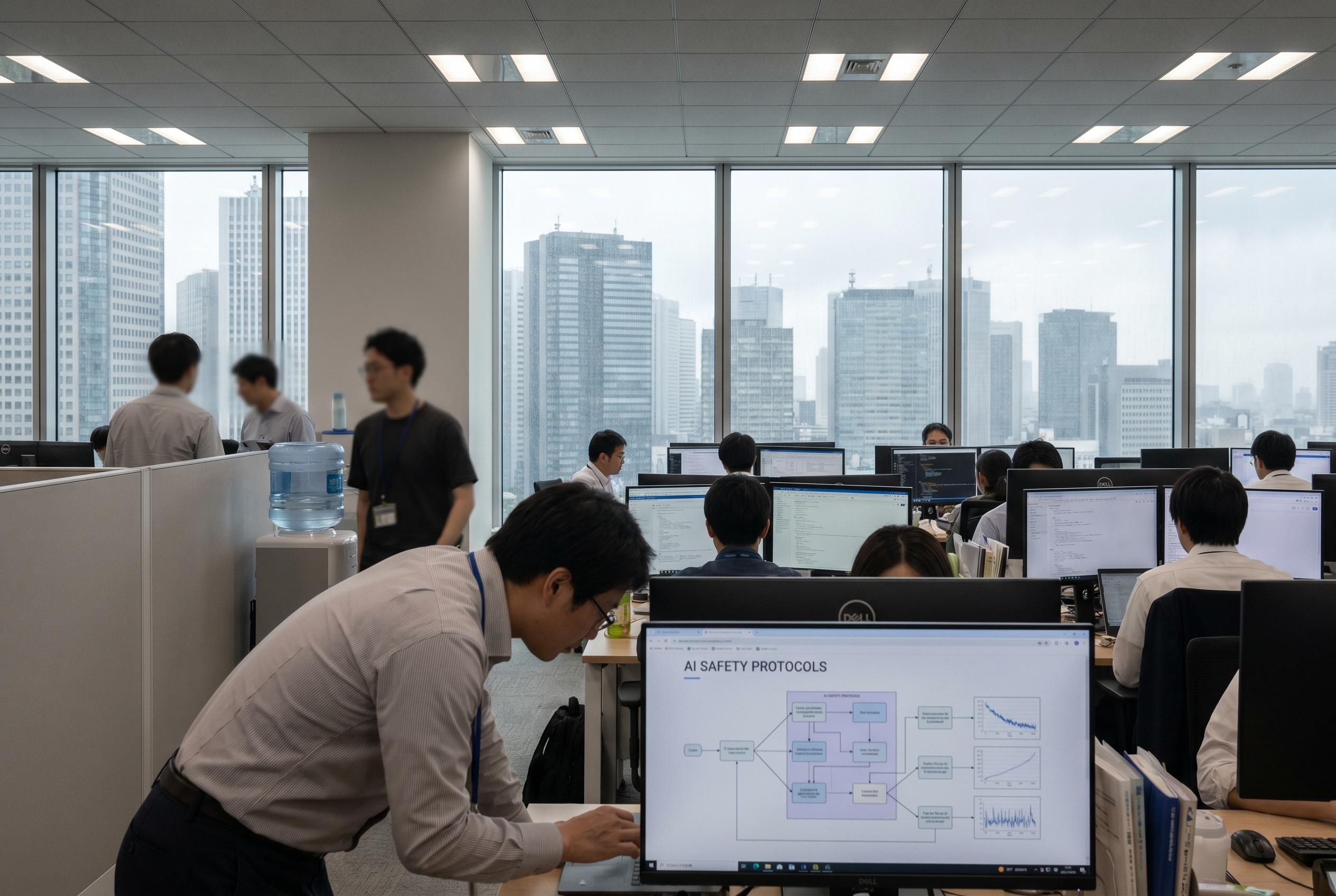
Artificial intelligence is moving quickly from experimental promise to everyday operations in insurance, reshaping underwriting, claims handling, risk selection and customer service. But as the technology spreads, the industry is also being forced to reckon with a broader and more complicated risk profile, one that extends well beyond software bugs and into cybersecurity, liability, infrastructure and the physical world. McKinsey has said AI could transform distribution, pricing and claims by 2030, while also intensifying concerns around data privacy and governance, underlining the tension between efficiency gains and new exposure.
That tension is already visible in reported incidents. Verisk’s emerging issues team found that about 77% of AI incidents reported in 2025 had some possible insurance implication, suggesting that the technology’s risk footprint is widening alongside adoption. Deloitte has argued that generative AI can speed underwriting and improve decision-making, but it also warned that data quality and staffing remain persistent hurdles. The result is a market in which AI is no longer just a productivity tool; it is becoming a source of potential claims in its own right.
The concern is not confined to abstract model failures. Recent reports have pointed to security flaws in enterprise generative AI systems that allowed confidential material to be accessed and summarised, reinforcing fears that widely deployed large language models can create systemic exposure across cyber, professional indemnity and management liability lines. Insurance Business reported that Tokio Marine HCC’s review of major cyber losses in 2025 again highlighted ransomware, supply-chain compromise and concentration risk around major cloud and platform providers, themes that are likely to intensify as insurers and their clients rely more heavily on shared AI infrastructure. Tom's Hardware has also reported that some insurers are responding by tightening exclusions or declining to cover certain AI-related losses altogether.
Much of that risk sits behind the scenes in the fast-growing buildout of data centres, the physical backbone of the AI economy. The insurance article notes projections that U.S. data centre construction spending could rise 23% this year and that the sector may produce as much as $10 billion in new premium in 2026. Yet the same expansion brings familiar property and casualty exposures: power interruption, fire, supply-chain disruption and contractor liability. The energy burden is especially stark. Industry forecasts cited in the piece suggest U.S. data centre electricity demand could reach 106GW by 2035, with the facilities accounting for as much as 12% of peak U.S. demand by 2028, while NERC has warned of mounting strain on the grid. Water use is also becoming a flashpoint, with some large sites drawing millions of gallons a day for cooling.
AI is also changing the risk profile on the road. Self-driving taxis and autonomous freight vehicles are becoming more visible, and the systems that control them depend heavily on machine learning, sensors and real-time data. Research cited in the article suggests more advanced AI models could make vehicles behave in increasingly human-like ways, but that does not eliminate danger; it may simply change the way accidents happen. A study from UC Santa Cruz found that embodied AI systems could be vulnerable to manipulation through misleading text in the physical environment, such as road signs. That raises difficult questions for insurers about whether future claims will be treated as driver fault, fleet liability or product liability.
For insurers, the central challenge is that AI does not create just one kind of exposure. It concentrates digital, physical and legal risks in the same ecosystem, often through a handful of dominant platforms and infrastructure providers. As McKinsey and Deloitte both suggest, the upside for productivity is real, but so are the governance, data and accountability gaps. The industry’s next test will be whether coverage frameworks can evolve quickly enough to keep pace with a technology that is now embedded not only in office software and underwriting rooms, but in the power grid, the cloud and the vehicles on the road.
Source Reference Map
Inspired by headline at: [1]
Sources by paragraph:
- Paragraph 1: [2]
- Paragraph 2: [2], [3], [1]
- Paragraph 3: [4], [5], [1]
- Paragraph 4: [1]
- Paragraph 5: [1], [2], [3]
Source: Noah Wire Services