The home ministry has told a parliamentary committee that Indian security agencies rely on publicly accessible online material, including social media, to support intelligence work while asserting that this does not amount to a breach of privacy because personal data is not harvested. The statement was submitted to the Standing Committee on Communications and Information Technology during its 2024–25 review, which had sought details about safeguards when material is collected from internet platforms. (According to the ministry, scraping is confined to content already in the public domain.) Sources analysing the growth of open-source methods note that tapping widely available digital traces has become a routine element of modern investigations.
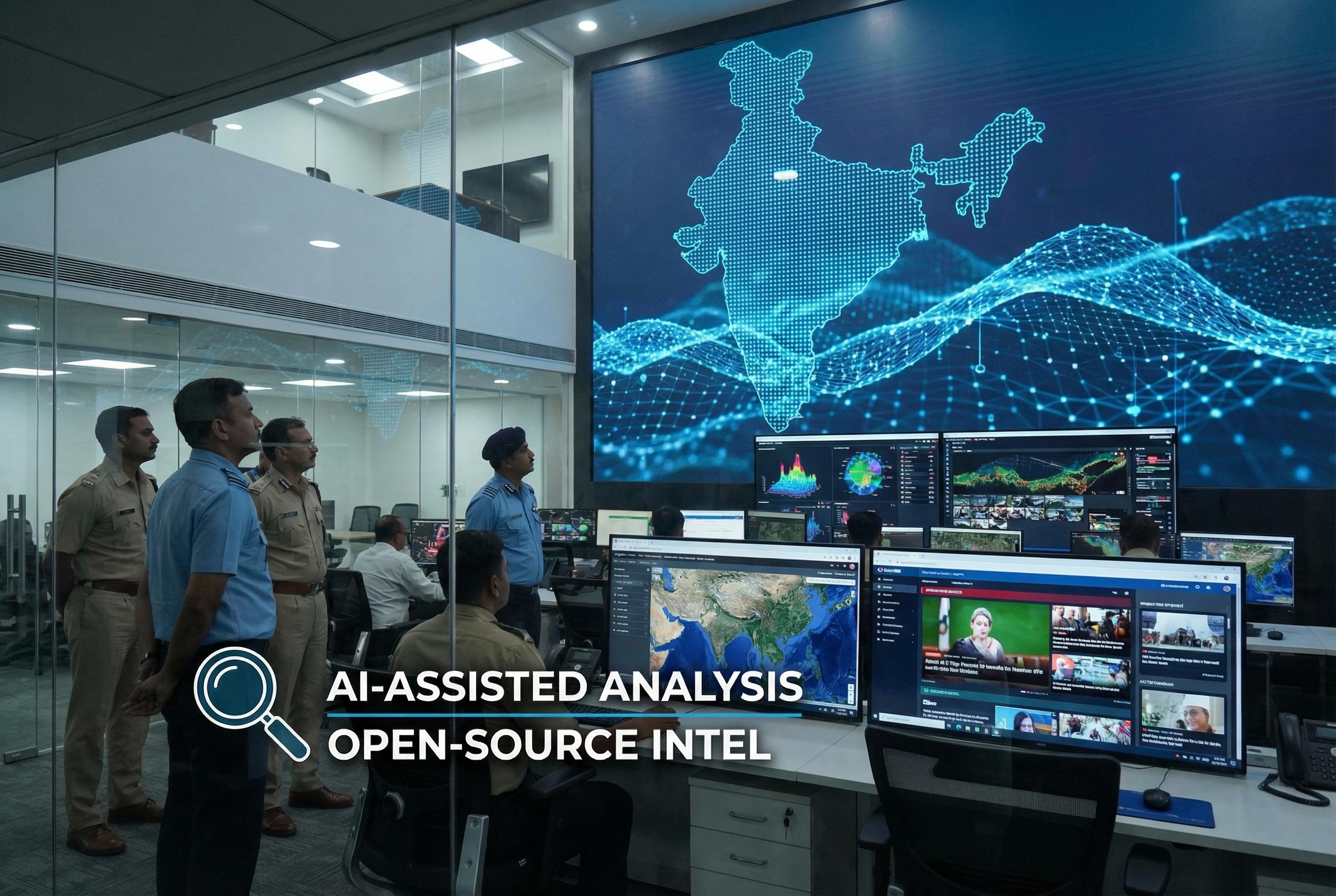
Officials also outlined a larger role for artificial intelligence in the intelligence ecosystem, describing tools that sift vast quantities of both structured and unstructured material to highlight anomalies, map relationships and surface leads. The ministry said AI assists multilingual monitoring , including regional dialects , and is deployed to parse content from open and more hidden corners of the web. Industry observers have described a similar trajectory, with machine learning increasingly embedded in platforms that aggregate news, forums and social feeds to produce actionable insights for law enforcement and national security bodies.
Several agencies are said to be experimenting with AI-driven capabilities across a range of functions, from sentiment and narrative analysis on social platforms to extraction of artefacts such as cryptocurrency wallet addresses from underground marketplaces. The ministry highlighted that an intelligence fusion centre powered by AI is nearing operational readiness and will aim to speed analysis and decision-making for operational needs. Independent vendors and integrators advertise comparable suites that combine scraping from hundreds of sources with modules for face recognition, object detection and dark‑web monitoring.
The ministry emphasised that work focuses on monitoring threats such as misinformation, extremist content, scam sites and online fraud, and that interventions may include investigating instances where public profiles are exploited for blackmail or coercion. Experts, however, warn that the same techniques that enable efficient threat detection also lower the technical bar for mass surveillance and civilian-led investigations, a dual-use dilemma noted in recent technology reporting. The expansion of AI-assisted OSINT has democratised powerful investigative tools, prompting calls for strengthened transparency and governance.
Vendors marketing OSINT platforms underscore the range of capabilities now available to both state and private users: comprehensive ingestion of public sources, AI-enhanced search and visualisation, and add-ons such as deepfake detection. According to product briefs, these systems can accelerate casework by correlating identities and evidence across diverse datasets, but their promotional language is distinct from formal statements issued by government departments. Observers say that distinguishing operational necessity from commercial enthusiasm is critical when assessing claims about both effectiveness and privacy safeguards.
As India and other countries scale AI-assisted open-source monitoring, the policy conversation is shifting toward oversight mechanisms that can reconcile investigative aims with civil liberties. Parliamentarians on the committee pressed the ministry for clarity on privacy protections when material is derived from public platforms; the ministry’s response stresses non-collection of private personal data as the principal safeguard. Independent analysts and privacy advocates contend that technical limits on collection, clear retention rules and independent audit trails are needed to make that assurance meaningful in practice.
Source Reference Map
Inspired by headline at: [1]
Sources by paragraph:
- Paragraph 1: [3]
- Paragraph 2: [3]
- Paragraph 3: [2]
- Paragraph 4: [4]
- Paragraph 5: [2]
- Paragraph 6: [3]
Source: Noah Wire Services