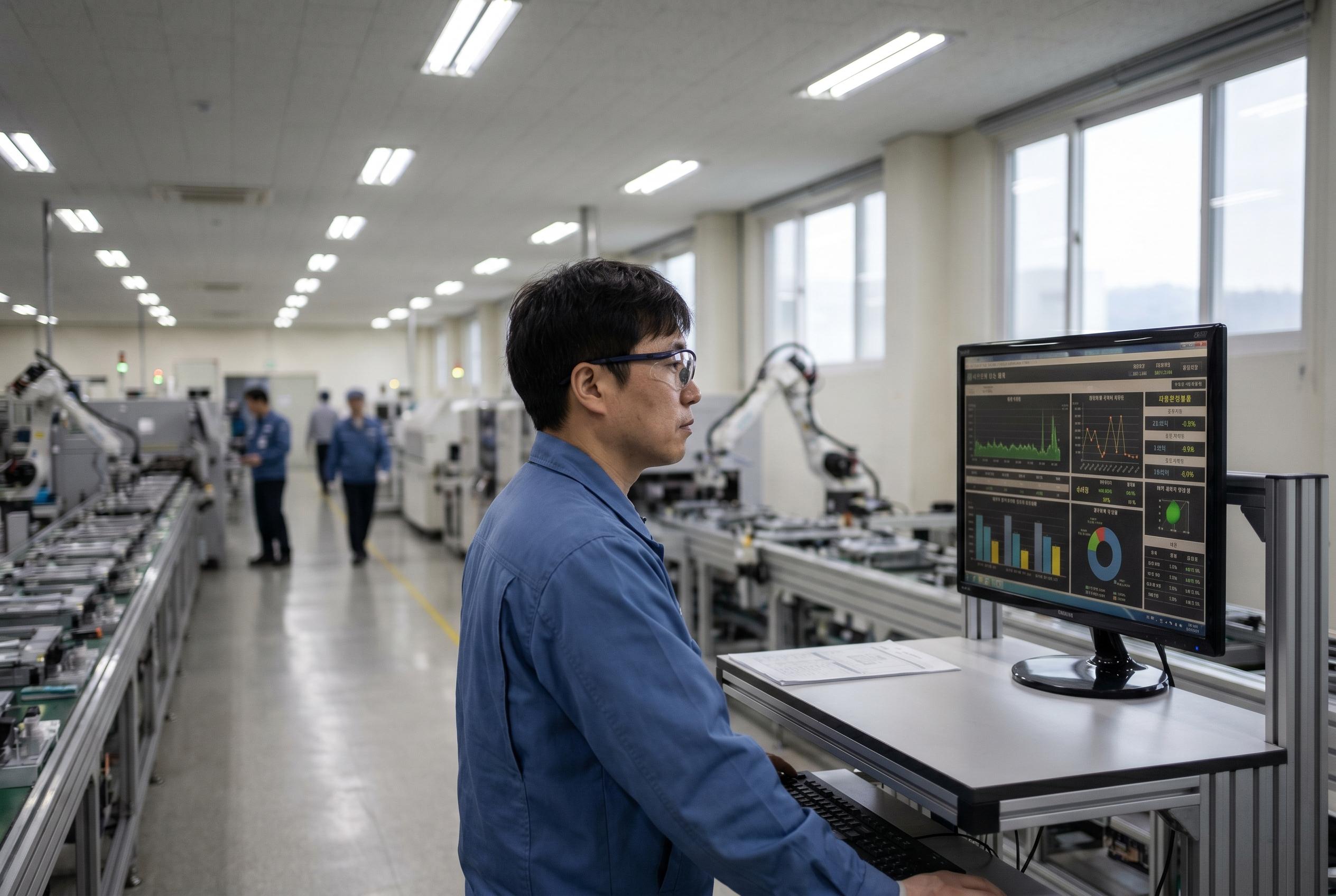
Artificial intelligence is moving from a promising concept to a practical shop-floor tool in manufacturing, but the Boston discussion at Rapid + TCT 2026 made clear that the biggest barrier is not the software itself.It is the condition of the data feeding it. Panellists told attendees that manufacturers still struggle with scattered records, inconsistent terminology and legacy systems that make it hard to turn information into something models can actually use. The message was that AI can help only when the underlying data architecture is ready for it.
That concern is echoed in broader industry thinking.According to the World Economic Forum, AI is already being used to optimise production lines, reduce costs and support digital transformation across manufacturing. KPMG has argued that generative AI can cut downtime, improve product quality and support predictive maintenance and automation, but only if firms treat it as a strategic capability rather than a bolt-on experiment. The common thread is that manufacturers need clean, connected and trustworthy data before AI can deliver value at scale.
At the Rapid + TCT session, panellists repeatedly returned to the problem of disjointed information. One speaker described how teams often end up with large volumes of data that are difficult to interpret because they were collected without a consistent plan for reuse. Another warned that too much manufacturing knowledge is trapped inside individual companies, labs or even spreadsheets, making it hard to build shared models that work across the sector. The future, they suggested, may depend on industry-wide knowledge foundations, shared standards and better ways to connect process, material and quality information.
There was also a strong emphasis on practical workforce readiness. The World Economic Forum has recently argued that AI-driven workforce transformation must be intentional and inclusive, with new roles and human capabilities developed alongside technology. That point was reflected in Boston, where panellists said many workers remain uneasy about models making decisions on the factory floor. Their answer was not to replace people, but to show how AI can remove repetitive tasks, help engineers interrogate results and provide explanations that make predictions more usable and trustworthy.
The panellists also drew a distinction between using AI as a helper and treating it as an all-purpose engine. They said large language models can be useful for quick analysis, report generation and lightweight coding support, especially when teams need a fast way to interrogate their own data. But they cautioned against feeding huge data sets directly into such tools. Instead, they argued, manufacturers should use AI to interact with well-designed data structures, while keeping sensitive operational data inside local systems where possible. For regulated or high-security environments, running models on-premises was presented as a more realistic path than sending information to public cloud services.
On the technical side, the discussion suggested that AI’s most immediate manufacturing gains may come in narrow, high-value use cases. The panellists pointed to process prediction, material qualification, computer vision and image-based monitoring as areas where models can accelerate development and shorten testing cycles. But even there, they said, success depends on whether data can be transferred between machines, processes and sites without losing context. The broader conclusion was that manufacturing does not need more hype; it needs stronger data discipline, better worker training and AI systems that fit the realities of production.
Source Reference Map
Inspired by headline at: [1]
Sources by paragraph:
- Paragraph 1: [2], [3]
- Paragraph 2: [2], [3]
- Paragraph 3: [1], [4]
- Paragraph 4: [1], [4]
- Paragraph 5: [1], [6], [7]
- Paragraph 6: [1], [3], [7]
Source: Noah Wire Services