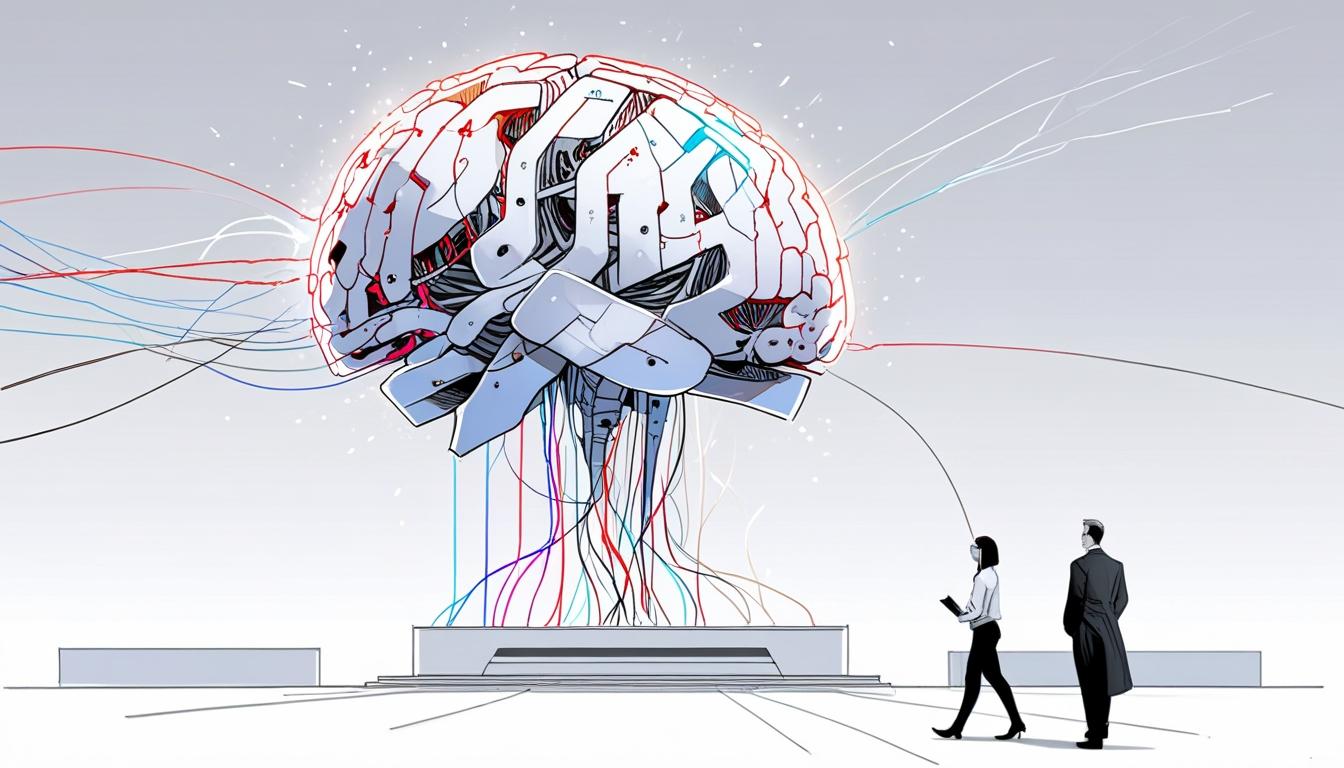
In a rapidly evolving financial landscape, the adoption of an AI-first strategy is emerging as a crucial focus for banks aiming to navigate increasing customer demands and competitive pressures. Varghese Abraham, a Consulting Leader in Enterprise AI at Infosys Consulting, explores this paradigm in his article for finews.first, emphasising both the challenges and the opportunities presented by such a transformation.
The article outlines a dual reality for banks: earnings are declining while customer expectations rise, compounded by the growing market share of non-traditional payment services like PayPal. The AI-first strategy, as proposed by Abraham, not only has the potential to enhance profitability but also to equip banks with the tools necessary to meet digital challenges head-on. He observes, “AI-first means fundamentally changing the way a bank works.”
Abraham identifies six critical components of an AI-first strategy that can redefine banking operations:
Strategic Decision-Making and Business Processes: AI facilitates informed, data-driven decisions and aids in the development of new products through predictive analytics and scenario modelling.
Customer Experience and Service Improvement: By enabling personalised interactions—from tailored advice to more efficient account management—AI can significantly enhance the customer experience. Synthetic personas created from customer data enable a more nuanced approach to service delivery.
Operational Efficiency and Automation: The integration of agent-based AI can automate routine banking processes, thus reducing error rates and increasing overall operational efficiency, which in turn boosts customer satisfaction.
Risk Management and Compliance: AI's capabilities extend to improving credit checks, real-time fraud detection, and assisting in regulatory compliance through automated monitoring systems.
Security and Data Protection: With intelligent access systems and vulnerability analyses, AI elevates data protection measures, fostering greater customer trust.
Organisational Culture and Human Resources: An AI-first approach necessitates a culture rooted in innovation. Training programmes will be essential for employees to effectively engage with AI systems.
For banks considering this transformation, Abraham advises a gradual implementation, recommending that initial efforts be concentrated in high-impact internal areas before broadening to external applications. “The best way to introduce an AI-first strategy is to start small and think in stages,” he notes. Pilot projects within a framework dubbed the "AI forge" can facilitate innovation and the systematic scaling of AI processes across the organisation.
Moreover, establishing a cross-functional ethics committee is proposed as a means to ensure responsible AI utilisation. Engaging in early dialogue with employees, customers, and regulatory bodies is critical, fostering transparency and trust while incorporating diverse perspectives during the implementation process.
Abraham argues for an incremental approach to development, stating, “Another principle is to make small, incremental improvements,” which allows for risk-managed integration of AI solutions. He also underscores the necessity of aligning AI initiatives with the bank’s core values to maintain ethical consistency.
While the transition to an AI-first banking model is complex, Abraham insists it is essential not only for technological advancement but also as a catalyst for ethical and cultural evolution within the organisation. This comprehensive shift sets the groundwork for a more adaptive, inclusive, and progressive banking future—a landscape increasingly shaped by artificial intelligence.
Source: Noah Wire Services