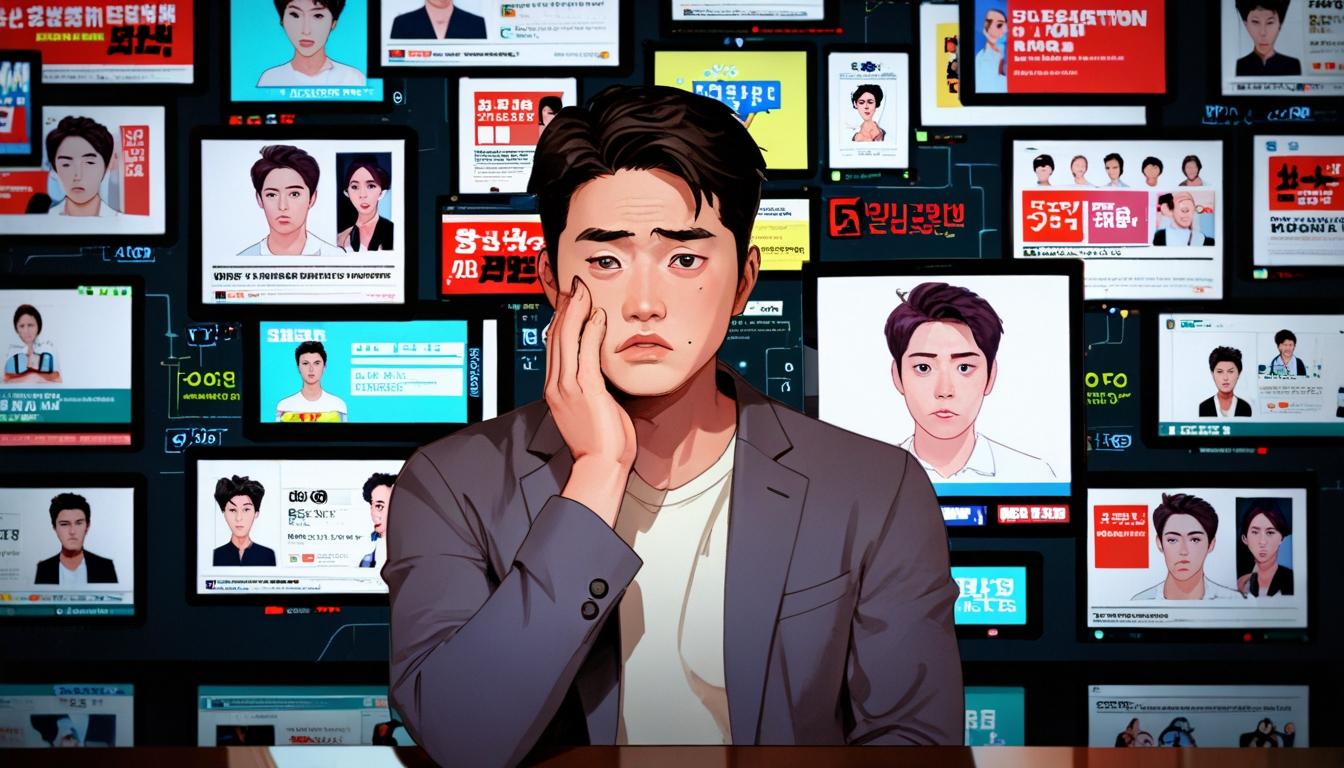
South Korean actor Simon Lee has expressed his shock upon discovering that his likeness was being used to promote dubious health cures on platforms such as TikTok and Instagram, often portraying roles such as a gynaecologist or a surgeon. He is among numerous individuals who have licensed their images to artificial intelligence (AI) marketing firms, only to find themselves featured in misleading advertisements and even political propaganda. "If it was a nice advertisement, it would’ve been fine. But it is such an obvious scam,” he remarked. Unfortunately, the terms of his contract have complicated his ability to have these videos removed.
The use of one's image in this manner is becoming increasingly popular due to its cost-effectiveness compared to traditional filming methods. This technology enables companies to create catalogues of digital models that can be integrated into various promotional videos. Solene Vasseur, a digital communications consultant, noted that this new advertising approach is not only fast but also significantly less expensive than conventional production, typically requiring just half a day of shooting and the use of a green screen and teleprompter.
Customers of firms like Synthesia can produce videos by selecting a face, a language, and a tone—whether serious or playful—before inserting a script. The pricing is accessible, with an ultrabasic version available for free and the pro version costing only a few hundred euros.
Image-licensing contracts can offer sums of up to a few thousand euros, depending on the duration and the celebrity's level of recognition. However, these contracts are often laden with complex legal jargon and, in some cases, include clauses that may be considered abusive. In their eagerness to earn quick cash, many individuals struggle to fully comprehend the agreements they are signing.
British actor and model Connor Yeates recounted his own experience after signing a three-year contract with Synthesia for €4,600 (HK$40,394). At the time, he was living in precarious conditions, stating, "I don’t have rich parents and needed the money.” This opportunity initially seemed promising but turned sour when he discovered that his image had been used to promote Ibrahim Traore, the president of Burkina Faso, following a coup in 2022.
Alyssa Malchiodi, a lawyer specialising in business law, highlighted the pitfalls of these contracts, noting that many clients did not clearly understand their agreements. She pointed out that a significant red flag is the presence of broad and irrevocable language that grants companies complete ownership and unrestricted rights to utilise a creator's voice, image, and likeness across any platform. Malchiodi further asserted that many contracts contain clauses that allow for unrestricted, global exploitation without a right of withdrawal.
As technology continues to advance, concerns grow regarding the incapacity of legal systems to keep pace with these rapid developments. Malchiodi remarked, "Technology is evolving faster than courts or legislatures can respond," indicating a notable gap between the swift evolution of AI and the slower mechanism of legal and regulatory responses.
Source: Noah Wire Services