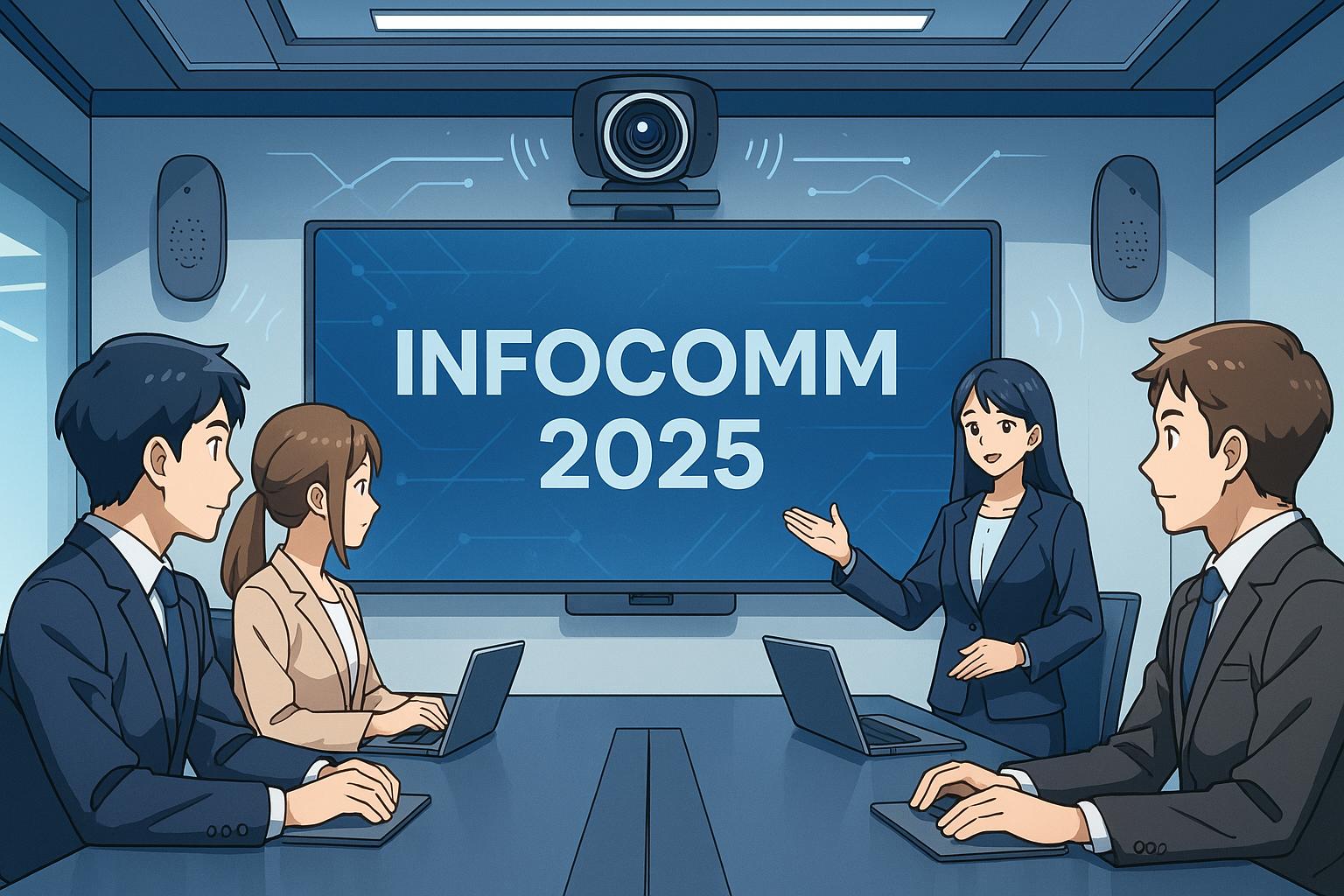
As InfoComm 2025 approaches, the AV industry is poised for a phase of transformation amidst both challenges and opportunities. Sean Wargo, the Vice President of Market Insights at AVIXA, recently shared insights into the current landscape of audiovisual technology and the trends reshaping collaboration, particularly in light of the hybrid work environment. His observations reflect a blend of optimism and caution regarding the future of the sector, particularly as it continues to recover from the effects of the COVID-19 pandemic.
While the pro AV market has witnessed significant growth, it is now experiencing a slowdown, transitioning to a more sustainable pace. Wargo noted that various factors, including tariffs, persistent supply chain issues, and a shortage of skilled labour, are contributing to a revised growth forecast for 2025. “It’s a bit of a mixed bag,” he explained. Despite these challenges, demand for specific solutions remains strong, signalling a recalibration rather than a downturn in the industry. This sentiment echoes broader observations in the enterprise video sector, where there is an increasing demand for high-quality broadcast capabilities that enhance corporate communications.
Collaboration technology, in particular, continues to emerge as the driving force within the AV landscape. Wargo highlighted the growing appetite for scalable and intelligent collaboration solutions, especially in meeting rooms and other shared spaces. Many organisations are still navigating the complexities of returning to the office, creating a surge in demand for technologies that facilitate connection and productivity. This trend aligns with findings from recent studies predicting that advanced ProAV solutions are crucial for seamless collaboration between in-office and remote workers, fostering an inclusive work environment.
The evolution of meeting room technology showcases another key trend, as enterprises move towards more standardised and intelligent setups. Central to this is the emergence of unified platforms that can be replicated across various sites, delivering a consistent user experience. These platforms leverage AI to enhance functionality, featuring smart cameras and adaptive microphones that adjust to room acoustics. This integration of AI reflects a broader technological shift, positioning software and backend solutions as increasingly critical to future AV systems. A recent report highlighted that software is among the fastest-growing segments in the AV sector, underscoring the necessity of managed services that improve scalability and provide ongoing support.
Moreover, there has been a noteworthy shift in the mainstreaming of broadcast-quality AV, extending beyond traditional applications to corporate settings. Organisations no longer view high production values as the exclusive domain of studios; instead, they demand polished, professional presentations for internal and external communications. This demands investment in high-end AV setups, featuring advanced cameras, lighting, and other production tools, which are becoming standard in corporate environments.
As InfoComm 2025 nears, anticipation builds for a showcase of innovation and resilience within the AV industry. Wargo emphasised the importance of experiential learning at the event, stating that it serves as a platform to explore emerging trends and technologies firsthand. Sessions will focus on crucial themes such as tariffs, supply chain dynamics, and the strategic direction of broadcast AV—issues that have become critical focal points for industry stakeholders. The vitality of collaboration technologies remains paramount, resting at the heart of modern work practices and organisational strategies.
The present landscape of AV is not merely defined by hardware and physical installations; rather, it encompasses the entire ecosystem of solutions, infrastructure, and user experience. As the industry moves forward, it is clear that ongoing adaptations and technological integration will dictate the next steps, with InfoComm 2025 acting as a mirror reflecting the evolution and future trajectory of audiovisual technology.
📌 Reference Map:
- Paragraph 1 – [1], [3]
- Paragraph 2 – [1], [2]
- Paragraph 3 – [1], [4]
- Paragraph 4 – [1], [5], [6]
- Paragraph 5 – [1], [7]
- Paragraph 6 – [1], [3]
Source: Noah Wire Services