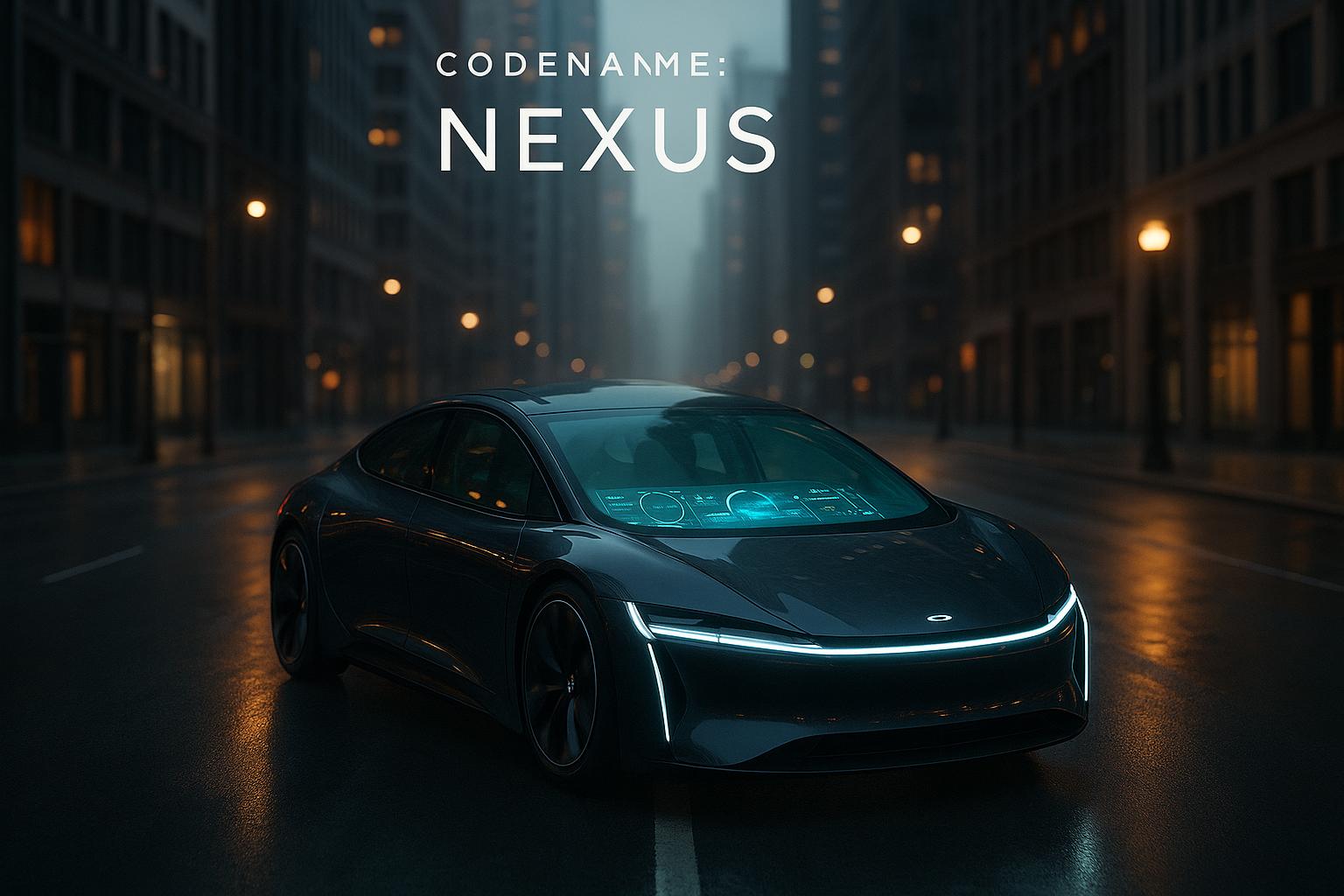
Tesla’s unveiling of the Cybercab at the 'We, Robot' event on October 10, 2024, marks a significant milestone in the rapidly evolving field of AI-powered autonomous vehicles, underscoring the company’s ambition to lead the transformation of urban mobility. The Cybercab—a fully autonomous robotaxi with no steering wheels or pedals—is designed to operate exclusively through advanced AI vision systems. Priced under $30,000 and expected to enter production in 2026, this two-seater coupe represents a shift from traditional automobile manufacturing towards robotics and AI-driven transportation solutions. Tesla’s CEO, Elon Musk, framed the company as more than a car manufacturer, positioning Tesla as an AI robotics company focused on autonomous fleets, including the announcement of a larger Robovan capable of carrying up to 20 passengers.
Tesla’s approach to autonomy differentiates itself by relying solely on camera-based AI, foregoing lidar sensors used by competitors such as Waymo and Cruise. This strategy lowers production costs and helps scale operations, with Tesla’s Full Self-Driving hardware having already amassed over 1 billion miles of real-world driving data by September 2024. Industry data forecasts the global autonomous vehicle market to grow from $1.5 billion in 2023 to $10 billion by 2030, driven by innovations such as Tesla’s AI vision system. Other advanced players, including Amazon’s Zoox and Baidu’s Apollo in China, remain competitive, focusing on AI collaborations and fleet optimization. Tesla’s utilization of its Dojo supercomputer, delivering over 1 exaflop of AI compute power, enables neural network training on vast datasets, refining perception and decision-making for real-world complexity and edge cases.
From a business perspective, Tesla aims to launch a robotaxi network by 2026, presenting a substantial new revenue stream akin to ride-sharing platforms but with lower operational costs due to driverless vehicles. Analysts project autonomous ride-hailing capturing up to 20 percent of the $7 trillion global mobility market by 2040. Tesla’s model allows vehicle owners to contribute their cars to Tesla’s ride-hailing service, creating recurring app-based income while cutting costs typically associated with human drivers. Predictive analytics and AI-driven fleet management can improve vehicle utilisation by up to 30 percent, while operational costs for the Cybercab are estimated at just $0.20 per kilometre, partly thanks to induction charging technology. The transition to autonomous electric fleets addresses urban challenges like congestion and pollution, aligning with regulatory agencies such as the National Highway Traffic Safety Administration (NHTSA), which updated guidelines in 2024 to accommodate Level 4 autonomy.
Regulatory and ethical considerations remain critical as autonomous vehicles scale. California’s Department of Motor Vehicles (DMV) recently expanded testing approvals, reinforcing compliance with data privacy regulations like GDPR. Ethical AI development is emphasised, focusing on safety through transparency in Tesla’s AI models and mitigating algorithmic bias to ensure equitable service access. The rapid introduction of autonomous vehicles will inevitably impact jobs in driving sectors, necessitating reskilling efforts as recommended by the World Economic Forum. Data security is a pressing concern, with growing adoption of blockchain technologies to protect against tampering and maintain robust logs of AI operations.
Technological advancements promise profound societal benefits, including an expected 90 percent reduction in traffic accidents through AI-driven vehicle-to-everything communication, supported by NHTSA research. Predictions indicate fully autonomous highways could become widespread by 2027, with new insurance models emerging based on usage and AI-driven risk assessment. Despite high upfront costs in AI infrastructure and computing, Tesla’s reliance on scalable cloud-based training, notably in partnership with AWS, aims to alleviate financial barriers. This strategic combination of AI innovation, business model disruption, and regulatory navigation positions Tesla as a frontrunner in reshaping the future of transportation, with its Cybercab potentially revolutionising urban mobility and creating sustainable, efficient, and accessible travel options.
📌 Reference Map:
- Paragraph 1 – [1] (blockchain.news), [2] (TechCrunch), [6] (Le Monde)
- Paragraph 2 – [1] (blockchain.news), [4] (Reuters), [7] (Le Monde)
- Paragraph 3 – [1] (blockchain.news), [3] (CNBC), [6] (Le Monde)
- Paragraph 4 – [1] (blockchain.news), [4] (Reuters), [7] (Le Monde)
- Paragraph 5 – [1] (blockchain.news), [7] (Le Monde), [4] (Reuters)
Source: Noah Wire Services