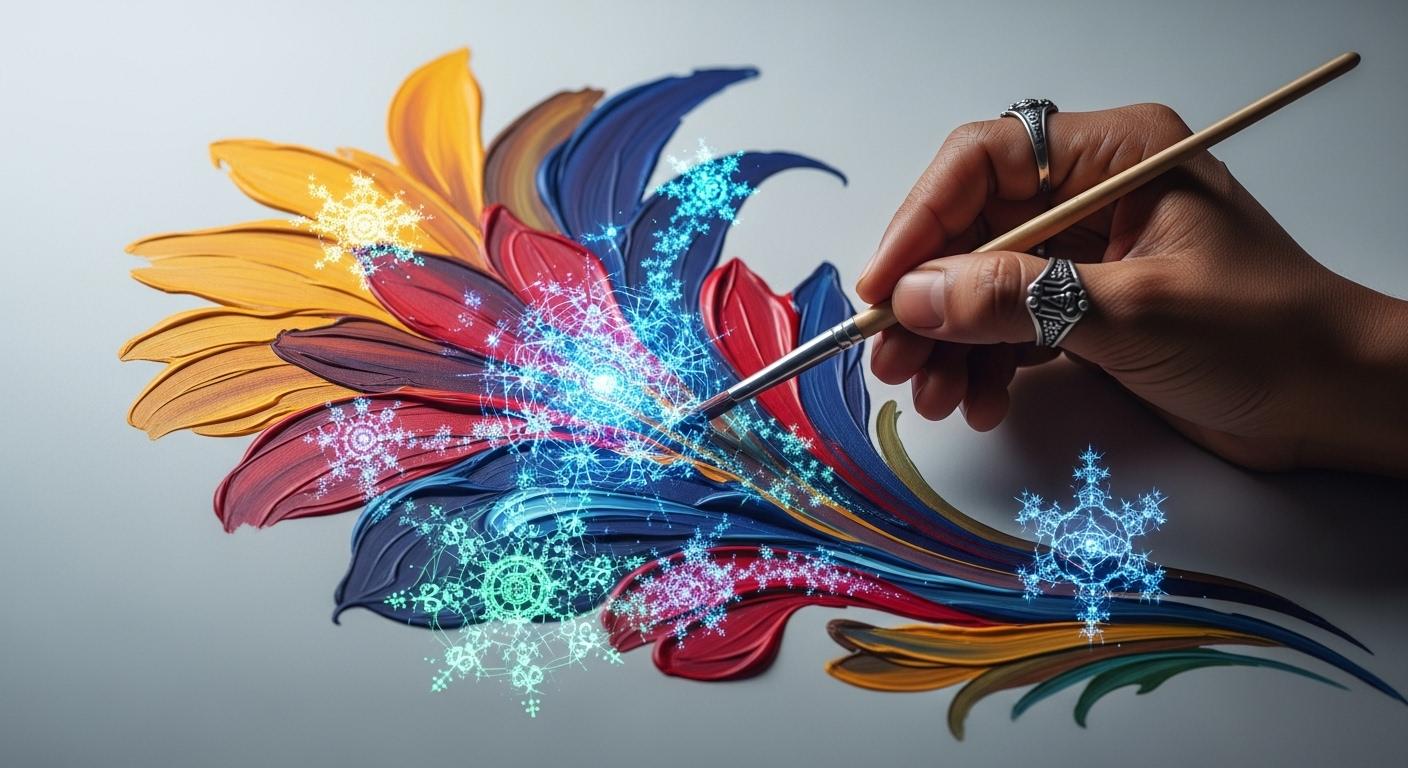
If 2024 marked the year of tentative but enthusiastic engagement with artificial intelligence (AI), 2025 is shaping up to be the year society reckons with the complexities of this relationship, especially in creative industries such as marketing. Industry observers and practitioners alike suggest that the new challenge will not be about glorifying AI’s capabilities but about embracing and amplifying human authenticity alongside it.
The marketing sector has long cycled through technological infatuations, from virtual reality to the metaverse, but AI now occupies centre stage. Yet, as articulated by a leading commentator in the field, the forthcoming year is less about AI as an independent phenomenon and more about what it means "to be human in the age of AI." AI can produce perfect prose without hesitation or emotional baggage, but it lacks the lived experience, emotional depth, and the messy humanity that gives creative work its soul. This emotional resonance, rooted in human vulnerabilities like hope, heartbreak, and chaos, remains beyond AI’s grasp. Authentic creativity emerges from a combination of raw experiences and data, not data alone.
This nuanced perspective is particularly relevant to audiences who have grown adept at detecting inauthenticity. Younger consumers, especially Gen Z, possess a near-instinctive ability to spot stock images and insincerity in brand messaging. The present-day consumer demands more than polished façades; they seek genuine interactions, such as brands who respond authentically at odd hours rather than broadcasting generic ‘we care’ slogans. Authenticity is thus no longer merely a tone or marketing gimmick but a fundamental business model that prioritises consistent, sincere engagement even when no spotlight is present.
In India, the relationship with AI mirrors societal tendencies toward new technologies: initial scepticism, followed by intense application, often leading to overuse, and eventually settling into practical, nuanced integration. Brands face a similar trajectory, AI should be a mechanism for scaling operations and automating repetitive tasks but should not replace the human spark that infuses creativity with purpose and meaning. AI, in this context, is likened to a highly efficient but unfeeling intern; it can generate numerous drafts and ideas quickly but cannot understand the subtleties behind why a joke lands or why a narrative resonates.
This understanding forms the foundation for what many experts anticipate as a major trend in 2025: hybrid creativity. The most successful creatives will be those who can fluidly bridge the gap between data-driven AI tools and instinctual human insight, weaving algorithms with anecdotal, emotional content to produce work that genuinely feels alive. The goal is not to prove whether or not AI was involved, but to ensure the final product holds authentic purpose and impact.
India’s rapid embrace of AI extends beyond marketing theory into substantial strategic investments and adoption. The country has emerged as a leader in AI usage in the Asia-Pacific region, with reports showing that over half of urban Indian adults actively engage with generative AI tools as early as 2025, significantly surpassing previous years and other regional competitors. This widespread user base is bolstered by high AI literacy, with nearly two-thirds of adults reporting a strong understanding of the technology.
Such grassroots adoption is complemented by massive infrastructural and financial commitments. Google plans to invest $15 billion in its first AI hub in Visakhapatnam, Andhra Pradesh, including gigawatt-scale data centres and advanced energy and fibre-optic networks. This move is part of a broader push that also involves India’s Adani Group committing up to $5 billion towards Google’s data centre project, while Reliance Industries, in a joint venture with Brookfield Corporation and Digital Realty, announced an $11 billion investment over five years to build a sprawling AI-native data centre campus in the same region. These projects underscore India’s growing strategic importance in the global AI landscape, not merely as an end user but as a hub for innovation, infrastructure, and talent.
Additionally, the venture capital ecosystem is responding robustly to this growth trajectory. Google and Accel have partnered to back at least ten early-stage AI startups in India, each potentially receiving up to $2 million to drive innovation across sectors like entertainment, workplace solutions, and coding. This infusion of capital and focus on innovation signals a maturing AI industry that strives to balance technical prowess with creative applications.
As the momentum builds, 2025 is poised to solidify AI’s role as a transformative, if complicated, partner to human creativity and business authenticity. While AI can turbocharge efficiency and scale, the irreplaceable human elements of intuition, emotional intelligence, and authenticity will define who truly thrives in this evolving landscape.
📌 Reference Map:
- [1] (Impact On Net) - Paragraphs 1, 2, 3, 4, 5, 6, 7, 8
- [2] (Impact On Net) - Paragraphs 1, 4, 5
- [3] (Reuters) - Paragraphs 9, 10
- [4] (Reuters) - Paragraph 11
- [5] (Reuters) - Paragraph 10
- [6] (Economic Times) - Paragraph 9
- [7] (AP News) - Paragraph 9
Source: Noah Wire Services