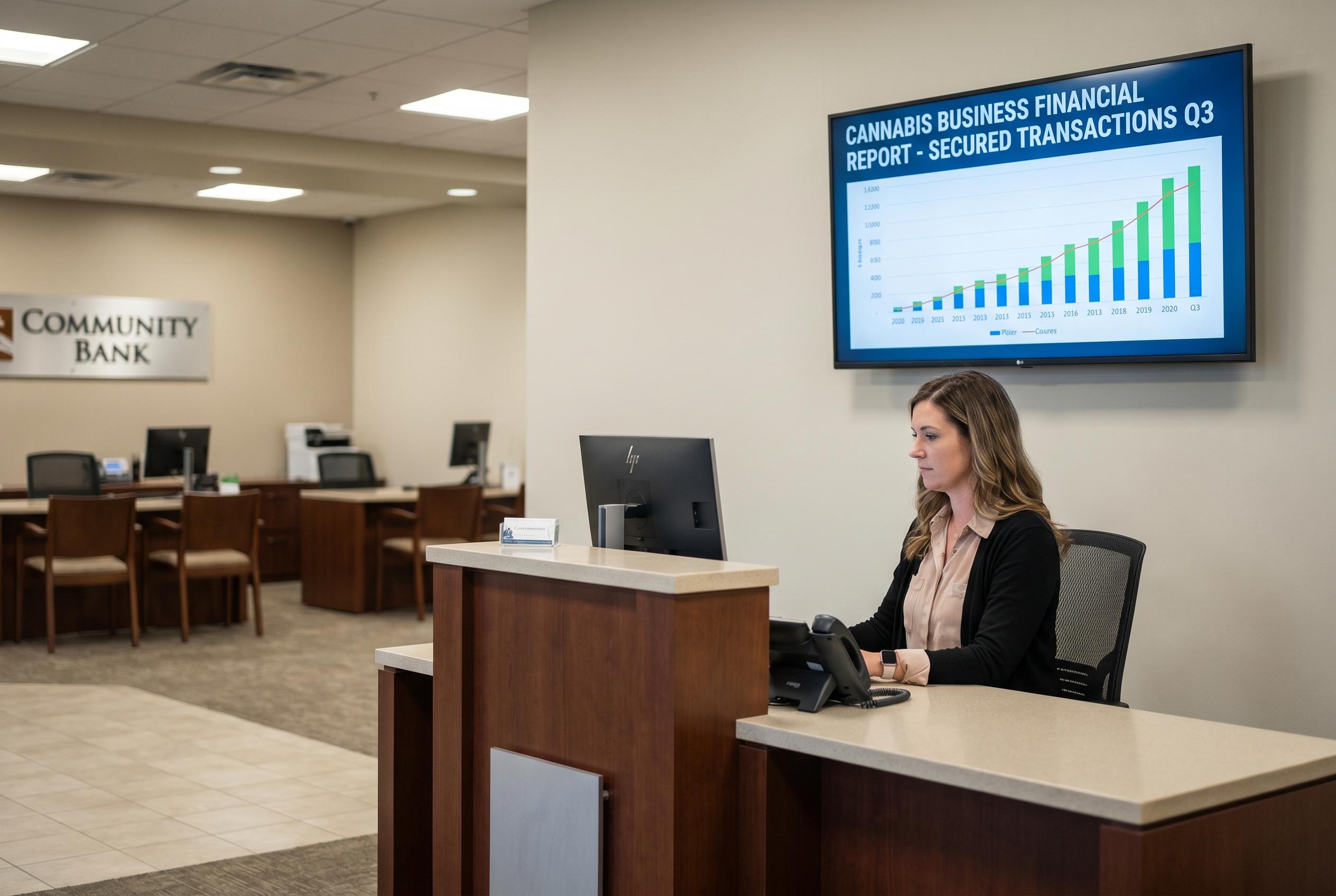
The Department of Justice’s decision in late April to place state-licensed medical marijuana and certain FDA-approved cannabis products into Schedule III has changed the tone of cannabis banking, even if it has not removed the sector’s compliance burden. According to several legal advisories on the order, the move applies only to tightly defined medical activity and leaves adult-use cannabis in Schedule I, meaning banks are now reassessing risk rather than abandoning caution altogether.
For lenders and payment providers, the most important shift is not that cannabis accounts suddenly become ordinary, but that the old assumption that all marijuana proceeds are necessarily tied to Schedule I activity no longer fits covered medical businesses. FinCEN’s 2014 guidance remains in force, so banks still need customer due diligence, ongoing monitoring and suspicious activity reporting. What changes is the file they expect from operators, and the quality of documentation that can support a lower-risk view of state medical accounts.
That is why the practical question for cannabis businesses is no longer whether they can explain their business in general terms, but whether they can hand a bank a complete, regulator-ready package. A strong file starts with current state medical licence and endorsement documents, then moves to real-time licence verification, ownership and control records, an expected activity profile and transaction-level evidence showing that sales fall within the newly covered medical category. Operators also need to show anti-diversion controls, up-to-date tax compliance and a consolidated readiness memo that lets a bank’s compliance team verify the story quickly.
The transaction record is especially important because it gives substance to the argument that the activity is medical rather than general marijuana commerce. For retailers, that means records tied to customer self-certification, product details and intended use. For wholesale businesses, it means documenting transactions between state-medical licensees. Legal advisers have also noted that dual-purpose operators should keep medical and adult-use revenue streams separate, because commingling would undercut the credibility of any bank-facing compliance file.
Banks are making their own adjustments as well. Risk models that once treated all cannabis customers as roughly equivalent are being revised to distinguish state medical operators from other marijuana businesses. Existing suspicious activity reporting duties have not disappeared, but the narrative around those reports will need to reflect the new federal status. Account-opening policies are also likely to remain uneven, with some institutions continuing blanket prohibitions while others quietly reopen the market.
The wider policy picture is still evolving. Legal updates say the Justice Department has restarted broader rescheduling proceedings for cannabis, but that process remains separate from the immediate Schedule III treatment for qualifying medical activity. For now, the banking opportunity is real, but limited: the businesses most likely to benefit are those that can prove they sit inside the medical category and can present a complete compliance file without prompting a long chase from the bank.
Source Reference Map
Inspired by headline at: [1]
Sources by paragraph:
- Paragraph 1: [2], [3], [5]
- Paragraph 2: [2], [4], [6]
- Paragraph 3: [1], [4], [7]
- Paragraph 4: [1], [4], [7]
- Paragraph 5: [1], [2], [6]
- Paragraph 6: [3], [5], [7]
Source: Noah Wire Services