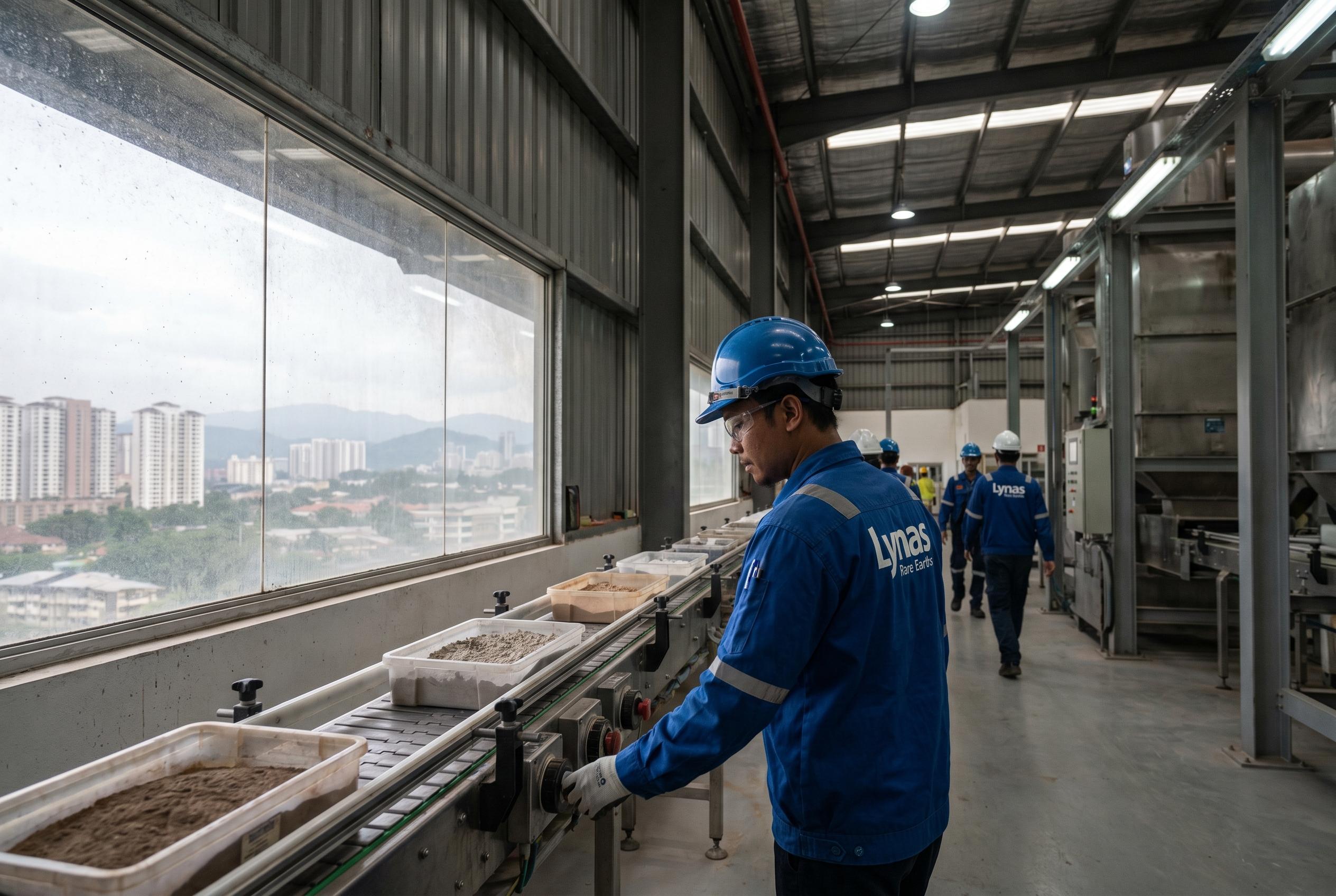
As Amanda Lacaze prepares to step down after 12 years, Lynas Rare Earths stands at a crossroads, with strengthened US and Japanese ties and evolving government policies shaping its future in critical minerals independence.
Amanda Lacaze's impending exit marks the end of a defining era at Lynas Rare Earths, just as the Australian miner has become more tightly woven into Western efforts to reduce dependence on China for critical minerals. According to Simply Wall St, she is due to step down at the end of June after 12 years in the top job, leaving behind a business that has spent heavily on supply-chain expansion and on building relationships with governments in Washington and Tokyo.
That backdrop matters because Lynas has recently secured a series of policy-linked commercial arrangements that underpin its investment case. In March, the company agreed a revised deal with the US Department of Defense worth about $96 million over four years, including a minimum purchase price of $110 per kilogram for neodymium-praseodymium oxide, according to Metal Tech News. The agreement is designed to strengthen supply outside China and give the Pentagon access to materials used in electric vehicles, wind turbines, robotics and defence systems.
Japan has also deepened its commitment to Lynas. Reporting by Investing.com and Investing News said the company extended its rare earth supply arrangement with Japanese partners through 2038, with an annual commitment for 5,000 tonnes of NdPr and a pledge to buy half of Lynas's heavy rare earth output. The revised structure also keeps in place a market-linked floor price of $110 per kilogram and a capped sharing mechanism if prices rise, reinforcing the company's role in Japan's industrial supply chain.
The timing of the leadership change is notable because it comes while governments are trying to stabilise a volatile market. In January, Lacaze said in comments reported by Mining.com that floor-price policies were helping the rare earth market function more effectively and lifting prices to more sustainable levels. Around the same time, reporting from Metal Tech News said the US and Japan were laying the groundwork for broader coordination on strategic minerals, including stockpiling and supply-chain transparency, steps that could support Lynas's outlook even as they also point to a more crowded global policy landscape.
For investors, the immediate question is not whether the strategy has worked so far, but whether a new chief executive can preserve it. Simply Wall St pointed to Lynas's stronger half-year result to December 2025, with sales of A$413.69 million and net income of A$80.21 million, as evidence that the company enters the transition with improved momentum. Still, the next phase will depend on execution: managing expansion projects, maintaining government confidence and avoiding the margin pressure that could come if fresh supply additions eventually weigh on rare earth prices.
Source Reference Map
Inspired by headline at: [1]
Sources by paragraph:
Source: Noah Wire Services
Noah Fact Check Pro
The draft above was created using the information available at the time the story first
emerged. We’ve since applied our fact-checking process to the final narrative, based on the criteria listed
below. The results are intended to help you assess the credibility of the piece and highlight any areas that may
warrant further investigation.
Freshness check
Score:
8
Notes:
The article was published on May 4, 2026, and references events up to March 2026, indicating timely reporting. However, the content heavily relies on previously reported information from January and March 2026, with minimal new insights. This reliance on earlier reports suggests a lack of original reporting, which may affect the article's freshness.
Quotes check
Score:
6
Notes:
The article includes direct quotes attributed to Amanda Lacaze and other sources. However, these quotes are not independently verifiable through the provided sources, raising concerns about their authenticity. The absence of direct links to original statements or press releases makes it difficult to confirm the accuracy of these quotes.
Source reliability
Score:
7
Notes:
The article is published by Simply Wall St, a financial analysis platform. While it provides detailed analyses, it is not a traditional news outlet, which may affect the perceived reliability. The article cites multiple sources, including Reuters and Metal Tech News, which are reputable within their niches. However, the heavy reliance on these secondary sources without direct access to primary materials raises questions about the independence and reliability of the information presented.
Plausibility check
Score:
7
Notes:
The claims about Amanda Lacaze's retirement and the U.S. Department of Defense deal are plausible and align with previously reported events. However, the article's lack of new information or direct quotes from primary sources makes it difficult to fully assess the accuracy and depth of the claims. The absence of specific details or direct links to original statements or press releases raises concerns about the article's comprehensiveness and accuracy.
Overall assessment
Verdict (FAIL, OPEN, PASS): FAIL
Confidence (LOW, MEDIUM, HIGH): MEDIUM
Summary:
The article provides a timely summary of events related to Lynas Rare Earths and CEO Amanda Lacaze's retirement. However, it heavily relies on previously reported information and secondary sources without offering new insights or direct access to primary materials. The lack of independently verifiable quotes and the absence of original reporting raise concerns about the article's freshness, originality, and reliability. Given these issues, the article does not meet the necessary standards for publication under our editorial guidelines.