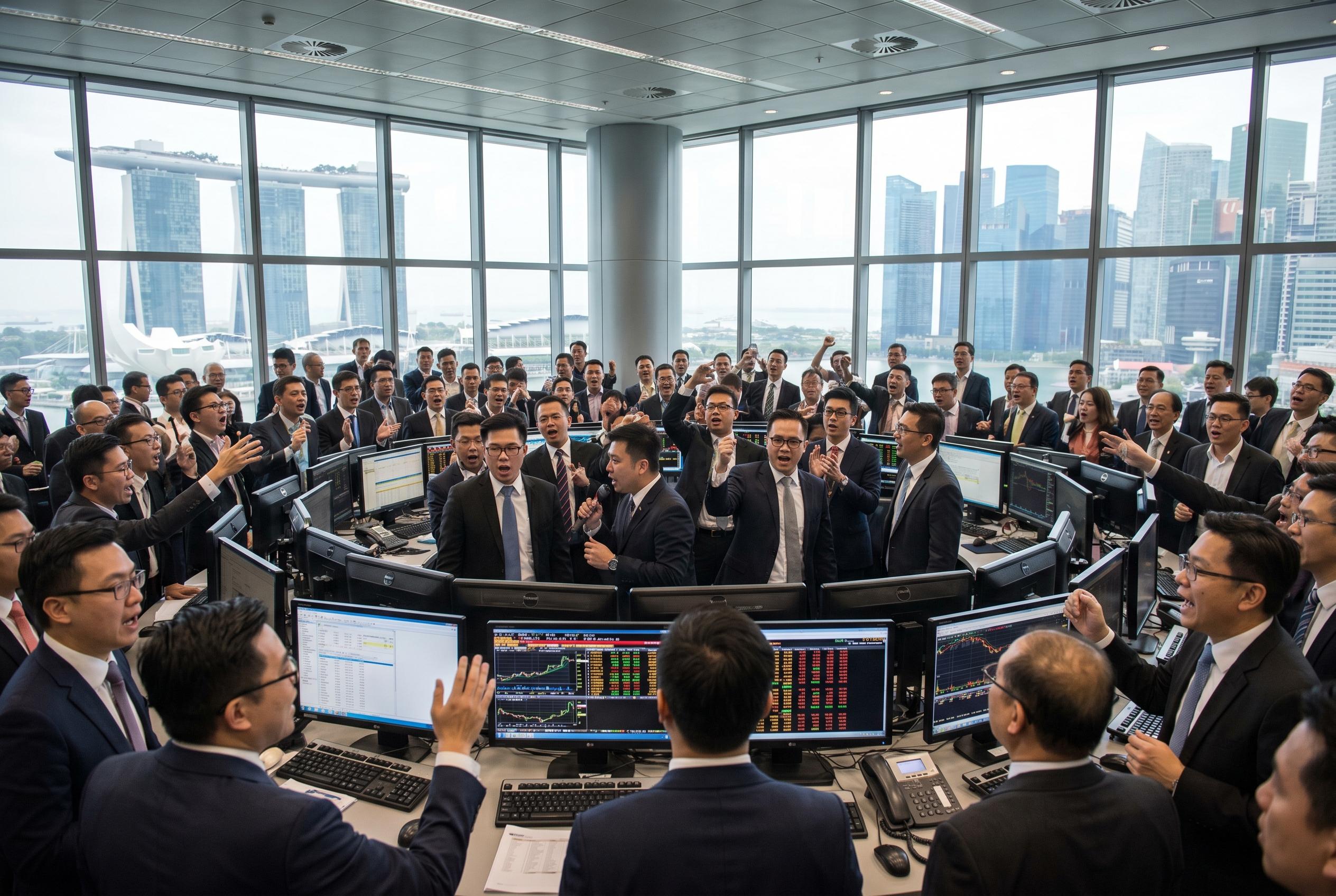
Markets closed last week with gains led by technology and growth stocks, as strong corporate earnings offset Iran-related uncertainties and climbing oil prices, signalling a shift towards more traditional investment relationships amid ongoing geopolitical tensions.
Equities finished last week on firmer footing, with technology and other growth names again doing much of the heavy lifting, even as investors kept a close watch on Iran-related risks and the recent climb in oil prices. Danske Bank’s research team said the combination of stronger earnings and higher geopolitical tension left markets with an unusual mix of rising share prices and rising bond yields, a pattern that points to investors returning to a more traditional stock-and-bond relationship.
The bank said the earnings season has been strong enough to offset some of the anxiety around the Middle East, giving equities fresh support despite the uncertain backdrop. That view fits with recent commentary from market strategists at BNY, who said first-quarter S&P 500 results have been robust, although the upside relative to already elevated expectations has been limited and guidance for the rest of the year remains uneven.
Danske also said there is still downside risk if tensions in the region worsen, but the strength of corporate profits may continue to create upside for equities. The firm noted that year-to-date gains of around 6% to 7% have been driven more by earnings growth than by a simple rerating of valuations, which makes it harder for bears to argue that stocks are expensive purely on valuation grounds.
The broader picture remains one of markets trying to look through geopolitical noise while staying alert to shifts in energy prices, yields and monetary policy. Earlier this month, Danske said investors were increasingly pricing in a future de-escalation in the Middle East, while BNY and MUFG both pointed to selective leadership in semiconductors, AI-linked names and other growth-sensitive parts of the market. That suggests the rally is still being driven by a narrow set of themes, even as volatility and cross-asset correlations remain elevated.
Source Reference Map
Inspired by headline at: [1]
Sources by paragraph:
Source: Noah Wire Services
Noah Fact Check Pro
The draft above was created using the information available at the time the story first
emerged. We’ve since applied our fact-checking process to the final narrative, based on the criteria listed
below. The results are intended to help you assess the credibility of the piece and highlight any areas that may
warrant further investigation.
Freshness check
Score:
8
Notes:
The article was published on 4 May 2026, making it current. However, similar analyses have been published in the past week, such as on 27 April 2026, discussing the divergence between US and European markets due to geopolitical tensions. ([fxstreet.com](https://www.fxstreet.com/news/equities-us-outpaces-lagging-europe-danske-bank-202604270641//?utm_source=openai)) This suggests the content may be recycled, potentially affecting its originality.
Quotes check
Score:
7
Notes:
The article includes direct quotes attributed to the Danske Research Team. However, these quotes are not independently verifiable through other sources, raising concerns about their authenticity and potential reuse from previous reports.
Source reliability
Score:
6
Notes:
The article originates from FXStreet, a financial news aggregator. While it compiles insights from various sources, its reliance on aggregated content may affect the independence and reliability of the information presented.
Plausibility check
Score:
7
Notes:
The claims about equities rising due to strong earnings and geopolitical tensions are plausible and align with recent market trends. However, the lack of independent verification and potential recycling of content raises questions about the novelty and accuracy of the analysis.
Overall assessment
Verdict (FAIL, OPEN, PASS): FAIL
Confidence (LOW, MEDIUM, HIGH): MEDIUM
Summary:
The article presents plausible claims about equities rising due to strong earnings and geopolitical tensions. However, concerns about content recycling, unverifiable quotes, reliance on aggregated sources, and lack of independent verification sources lead to a 'FAIL' assessment. Editors should exercise caution and seek additional independent verification before publishing.