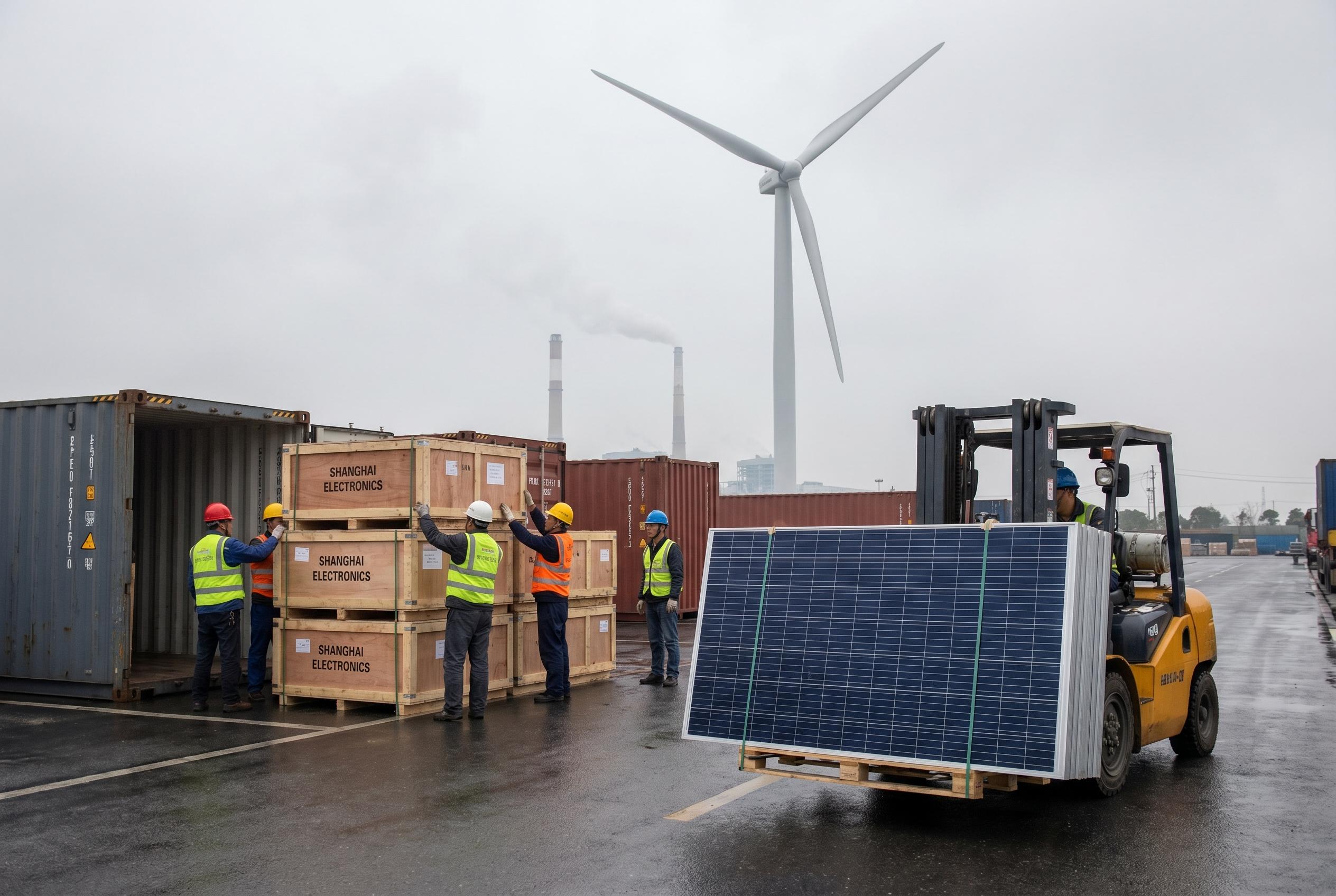
The idea that ESG has vanished is misleading. What has changed is the noise around it. Companies may be speaking less openly about sustainability, social responsibility and governance, but that does not mean the work has stopped. As SupplyChainBrain argues, the mood has shifted from polished public messaging to a more guarded form of disclosure, with many firms preferring quiet compliance to public virtue-signalling.
That reticence comes as regulation tightens, particularly in Europe. Businesses are being pushed to map emissions deep into their supplier networks, including Scope 3 output, while the prospect of digital product passports is raising the bar for traceability, durability and origin data. At the same time, pressure on critical raw materials is exposing how fragile supply chains remain. McKinsey has also warned that the global energy transition is still far from the scale needed for Paris-aligned targets, with less than 15% of the low-emissions technologies required by 2050 already deployed.
The transition is nonetheless advancing in places that would once have seemed unlikely. SupplyChainBrain points to heavy investment in solar power in Saudi Arabia, China, India, the United Arab Emirates and Egypt, while McKinsey says China has accounted for about two-thirds of the extra solar and wind capacity and electric vehicle sales added since 2022. Yet the broader picture remains uneven. Progress in areas such as carbon capture, hydrogen and heavy industry is lagging, and McKinsey says there is still a sizeable gap between climate ambitions and the projects actually being committed in the EU and the US.
Geopolitics has only sharpened the case for diversification. The wars in Ukraine and the Middle East have underlined how exposed economies remain to fossil fuel volatility, even as oil and gas continue to dominate the global system. McKinsey notes that some Middle East producers have relatively low carbon intensity in extraction and could retain an important role in supplying the remaining hydrocarbons in a lower-emissions economy. For supply chains, the message is straightforward: ESG may be less visible, but it is more embedded than ever, and the mix of regulation, resource constraints, technology and transparency demands is unlikely to loosen any time soon.
Source Reference Map
Inspired by headline at: [1]
Sources by paragraph:
- Paragraph 1: [2], [6], [7]
- Paragraph 2: [2], [3], [4]
- Paragraph 3: [2], [3], [4]
- Paragraph 4: [2], [5], [4]
Source: Noah Wire Services