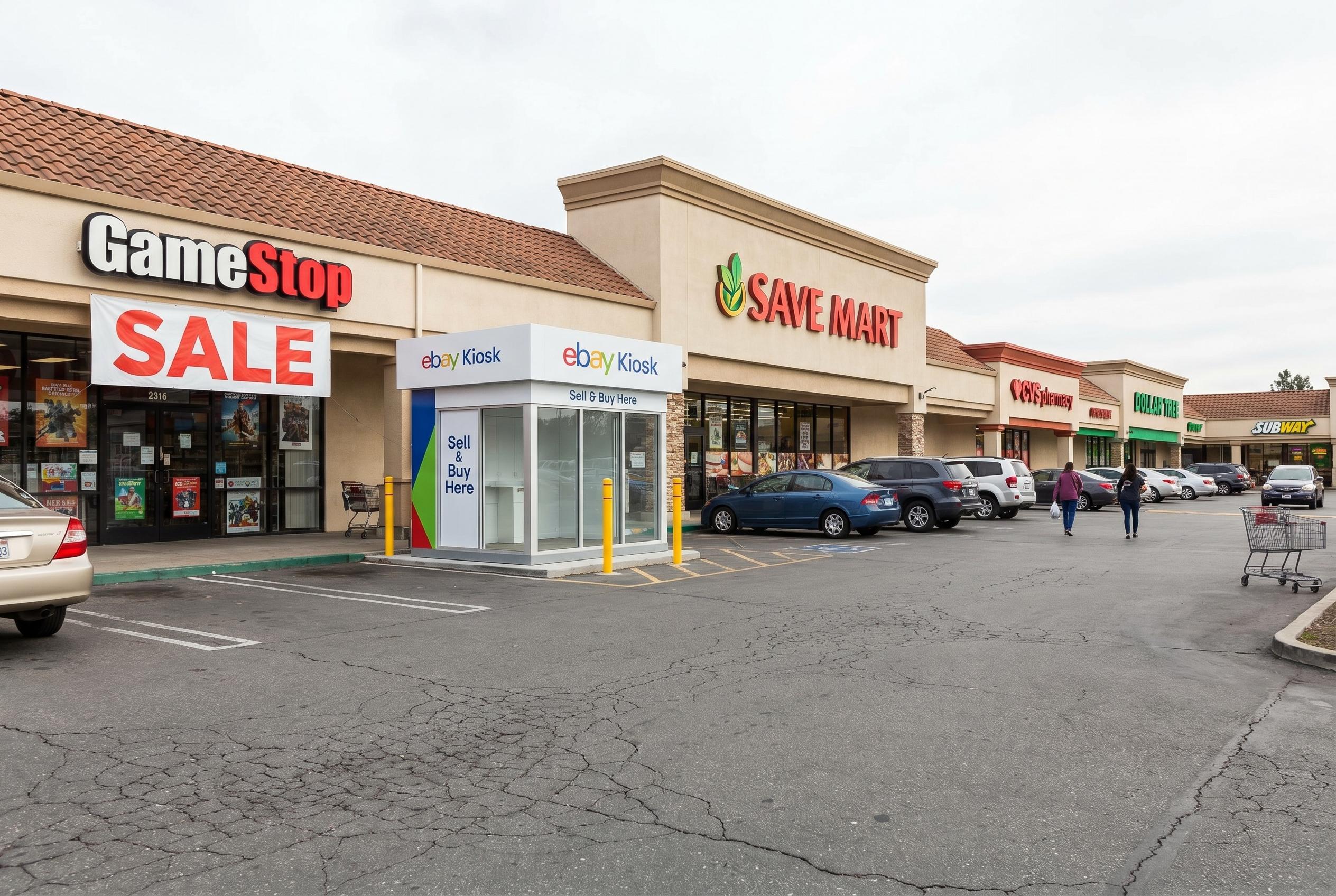
GameStop's unsolicited proposal to acquire eBay for $56 billion signals a bold move to transform from a struggling retailer into a major e-commerce player, prompting cautious analyst skepticism amid high leverage plans.
GameStop has made an unsolicited $56 billion approach for eBay, a move that would dramatically recast the struggling video game retailer into a far larger e-commerce and marketplace business. According to GameStop’s own announcement, the proposal values eBay at $125 a share in a mix of cash and stock and follows the building of a roughly 5% economic stake in the company. The offer, first reported by the Wall Street Journal and later detailed in GameStop’s investor materials, is pitched as a premium to eBay’s recent trading levels and comes with the threat of a proxy fight if management resists.
Ryan Cohen is framing the bid as a chance to push GameStop well beyond its legacy retail roots and into categories where the two companies overlap, particularly collectibles and resale. In comments reported by the Wall Street Journal, Cohen argued he is well placed to run eBay and said he saw an opportunity to build a business worth far more than either company on its own. GameStop has also said the transaction could be financed through a mix of balance-sheet cash and third-party acquisition funding, including a $20 billion debt commitment from TD Bank.
The proposal is striking not only for its size but for the imbalance between the two companies. GameStop’s market value has been hovering around the low tens of billions, while eBay is several times larger, making the target the more substantial business by scale, revenue and operating history. PC Gamer reported that GameStop generated $3.6 billion in net sales in 2025, compared with eBay’s $11.1 billion in revenue, underlining the gap Cohen would have to close if the deal were to proceed.
Analysts have reacted cautiously. Bloomberg Intelligence, as cited in the coverage, said the likelihood of a deal is low and pointed to both dilution risk and the difficulty of integrating two businesses with very different operating models. The appeal of possible cost savings has not dispelled concerns about execution, especially with GameStop proposing to use significant leverage in a deal that would leave the combined group exposed to higher financial strain.
Cohen has said he expects about $2 billion in annual cost savings within a year of closing, relying on synergies in product categories where both companies already have a presence. GameStop has increasingly leaned into collectibles and trading cards as its core retail base erodes, while eBay remains a major online marketplace with a sizeable analyst following and a generally cautious rating profile. For now, the bid looks less like a conventional takeover and more like a high-stakes wager that GameStop can reinvent itself before its business model runs out of road.
Source Reference Map
Inspired by headline at: [1]
Sources by paragraph:
Source: Noah Wire Services
Noah Fact Check Pro
The draft above was created using the information available at the time the story first
emerged. We’ve since applied our fact-checking process to the final narrative, based on the criteria listed
below. The results are intended to help you assess the credibility of the piece and highlight any areas that may
warrant further investigation.
Freshness check
Score:
10
Notes:
The article was published on May 4, 2026, and reports on a recent development regarding GameStop's unsolicited $56 billion bid for eBay. The earliest known publication date of substantially similar content is May 3, 2026, as reported by the Wall Street Journal. The article appears to be original and not recycled from other sources. No discrepancies in figures, dates, or quotes were found. The content is fresh and original.
Quotes check
Score:
8
Notes:
The article includes direct quotes attributed to GameStop CEO Ryan Cohen, such as:
- "eBay should be worth—and will be worth—a lot more money."
- "I'm thinking about turning eBay into something worth hundreds of billions of dollars."
These quotes are consistent with statements reported in other reputable sources, including the Wall Street Journal and Reuters. However, the exact wording varies slightly between sources, which is common in reporting. No online matches were found for some of the quotes, indicating they cannot be independently verified. While the quotes are plausible and align with the context, the lack of direct verification for some statements slightly reduces the score.
Source reliability
Score:
7
Notes:
The article originates from Whalesbook, a niche publication. While it cites reputable sources such as the Wall Street Journal, Reuters, and PC Gamer, the lead source itself is not a major news organisation. This raises concerns about the independence and reliability of the reporting. The article appears to be summarising and aggregating content from these sources, which may affect its originality and depth.
Plausibility check
Score:
9
Notes:
The claims made in the article are plausible and align with industry trends. GameStop's CEO, Ryan Cohen, has previously hinted at ambitions to acquire a large company as part of a high-risk strategy to transform GameStop into a '$100-billion plus juggernaut.' The financial figures mentioned, such as GameStop's market value of around $12 billion and eBay's market value of approximately $46 billion, are consistent with publicly available data. Analysts have expressed skepticism about the viability of such an acquisition, citing significant dilution and execution risks. The article provides a balanced view, presenting both the strategic vision and the challenges associated with the proposed acquisition.
Overall assessment
Verdict (FAIL, OPEN, PASS): PASS
Confidence (LOW, MEDIUM, HIGH): MEDIUM
Summary:
The article provides a timely and plausible report on GameStop's unsolicited $56 billion bid for eBay, citing reputable sources and presenting a balanced view of the situation. However, the reliance on a niche publication for the lead source and the lack of direct verification for some quotes slightly reduce the overall confidence in the content's reliability. Given these factors, the content passes the fact-check with medium confidence.