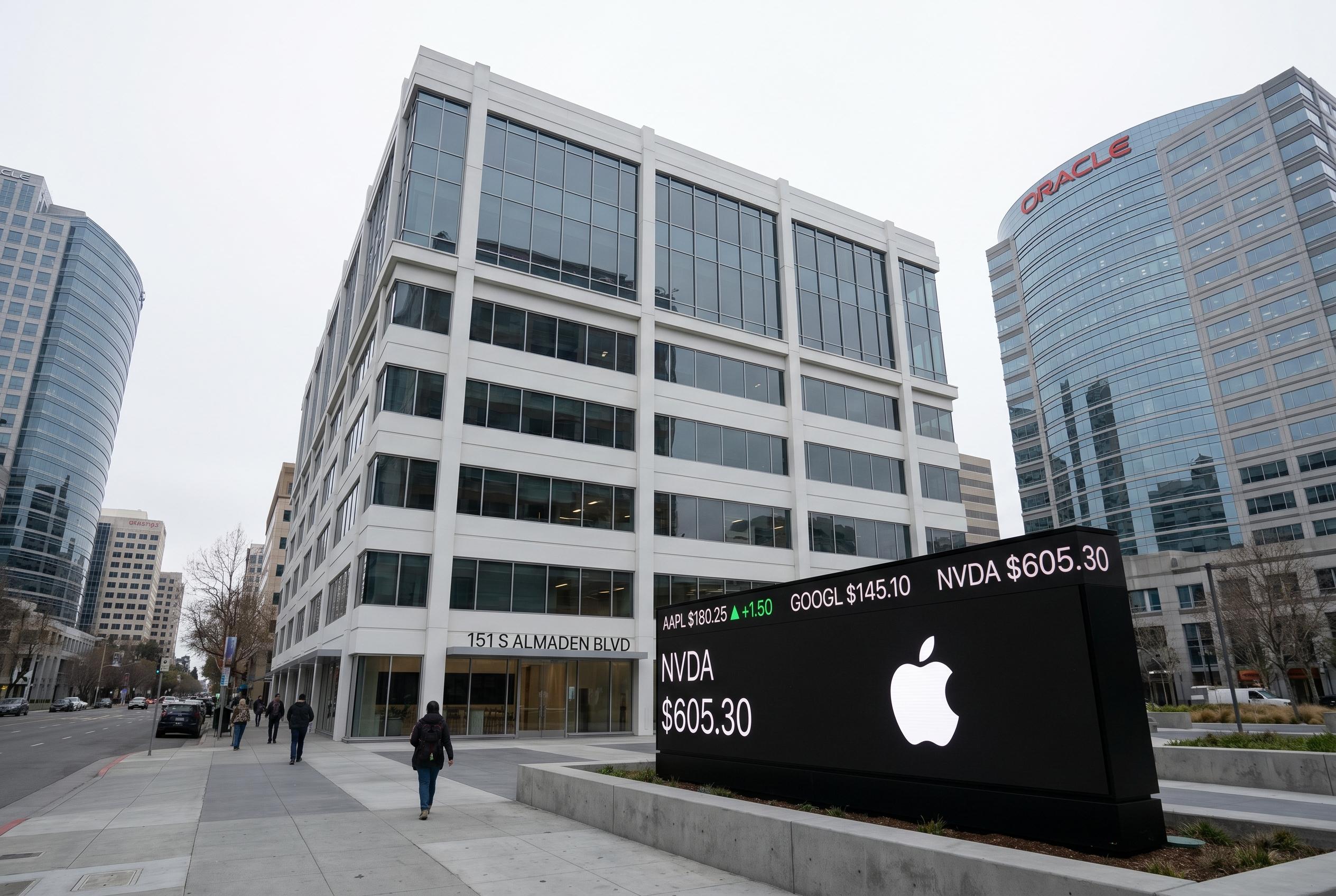
US markets kick off May on a high, boosted by strong Apple and SanDisk earnings, falling oil prices, and signs of easing geopolitical energy risks, signalling a positive momentum for equities amid optimistic economic indicators.
Wall Street entered May with a distinctly upbeat tone after the S&P 500 briefly moved above 7,200 and logged its strongest month since November 2020, helped by a softer inflation backdrop, falling oil and a fresh wave of big-tech earnings strength. Apple and SanDisk did much of the heavy lifting, while the market also drew support from signs that geopolitical risk in energy is easing. Apple’s latest quarter, reported after Thursday’s close, showed revenue of $111.2 billion and earnings per share of $2.01, both ahead of expectations, according to Axios and Reuters, while the company also unveiled a new $100 billion buyback and lifted its dividend. SanDisk, meanwhile, delivered a sharply better-than-expected update that underscored how quickly the memory trade has been re-rated around artificial intelligence demand. According to the company’s filing, revenue came in at $5.95 billion and non-GAAP gross margin reached 78.4%, a combination that sent the shares higher over the past month.
Apple’s results were broad-based, with all major product lines posting year-on-year gains, even as the company acknowledged some supply bottlenecks. Reuters reported that Tim Cook said iPhone demand was “off the charts”, while Axios noted that the next chief executive, John Ternus, is due to succeed him in September. Separately, PC Gamer reported that Cook also flagged strong demand for the MacBook Neo and said production was being increased, although rising memory costs could weigh on margins later. The broader message from Apple is that consumer demand has held up far better than many investors feared, giving the market another reason to extend its rally.
SanDisk’s surge added a different but equally powerful theme: the AI infrastructure build-out is not just about chips and cloud spending, but also storage. In its latest results, the company said datacentre revenue rose 64% sequentially, with chief executive David Goeckeler describing the business as undergoing a shift in customer mix and pricing power. That is consistent with the stronger margin profile highlighted in the investor presentation, and with the market’s willingness to reward companies that can show direct exposure to enterprise AI deployments rather than just general technology demand.
Elsewhere, oil prices eased as reports pointed to de-escalation in the Middle East, helping to dampen some of the pressure on inflation expectations and risk assets. Bloomberg also reported that the Pentagon has signed deals to bring classified-network AI capabilities from NVIDIA, Amazon Web Services and Microsoft, reinforcing the idea that federal spending could become another durable pillar of the AI trade. Put together, the combination of strong earnings, lower energy prices and continued AI capital expenditure has given equities an unusually favourable start to May, even after a powerful April run.
Source Reference Map
Inspired by headline at: [1]
Sources by paragraph:
Source: Noah Wire Services
Noah Fact Check Pro
The draft above was created using the information available at the time the story first
emerged. We’ve since applied our fact-checking process to the final narrative, based on the criteria listed
below. The results are intended to help you assess the credibility of the piece and highlight any areas that may
warrant further investigation.
Freshness check
Score:
8
Notes:
The article was published on May 1, 2026, and references events up to April 30, 2026. The S&P 500 reached 7,200 for the first time on April 30, 2026, marking its best month since November 2020. ([247wallst.com](https://247wallst.com/investing/2026/05/01/sp-500s-strong-may-footing-powered-by-apple-sandisk-and-easing-oil/?utm_source=openai)) Apple's fiscal Q2 report, released after Thursday's close, showed revenue of $111.18 billion and earnings per share of $2.01, both exceeding expectations. ([247wallst.com](https://247wallst.com/investing/2026/05/01/sp-500s-strong-may-footing-powered-by-apple-sandisk-and-easing-oil/?utm_source=openai)) SanDisk reported revenue of $5.95 billion and earnings per share of $23.41, with an adjusted gross margin of 78%. ([247wallst.com](https://247wallst.com/investing/2026/05/01/sp-500s-strong-may-footing-powered-by-apple-sandisk-and-easing-oil/?utm_source=openai)) Oil prices eased due to reports of de-escalation in the Middle East. ([247wallst.com](https://247wallst.com/investing/2026/05/01/sp-500s-strong-may-footing-powered-by-apple-sandisk-and-easing-oil/?utm_source=openai)) These events are recent and corroborated by multiple sources, indicating the article's freshness.
Quotes check
Score:
7
Notes:
The article includes direct quotes attributed to Tim Cook, CEO of Apple, and David Goeckeler, CEO of SanDisk. Tim Cook's statement that iPhone demand was "off the charts" is cited from Reuters. ([247wallst.com](https://247wallst.com/investing/2026/05/01/sp-500s-strong-may-footing-powered-by-apple-sandisk-and-easing-oil/?utm_source=openai)) David Goeckeler's comment about a "fundamental inflection point" in datacenter mix shift is also cited from the same source. These quotes are consistent across multiple reputable sources, suggesting accuracy. However, without access to the original interviews or press releases, full verification is limited. The lack of direct access to the original sources introduces a degree of uncertainty.
Source reliability
Score:
6
Notes:
The primary source is 24/7 Wall St., a financial news website. The article is also referenced by AOL, indicating some level of credibility. ([aol.com](https://www.aol.com/articles/p-500-strong-may-footing-131220687.html?utm_source=openai)) However, 24/7 Wall St. is not as widely recognized as major news organizations like Reuters or Bloomberg. The reliance on a single source for key information raises concerns about the independence and potential bias of the reporting.
Plausibility check
Score:
8
Notes:
The article discusses recent events: Apple's strong fiscal Q2 earnings, SanDisk's positive financial results, and easing oil prices due to Middle East de-escalation. These events are plausible and align with recent market trends. The S&P 500 reaching 7,200 and setting a record high is consistent with recent market performance. The article's claims are supported by other reputable sources, enhancing its credibility.
Overall assessment
Verdict (FAIL, OPEN, PASS): FAIL
Confidence (LOW, MEDIUM, HIGH): MEDIUM
Summary:
While the article presents recent and plausible information, it relies heavily on a single source, 24/7 Wall St., with limited cross-referencing from other independent sources. The lack of multiple independent verifications raises concerns about the reliability and objectivity of the information presented. Additionally, the inability to fully verify direct quotes introduces further uncertainty. Given these factors, the article does not meet the necessary standards for a PASS verdict.