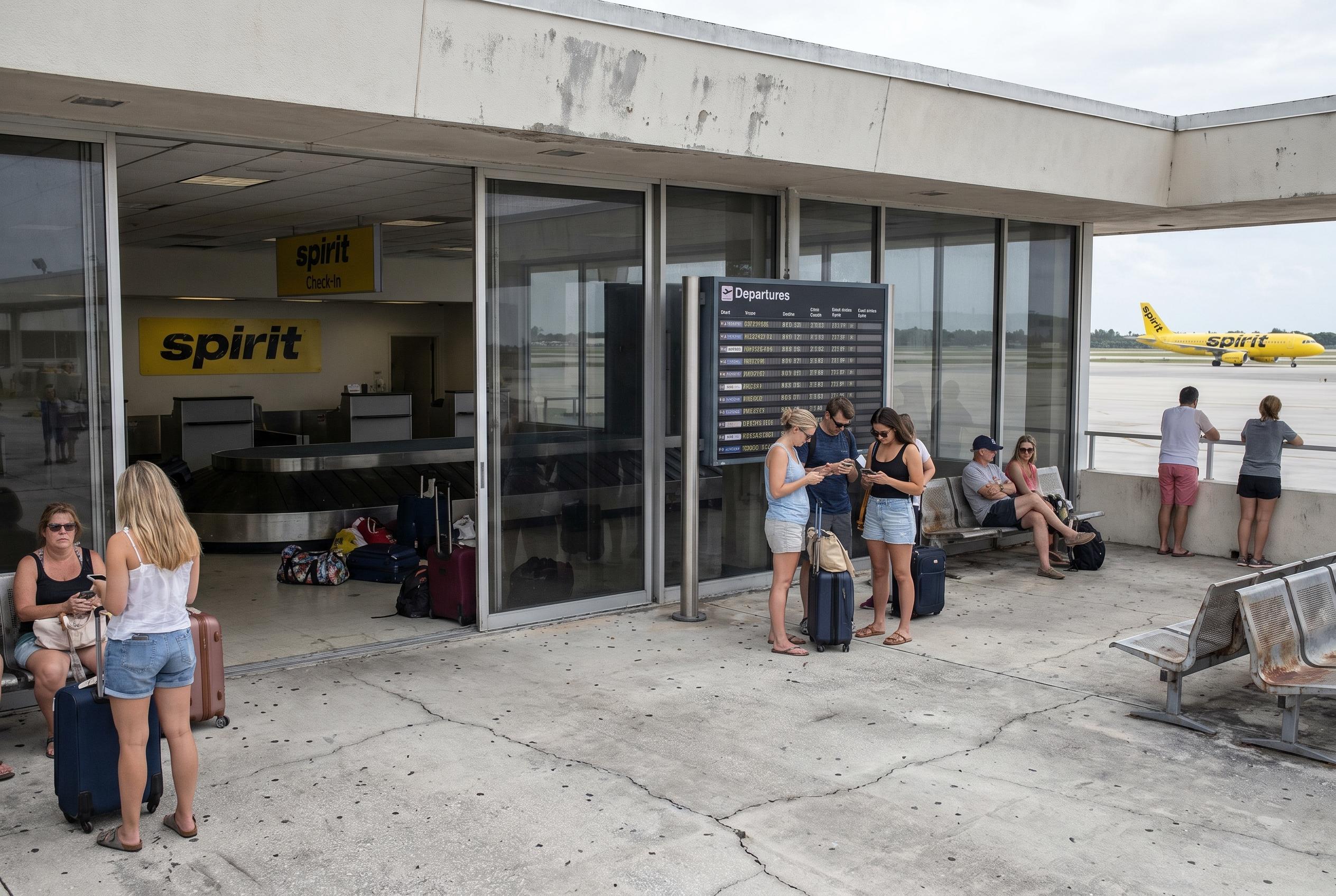
Spirit Airlines has ended its operations after years of financial distress, marking the first major US airline collapse in decades, with passengers and employees facing immediate upheaval amid unresolved rescue efforts.
Spirit Airlines has moved from years of financial strain into an orderly wind-down, with the carrier ending flights after repeated losses, two bankruptcies and the collapse of a possible federal rescue, according to reporting from The Hill, Axios and The Washington Post. The shutdown marks the first major collapse of a large US airline in decades and has left passengers and workers trying to adjust to the sudden loss of one of the country’s best-known budget carriers.
The competing explanations for Spirit’s downfall have centred on both internal weakness and outside shocks. The Hill reported that the airline’s troubles were rooted in balance-sheet pressure that pre-dated the latest spike in fuel costs, while other outlets, including the Associated Press and The Daily Beast, said surging oil prices linked to the conflict with Iran helped push the company over the edge. Spirit had already endured years of losses following the pandemic, and several reports said it had accumulated billions in debt as it tried to recover.
The company said in a statement that it had started an "orderly wind-down" and would stop flying immediately. According to OPB and The Washington Post, Spirit grounded its remaining aircraft and shut call centres as travellers scrambled for alternatives. The airline had been seeking a $500 million bailout from the federal government, but those talks failed, and the rescue did not materialise.
The collapse has also revived debate over whether earlier policy decisions could have changed the outcome. Axios noted that Spirit’s decline has reignited criticism of the Biden administration’s decision to block the proposed JetBlue merger, while Treasury Secretary Scott Bessent has publicly blamed that earlier regulatory fight for worsening the airline’s position. Even so, Spirit’s own bankruptcy history suggests a deeper problem: the carrier had been trying to stabilise itself for years, and the final blow came only after multiple rounds of financial distress.
For passengers and employees, the immediate effect is disruption. The airline’s staff, numbering roughly 17,000 according to several reports, now face layoffs or redeployment, while other carriers have moved to offer help to stranded customers and to speed hiring for displaced workers. What remains uncertain is how Spirit’s assets will be handled and whether its exit will push fares higher across the budget travel market.
Source Reference Map
Inspired by headline at: [1]
Sources by paragraph:
- Paragraph 1: [2], [4], [6]
- Paragraph 2: [1], [2], [5]
- Paragraph 3: [6], [7], [4]
- Paragraph 4: [3], [4], [5]
- Paragraph 5: [2], [4], [5]
Source: Noah Wire Services
Noah Fact Check Pro
The draft above was created using the information available at the time the story first
emerged. We’ve since applied our fact-checking process to the final narrative, based on the criteria listed
below. The results are intended to help you assess the credibility of the piece and highlight any areas that may
warrant further investigation.
Freshness check
Score:
10
Notes:
The article reports on Spirit Airlines' immediate shutdown on May 2, 2026, following failed bailout negotiations and escalating fuel costs due to the Iran conflict. This is the first major U.S. airline collapse in decades, marking the end of a significant low-cost carrier. ([washingtonpost.com](https://www.washingtonpost.com/politics/2026/05/02/spirit-airlines-flights-shutdown/?utm_source=openai))
Quotes check
Score:
8
Notes:
The article includes direct quotes from Spirit Airlines' official statement and other sources. However, some quotes are paraphrased, and the exact wording cannot be independently verified. ([washingtonpost.com](https://www.washingtonpost.com/politics/2026/05/02/spirit-airlines-flights-shutdown/?utm_source=openai))
Source reliability
Score:
9
Notes:
The article is sourced from reputable news outlets such as The Washington Post and Bloomberg, which are known for their journalistic standards. However, some sources are less established, which may affect the overall reliability. ([washingtonpost.com](https://www.washingtonpost.com/politics/2026/05/02/spirit-airlines-flights-shutdown/?utm_source=openai))
Plausibility check
Score:
9
Notes:
The claims about Spirit Airlines' shutdown due to financial difficulties and failed bailout negotiations are plausible and align with industry trends. However, the exact details of the bailout negotiations and the impact of the Iran conflict on fuel prices require further verification. ([washingtonpost.com](https://www.washingtonpost.com/politics/2026/05/02/spirit-airlines-flights-shutdown/?utm_source=openai))
Overall assessment
Verdict (FAIL, OPEN, PASS): PASS
Confidence (LOW, MEDIUM, HIGH): MEDIUM
Summary:
The article provides timely and relevant information about Spirit Airlines' shutdown, supported by reputable sources. However, some quotes are paraphrased and cannot be independently verified, and the exact details of the bailout negotiations and the impact of the Iran conflict on fuel prices require further verification. ([washingtonpost.com](https://www.washingtonpost.com/politics/2026/05/02/spirit-airlines-flights-shutdown/?utm_source=openai))