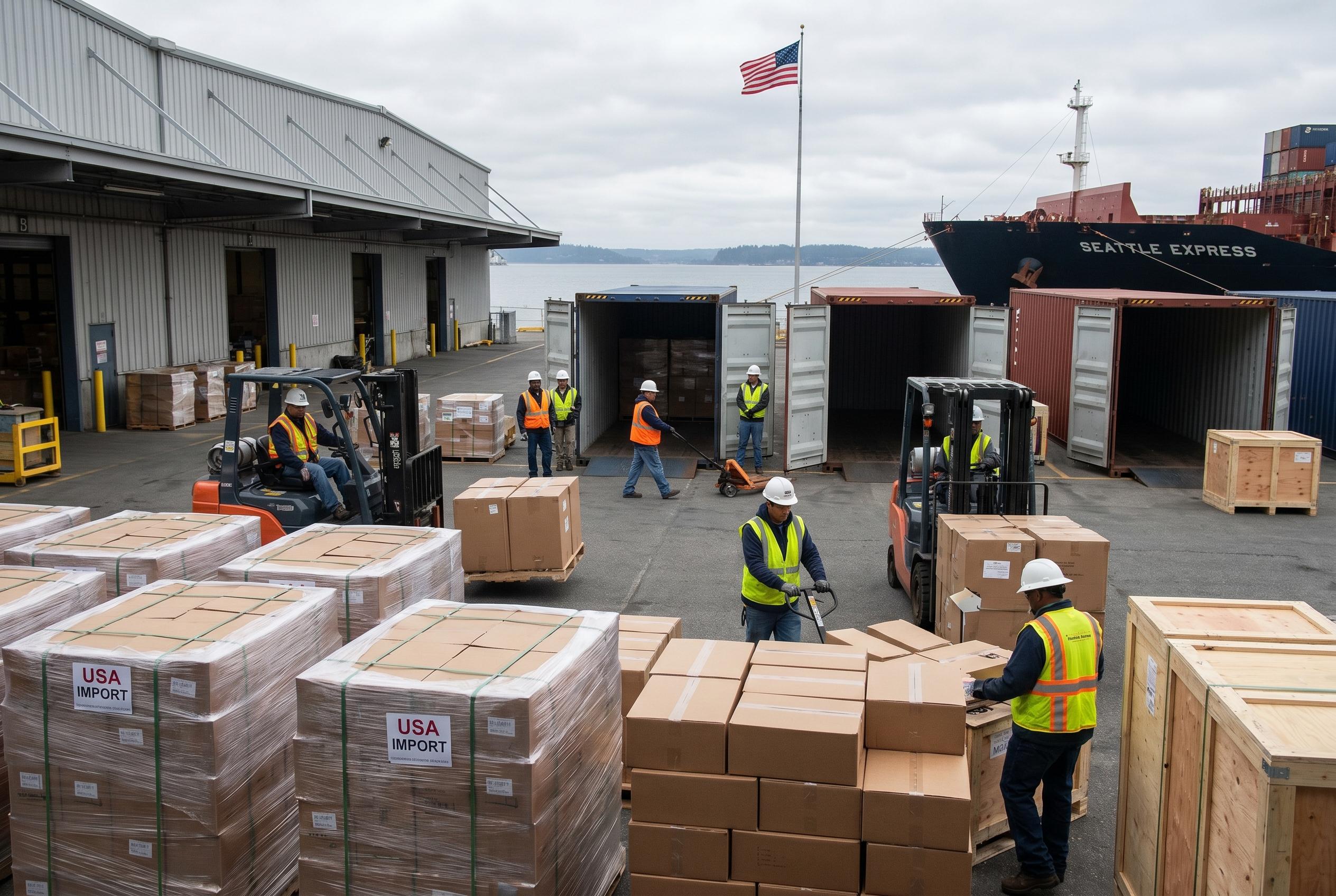
The US Supreme Court's decision to invalidate emergency powers for tariffs unleashes a wave of potential refunds worth billions, prompting companies to revisit executive compensation practices and highlight the growing importance of trade policy in corporate governance.
The Supreme Court’s decision to strike down the use of emergency powers for broad tariffs has set off a scramble through corporate America, with importers now pursuing refunds and boards revisiting how they treat trade shocks in executive pay. General Motors said the ruling could bring it about $500 million in refunds, while also improving its outlook for 2026 and trimming its expected tariff bill for the year. The company has not received the money yet, and the timing remains uncertain, with U.S. Customs and Border Protection only recently putting a claims process in place.
That refund potential is part of a much larger unwind. Trade specialists say the court’s ruling on the International Emergency Economic Powers Act did not make tariff repayments automatic; instead, companies must work through liquidation status, protests and possible litigation in the Court of International Trade. Even so, the exposure is substantial, with legal analysts and advisers putting the total value of contested duties in the tens of billions of dollars and some estimates ranging as high as the mid-$100 billion area.
The legal reversal has also exposed a second, more sensitive issue: how companies protected senior executives from the original tariff shock. At RTX, the compensation committee decided in advance that tariff costs would be stripped out of bonus calculations, arguing that they were external and unrelated to management performance. Similar adjustments were made at Ross Stores and Gap, where boards removed tariff effects from incentive metrics, allowing payouts to remain elevated despite the cost pressure on the underlying business.
That has created an awkward governance question. If boards treated tariffs as an extraordinary burden when they were pushing margins lower, should they now treat refunds as an ordinary benefit for shareholders rather than another reason to keep executive pay insulated? Compensation experts say many committees have been willing to “neutralise” policy shocks when setting bonuses, but the coming refund wave may test how symmetrical that approach really is.
The bigger lesson is that trade policy has become a material balance-sheet and governance issue, not just a background macro risk. Companies with large import exposure may use refunds to strengthen cash flow, reduce debt or fund investment, while consumer groups and plaintiff firms are already exploring whether customers who absorbed higher prices should have any remedy at all. For now, the money, if and when it arrives, is likely to flow first to importers, not households.
Source Reference Map
Inspired by headline at: [1]
Sources by paragraph:
Source: Noah Wire Services
Noah Fact Check Pro
The draft above was created using the information available at the time the story first
emerged. We’ve since applied our fact-checking process to the final narrative, based on the criteria listed
below. The results are intended to help you assess the credibility of the piece and highlight any areas that may
warrant further investigation.
Freshness check
Score:
8
Notes:
The article was published on May 3, 2026, which is recent. However, the Supreme Court's decision on the International Emergency Economic Powers Act (IEEPA) tariffs was made on February 20, 2026. ([sidley.com](https://www.sidley.com/en/insights/newsupdates/2026/02/us-supreme-court-issues-international-emergency-economic-powers-act-tariff-decision?utm_source=openai)) The article references this decision and discusses its implications, indicating that the content is timely and relevant.
Quotes check
Score:
7
Notes:
The article includes direct quotes from General Motors (GM) and other companies regarding their expectations of tariff refunds. While these quotes are plausible, they cannot be independently verified through the provided sources. ([apnews.com](https://apnews.com/article/1b476b4c7e62bbf9cf8155391aec7222?utm_source=openai)) The absence of direct links to official statements or press releases raises concerns about the verifiability of these quotes.
Source reliability
Score:
6
Notes:
The article is published on CEOWORLD magazine, which is a niche publication. While it may have a readership among business professionals, its reach and influence are limited compared to major news organisations. The reliance on a single, less widely recognised source for the majority of the content reduces the overall reliability of the information presented.
Plausibility check
Score:
7
Notes:
The claims about GM expecting a $500 million refund and other companies adjusting their executive compensation due to tariff refunds are plausible and align with the Supreme Court's decision. ([apnews.com](https://apnews.com/article/1b476b4c7e62bbf9cf8155391aec7222?utm_source=openai)) However, the article lacks specific details or evidence to substantiate these claims, making it difficult to fully assess their accuracy.
Overall assessment
Verdict (FAIL, OPEN, PASS): FAIL
Confidence (LOW, MEDIUM, HIGH): MEDIUM
Summary:
The article presents timely information regarding the Supreme Court's decision on IEEPA tariffs and its implications for companies like GM. However, the reliance on a single, less widely recognised source, the inability to independently verify direct quotes, and the lack of corroborating evidence from independent sources raise significant concerns about the accuracy and reliability of the content.