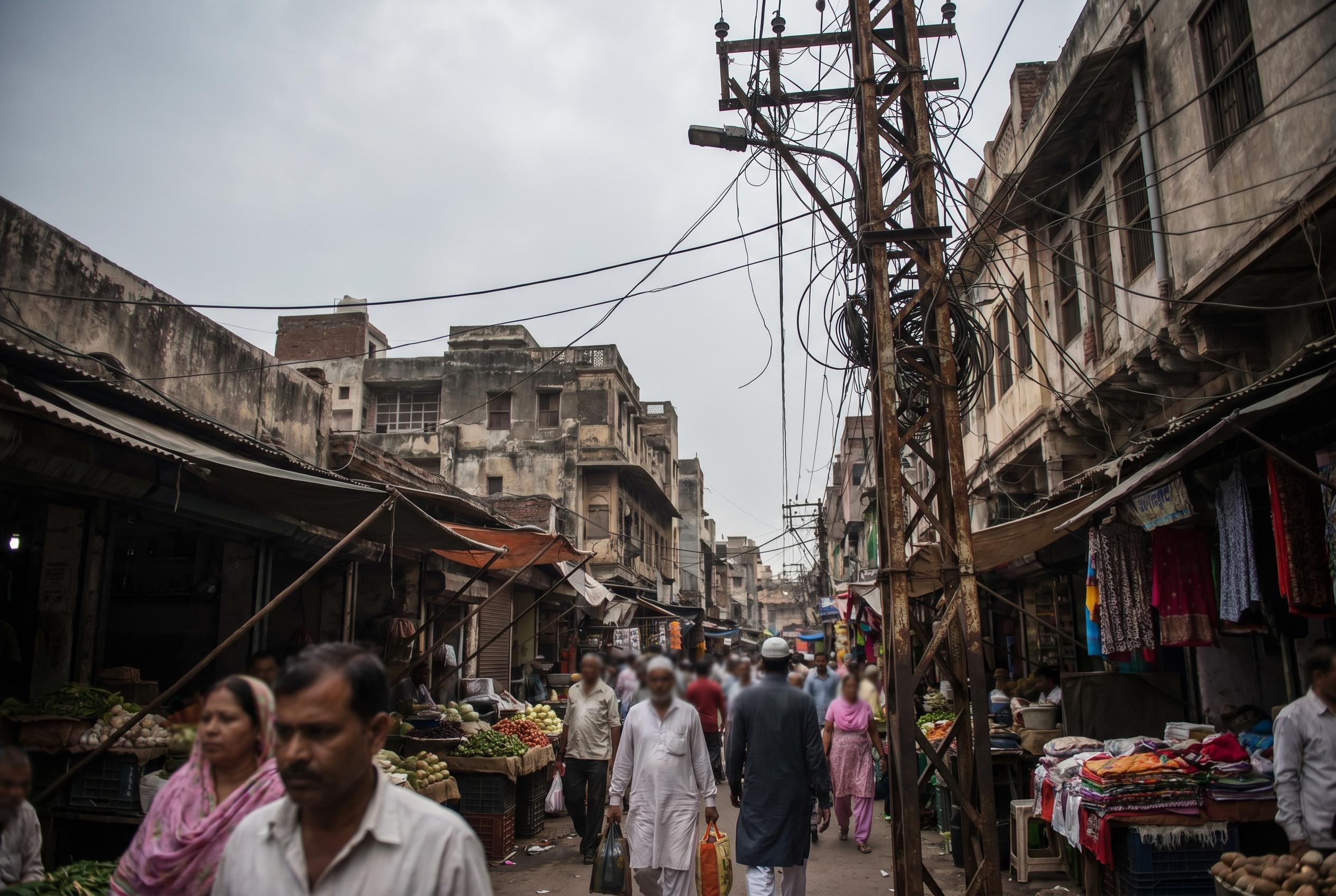
India’s clean energy push is running into a less visible but increasingly decisive problem: the grid itself. According to Business Standard, the focus of the energy transition is shifting from adding more solar and wind farms to making the wider power system resilient enough to absorb them, especially as geopolitical tensions in West Asia sharpen concerns about supply security and energy resilience.
Arvind Ananthanarayanan, director of investments at ValueQuest Investment Advisors, told Business Standard that the central constraint is no longer generating power but keeping the system stable as renewable output grows. He said renewables behave differently from conventional plants because they are variable, spread across wide geographies and largely inverter-based, which changes the way grids manage frequency, balance supply and demand, and preserve stability. That means more of the burden is moving to transmission lines, storage, digital controls and distribution networks.
The risks are not theoretical. A ValueQuest report cited by Business Standard points to the Texas blackout in 2021 and the Iberian outage in 2024 as reminders that rapid clean-energy growth without enough grid strength, forecasting and flexibility can magnify disruption. In India, the country’s own system has already shown strain. Grid India has highlighted technical limits on renewable evacuation from Rajasthan, while the report says about 4 GW of commissioned capacity was shut down during daytime hours in January despite the recent commissioning of the 765 kV Khetri-Narela line. NTPC has also warned that two-shift thermal operations needed to support renewable integration are damaging equipment, increasing boiler tube leakages, flame failures and turbine stress.
The Central Electricity Authority has begun to address those pressures in its long-term resource adequacy planning, urging faster expansion of transmission corridors, smarter grid tools, demand-side response and better forecasting. That effort comes as official projections point to a steep rise in non-fossil capacity over the next decade: solar could climb from 141 GW in January 2026 to about 509 GW by 2035-36, wind from 55 GW to 155 GW, large hydro to nearly 78 GW and nuclear to roughly 22 GW. Storage is expected to become far more important as well, with pumped storage and batteries projected to reach about 94 GW and 80 GW respectively by 2035-36.
Other research reinforces the scale of the challenge. The National Renewable Energy Laboratory has previously concluded that India can technically and economically integrate large volumes of renewable energy, but only with the right operational changes. More recently, reporting by Financial Express and analysis cited by Underground Infrastructure have described a widening mismatch between generation and evacuation capacity, with project delays, curtailed clean power and underused transmission corridors. The broad conclusion is clear: India’s renewable build-out may be moving quickly, but without a matching acceleration in transmission and system readiness, the clean-energy transition could become constrained by the wires meant to carry it.
Source Reference Map
Inspired by headline at: [1]
Sources by paragraph:
- Paragraph 1: [1], [6]
- Paragraph 2: [1], [5]
- Paragraph 3: [1], [3], [4]
- Paragraph 4: [1], [5]
- Paragraph 5: [2], [3], [4], [7]
Source: Noah Wire Services