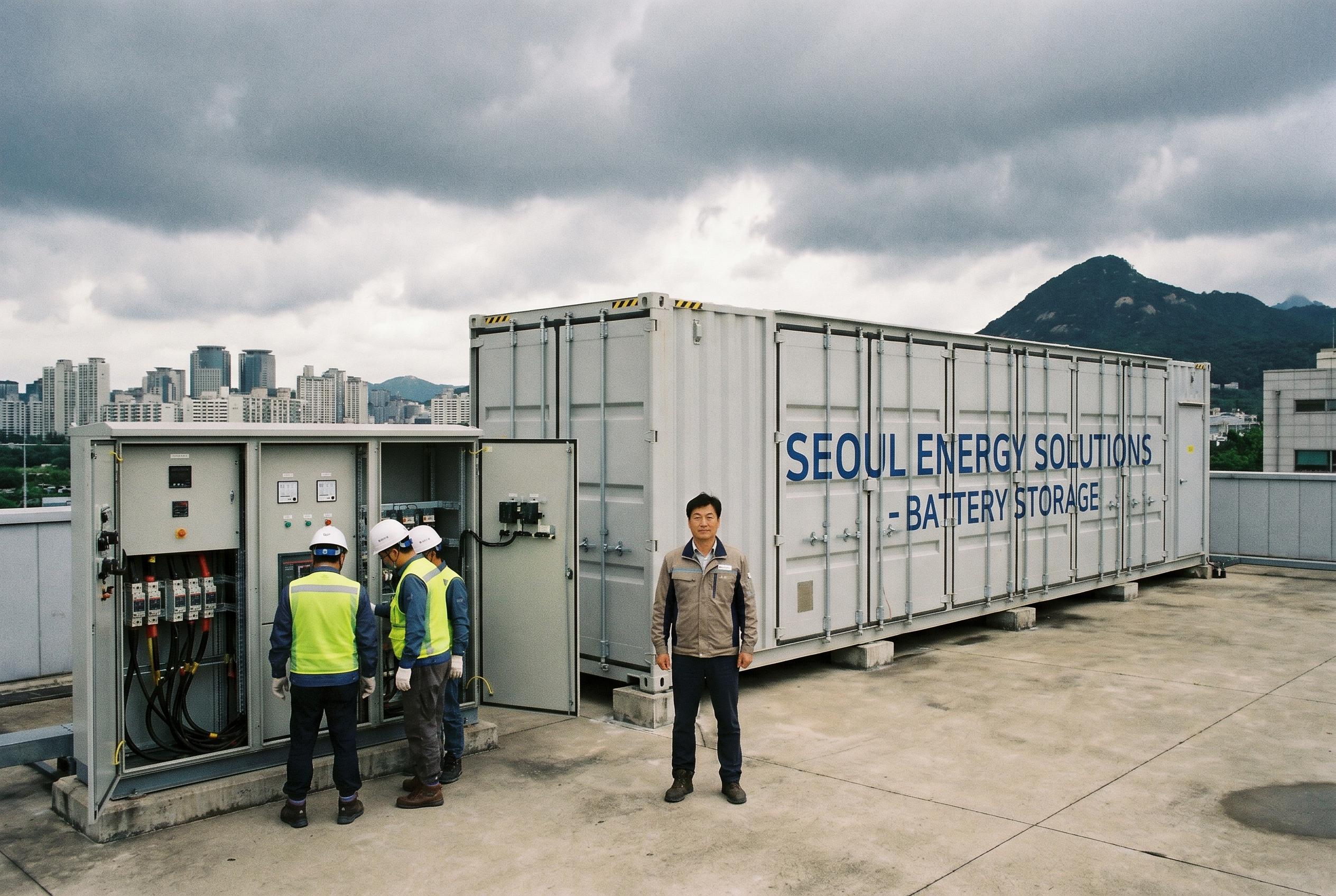
LG Energy Solution and Samsung SDI are shifting their focus from electric vehicle batteries to stationary energy storage systems in the US, boosting domestic production amid geopolitical and supply-chain challenges.
South Korean battery makers are increasingly treating grid storage as the next best home for manufacturing lines built for electric vehicles. As EV demand softens, LG Energy Solution and Samsung SDI are steering more of their US strategy toward stationary batteries for utilities, renewable integration and other power-grid uses, according to Enverus Intelligence Research and Bloomberg.
LG has already begun mass production of cells aimed at grid applications, while Samsung SDI is preparing to repurpose part of its Indiana footprint for energy storage systems and has lined up cathode supply for its North American expansion. That shift is being reinforced by a broader industry move: in March, LG Energy Solution and General Motors’ Ultium Cells said they would convert part of their Spring Hill, Tennessee, plant to make lithium iron phosphate batteries for storage projects, a signal that EV-capable lines are being redirected rather than left idle.
The commercial logic is being sharpened by tariffs and supply-chain risk. Enverus said imported battery cell costs have risen after tariffs, strengthening the case for domestic production of storage hardware. That makes local manufacturing more attractive for developers trying to reduce exposure to Chinese supply chains, meet US content requirements and avoid delays in project delivery.
The opportunity is real, but so is the risk of overbuilding. Enverus expects renewable additions to crest in 2028 as developers race to secure policy support, with batteries expanding alongside them to support reliability and absorb intermittent wind and solar output. After that, project economics are likely to depend more heavily on interconnection queues, transmission constraints and market design than on pure demand growth.
LG is pitching its storage push as a long-term growth business, saying in a company release that it wants to triple the global sales of its ESS division over five years and establish the first large-scale ESS battery production in the US. It has also unveiled modular products for grid use, while a separate announcement said LG Energy Solution Vertech and Qcells plan to deliver 5 gigawatt-hours of US storage projects between 2028 and 2030 that satisfy domestic-content rules.
Samsung SDI is following a similar path. Korean media reported in March that the company had secured a 1.5 trillion won supply deal with a US energy firm for prismatic batteries to be produced at the StarPlus Energy plant in Indiana, with output starting this year and continuing through 2029. The initial products are expected to use nickel-cobalt-aluminium chemistry, with lithium iron phosphate to follow.
For both companies, the near-term prize is the segment of the storage market where batteries are most indispensable: grid balancing, frequency regulation, capacity support and black-start capability. The strategic challenge is timing. If manufacturers expand too quickly, they risk building a glut of supply just as policy support eases and the market becomes more selective about what it will actually buy.
Source Reference Map
Inspired by headline at: [1]
Sources by paragraph:
Source: Noah Wire Services
Noah Fact Check Pro
The draft above was created using the information available at the time the story first
emerged. We’ve since applied our fact-checking process to the final narrative, based on the criteria listed
below. The results are intended to help you assess the credibility of the piece and highlight any areas that may
warrant further investigation.
Freshness check
Score:
8
Notes:
The article was published on April 28, 2026, which is recent. However, the content references events from March 2026, indicating that the information may have been compiled over a period of time. The earliest known publication date of similar content is March 18, 2026, when LG and GM announced the pivot of their Ultium Cells JV to LFP battery production for the U.S. storage market at the Tennessee plant. ([pv-magazine-usa.com](https://pv-magazine-usa.com/2026/03/18/lg-and-gm-pivot-ultium-cells-jv-to-lfp-battery-production-for-u-s-storage-market-at-tennessee-plant/?utm_source=openai)) This suggests that the article may be summarizing previously reported information. Additionally, the article includes a source reference map, indicating that it is based on multiple sources. While the article is recent, the information may not be entirely original.
Quotes check
Score:
7
Notes:
The article does not include direct quotes. However, it references statements from LG Energy Solution and General Motors regarding their plans to convert part of their Spring Hill, Tennessee, plant to make lithium iron phosphate batteries for storage projects. These statements were reported in other sources, such as the article from pv magazine USA published on March 18, 2026. ([pv-magazine-usa.com](https://pv-magazine-usa.com/2026/03/18/lg-and-gm-pivot-ultium-cells-jv-to-lfp-battery-production-for-u-s-storage-market-at-tennessee-plant/?utm_source=openai)) The lack of direct quotes makes it difficult to verify the exact wording of these statements.
Source reliability
Score:
6
Notes:
The article is published on Enverus' official blog, which is a corporate blog. While Enverus is a known entity in the energy sector, corporate blogs may have inherent biases and are not always considered independent sources. The article references other sources, such as Bloomberg and pv magazine USA, which are reputable publications. However, the reliance on a corporate blog raises concerns about the independence and potential bias of the information presented.
Plausibility check
Score:
8
Notes:
The claims made in the article align with industry trends, such as the shift from electric vehicle (EV) battery production to energy storage systems (ESS) due to cooling EV demand. For instance, Samsung SDI has secured a 1.5 trillion won supply deal with a U.S. energy firm for prismatic batteries to be produced at the StarPlus Energy plant in Indiana, with output starting this year and continuing through 2029. ([biz.chosun.com](https://biz.chosun.com/en/en-industry/2026/03/11/IADUJOZLPVCUBMCJLWCZWBKW44/?outputType=amp&utm_source=openai)) Additionally, LG Energy Solution and General Motors' Ultium Cells JV announced plans to convert part of their Spring Hill, Tennessee, plant to make lithium iron phosphate batteries for storage projects. ([pv-magazine-usa.com](https://pv-magazine-usa.com/2026/03/18/lg-and-gm-pivot-ultium-cells-jv-to-lfp-battery-production-for-u-s-storage-market-at-tennessee-plant/?utm_source=openai)) These developments support the plausibility of the article's claims.
Overall assessment
Verdict (FAIL, OPEN, PASS): PASS
Confidence (LOW, MEDIUM, HIGH): MEDIUM
Summary:
The article provides a recent overview of the shift by LG Energy Solution and Samsung SDI towards grid energy storage solutions. While the information aligns with industry trends and is supported by reputable sources, the reliance on Enverus' corporate blog raises concerns about the independence and potential bias of the information presented. Additionally, the lack of direct quotes makes it difficult to verify the exact wording of statements attributed to the companies. Given these factors, the overall assessment is a PASS with MEDIUM confidence.