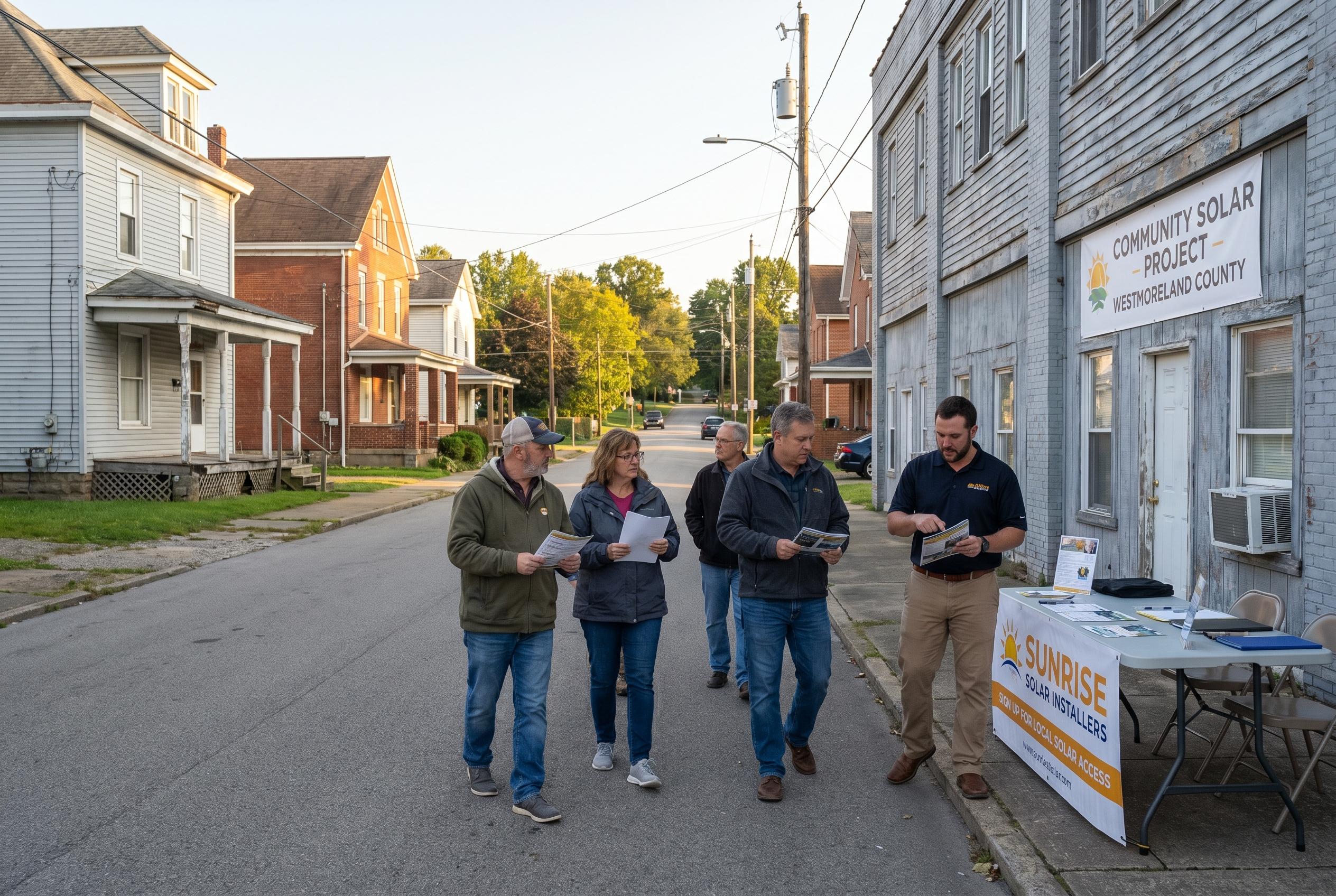
Shoppers, homeowners and municipal staff are flocking to grassroots sessions that turn federal solar policy into local plans; a Westmoreland County workshop showed who benefits, how the math works and why towns can actually lock in cheaper power when they act together.
Essential Takeaways
- Energy Community boost: Westmoreland County’s “Energy Community” status unlocks extra federal tax credits, potentially reducing commercial solar project costs by around 40%.
- Justice40 perks matter: Several local census tracts qualify for Justice40 bonuses, giving priority access to grants and extra credit incentives.
- Fast paybacks possible: With federal incentives and C-PACE-style financing, small commercial rooftop arrays can reach 5–7 year paybacks, then produce decades of low-cost electricity.
- Local barriers remain: Zoning and municipal approvals still decide whether projects get built; advocacy templates and community signalling help.
- Case studies sell it: Municipal and commercial installations , like a 3 MW wastewater plant and a 1 MW retailer system , show operational savings and local leadership.
Why this workshop felt different , a room full of people who smell the coffee and the opportunity
Walk into a community solar workshop and you immediately get the feeling that something useful is happening , folding chairs, a notebook in the back, conversation that’s part curiosity, part calculation. According to the PA Solar Center’s event listing, these sessions focus on practical steps for residents, businesses and local officials to move from policy headlines to signed contracts. That earthy, nuts-and-bolts vibe matters because most folks don’t act on incentives they don’t understand.
Energy Community designation: the technical detail that changes the sums
Westmoreland County’s federal “Energy Community” tag matters in real dollars. The designation, explained during PA Solar Center programming, layers extra tax credits on top of standard renewable incentives, shifting a commercial project’s financial model in a noticeable way. When a region qualifies, projects can access bonuses that materially reduce upfront costs and shorten payback horizons , which is exactly what convinces municipal managers and CFOs who worry about budgets.
Justice40 and local equity , more than a buzzword for Greensburg and Jeannette
The workshop dug into Justice40, pointing out that parts of Greensburg, New Kensington and Jeannette are eligible for extra benefits aimed at historically disadvantaged census tracts. That translates into both priority grant access and additional credit opportunities, a detail many community organisations hadn’t realised. For locals, the takeaway was simple: knowing your tract’s status can change whether a project is just aspirational or actually affordable.
Real projects, real impact , wastewater plants and retail roofs that show the way
Speakers used concrete examples to make the case. A Municipal Authority 3 MW installation at a wastewater treatment plant was held up as a classic win: big energy user, measurable operating-cost reduction, and resilience during outages. Similarly, a 1 MW commercial array at a retailer like Levin Furniture illustrates how solar becomes both a cost-saver and a visible sustainability signal , useful for marketing and staff morale as well as the balance sheet.
Zoning, advocacy and the small-but-crucial human work
Even with generous federal incentives, local siting rules often decide a project's fate. The PA Solar Center and partners such as Solar United Neighbors provide templates, siting guides and sample letters so communities can show up informed at planning hearings. The workshop emphasised tactics , how to present evidence, rally community support, and answer familiar concerns about aesthetics or land use , because a few prepared neighbours can tip a zoning vote in favour.
How to get started if you live or work in Westmoreland County
Start by checking the PA Solar Center’s “Get Solar” pages for event listings and community resources, then map your parcel to see if it falls within a Justice40 tract or Energy Community area. If you’re a business or municipal buyer, run the numbers with potential C-PACE financing and federal direct-pay options to estimate payback. Finally, reach out to local advocates before a hearing so you’ve got allies when the council meeting starts.
It's the slow, steady work , meetings, calculations, a bit of civic theatre at zoning boards , that turns policy into projects and opens the door to real local energy independence.
Source Reference Map
Story idea inspired by: [1]
Sources by paragraph: