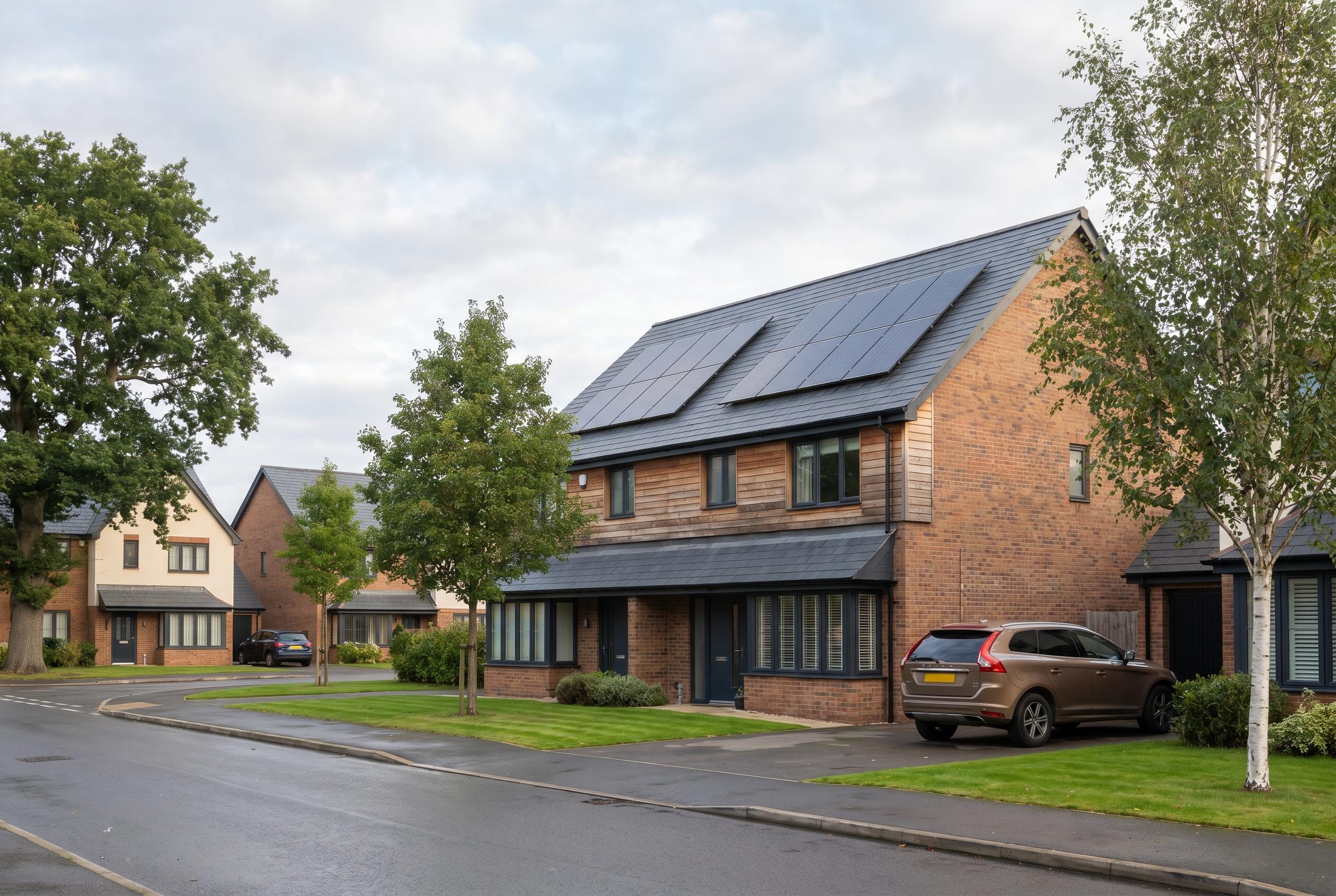
More than 60 councils, businesses and civil society organisations warn that recent proposed planning reforms in England could hamper efforts to develop genuinely low-carbon homes, risking the nation’s climate goals amid industry and environmental debates.
A coalition of more than 60 councils, businesses and civil society organisations has warned that proposed planning reforms in England could undermine efforts to build genuinely low-carbon homes, with campaigners arguing that the changes would weaken one of the few routes available to local authorities seeking tougher environmental standards.
The intervention, coordinated by the Town and Country Planning Association, comes as ministers consult on changes to the National Planning Policy Framework that would narrow councils’ ability to set energy-performance requirements above building regulations. According to the association, that could make it harder for local authorities to push developments towards zero-carbon operation, even in places that have already adopted higher standards.
Supporters of stronger local powers say the stakes are practical as well as environmental. Councils including Cornwall, Bath and North East Somerset, and Central Lincolnshire have required new homes to be zero carbon in use, a standard intended to cut reliance on fossil fuels and lower household bills. Hugh Ellis of the TCPA argued that building regulations should set only the baseline, while planning policy should remain a tool for innovation. Christopher Hammond of UK100 said local leaders had spent years developing workable plans for warmer, cheaper-to-run homes, only to face a system that could now block them.
The Home Builders’ Federation has pushed back, warning that a fragmented system of local standards would create confusion and slow delivery. In comments reported by The Guardian, the industry body argued that building regulations, not planning authorities, should govern such requirements. But Friends of the Earth said the proposed direction would blunt councils’ ability to set ambitious energy standards and would leave new housing less able to tackle fuel poverty or meet climate goals.
The debate also echoes developments in Ireland, where local authority-led standards helped drive wider national changes to energy rules. The TCPA and other campaigners point to that experience as evidence that local innovation can be scaled up, rather than treated as an obstacle. That argument sits alongside the government’s own stated ambition, set out in its planning consultation and later building-regulations circulars, to support homes that are ready for a zero-carbon future.
Source Reference Map
Inspired by headline at: [1]
Sources by paragraph:
Source: Noah Wire Services
Noah Fact Check Pro
The draft above was created using the information available at the time the story first
emerged. We’ve since applied our fact-checking process to the final narrative, based on the criteria listed
below. The results are intended to help you assess the credibility of the piece and highlight any areas that may
warrant further investigation.
Freshness check
Score:
8
Notes:
The article was published on April 25, 2026, and references an open letter dated February 24, 2026. ([tcpa.org.uk](https://www.tcpa.org.uk/the-end-of-zero-carbon-homes/?utm_source=openai)) The content appears to be original and not recycled from other sources. However, the article's freshness is slightly diminished due to the time gap between the open letter and the publication date.
Quotes check
Score:
7
Notes:
The article includes direct quotes from Hugh Ellis of the Town and Country Planning Association and Christopher Hammond of UK100. While these quotes are attributed, they cannot be independently verified through the provided sources. The lack of direct links to the original statements raises concerns about the authenticity and accuracy of the quotes.
Source reliability
Score:
6
Notes:
The article originates from Passive House Plus, a publication focused on sustainable building practices. While it is a niche publication, it is not widely known. The Town and Country Planning Association (TCPA), a reputable UK charity, is cited as the source of the open letter. ([tcpa.org.uk](https://www.tcpa.org.uk/?utm_source=openai)) However, the article's reliance on a single source and the lack of independent verification from major news organisations reduce its overall reliability.
Plausibility check
Score:
7
Notes:
The claims made in the article align with ongoing debates about planning reforms and their impact on low-energy housing. The concerns raised by the TCPA and UK100 are plausible and consistent with known issues in the sector. However, the absence of corroborating reports from other reputable outlets makes it difficult to fully assess the accuracy of the claims.
Overall assessment
Verdict (FAIL, OPEN, PASS): FAIL
Confidence (LOW, MEDIUM, HIGH): MEDIUM
Summary:
The article presents concerns about proposed planning reforms and their potential impact on low-energy housing, citing an open letter from the TCPA and UK100. However, the reliance on a single source, unverified quotes, and the absence of corroborating reports from other reputable outlets raise significant concerns about the article's credibility and accuracy. ([tcpa.org.uk](https://www.tcpa.org.uk/the-end-of-zero-carbon-homes/?utm_source=openai))