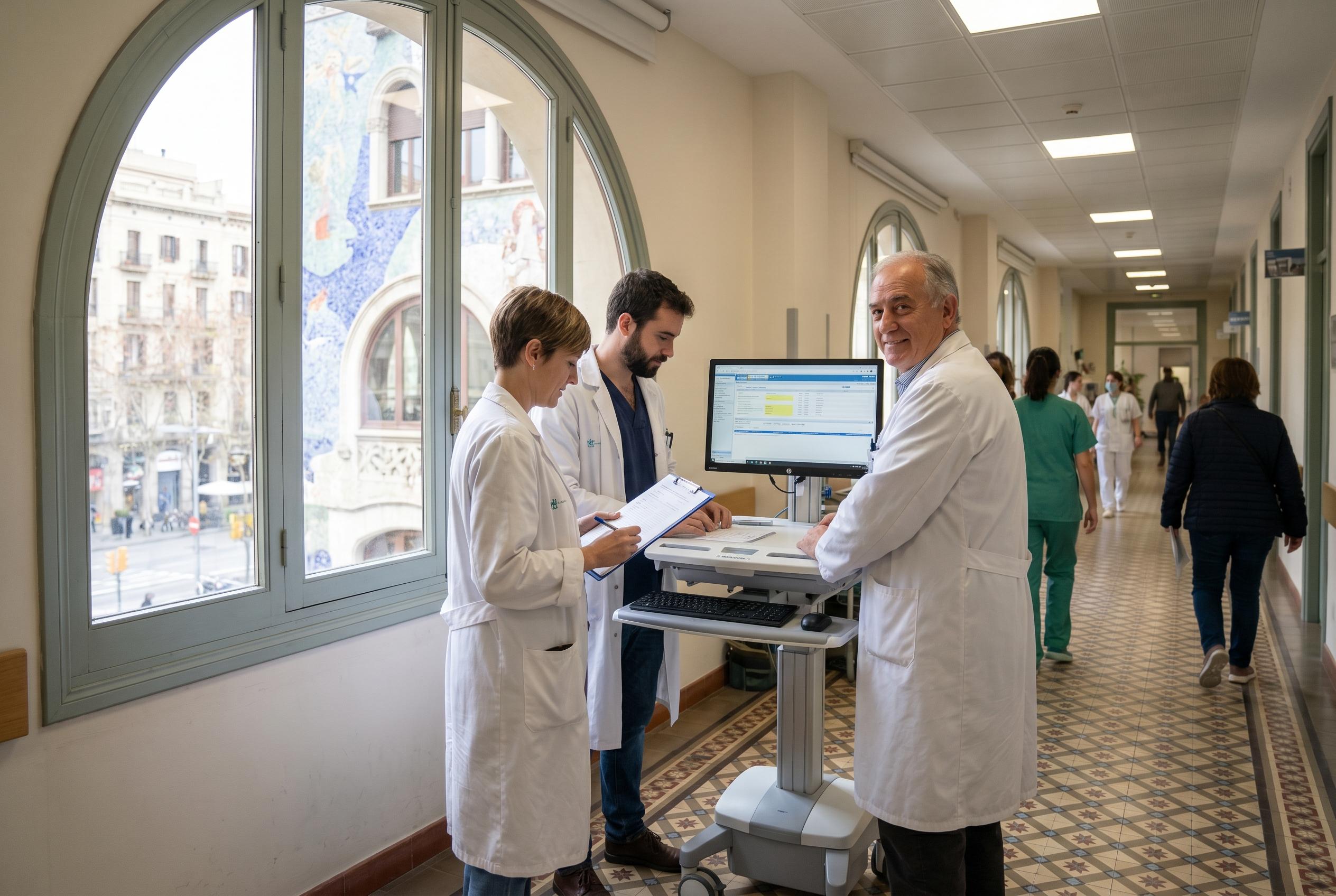
Shoppers of health tools, clinicians and parents are turning to advanced AI models after a new study found they spot rare paediatric conditions more often than doctors do; the biggest gains come when AI is used as a supervised second opinion alongside clinicians, improving diagnostic reach and reducing missed possibilities.
Essential Takeaways
- Stronger rare-disease detection: Advanced AI models outperformed paediatricians on real-world case vignettes, especially for rare conditions.
- Best with a human: Combining clinician judgement and AI suggestions gave the highest Top‑5 accuracy, suggesting complementary strengths.
- Real-case realism: Evaluations used the first 72 hours of presentation and iterative tests, so results reflect early, messy clinical information.
- Data matters: Accuracy rose when more clinical data (labs, imaging) were added , AI helps, but it needs good input.
- Governance required: The EU AI Act views diagnostic support as high risk, so oversight, transparency and clinician accountability are essential.
AI beats clinicians on tricky, rare cases , and it smells like progress
Researchers tested advanced language models on authentic paediatric cases and found AI often reached correct diagnoses that doctors missed, particularly for rare diseases. The study used short, early patient summaries , the kind of messy, incomplete snapshots clinicians wrestle with , and trained the spotlight on whether the right answer appeared as the top guess or within the top five. Results showed AI trimming the guesswork in hard cases, and that feels like a practical win for families chasing an answer.
How the study mirrored real clinical practice
Instead of neat, textbook vignettes, the team used patient summaries from the first 72 hours of presentation , symptoms, initial notes and whatever tests happened to be available. Each case was run multiple times to check consistency, and performance was judged on both Top‑1 and Top‑5 lists. Using real early-stage data matters because that’s when clinicians are most uncertain, and it’s precisely there where AI showed useful breadth, suggesting diagnoses that might not have been on a doctor’s radar.
Why the human-plus-AI union outperformed either alone
The most interesting takeaway wasn’t that AI beat doctors; it was that pairing them produced the best results. By asking whether the correct diagnosis appeared in either the clinician’s or the model’s Top‑5 lists, the combined approach reached around 94% Top‑5 accuracy in the best pairing. In plain terms, humans and machines bring different strengths: clinicians add context, risk assessment and experience with messy social or family factors, while AI brings pattern-recognition across vast, rare examples. Use them together and you broaden the differential rather than replace clinical judgement.
Don’t hand over the reins , governance and oversight matter
Regulators already flag diagnostic decision-support as high-risk, and for good reason. The European Union AI Act expects strong risk management, data governance, explainability and human oversight for tools used in healthcare. That’s sensible: an AI suggestion can nudge a clinician toward a useful hypothesis, but it should never be an unsupervised verdict. Developers, hospitals and regulators will need to agree on accountability, monitoring and fail-safes before these tools move from study to bedside.
Practical tips for clinicians and parents curious about AI-assisted diagnosis
If you’re a clinician testing AI in practice, start with it as a second opinion for complex or rare cases, and always document how the model influenced decision-making. Feed the model richer data when possible , adding lab results and imaging improves accuracy. For parents, ask whether your care team uses AI as an aid and how outputs are reviewed; a model that can suggest rare conditions is most helpful when a clinician interprets and investigates the hypothesis further.
It's a small change that can make every early diagnosis safer and more complete.
Source Reference Map
Story idea inspired by: [1]
Sources by paragraph: