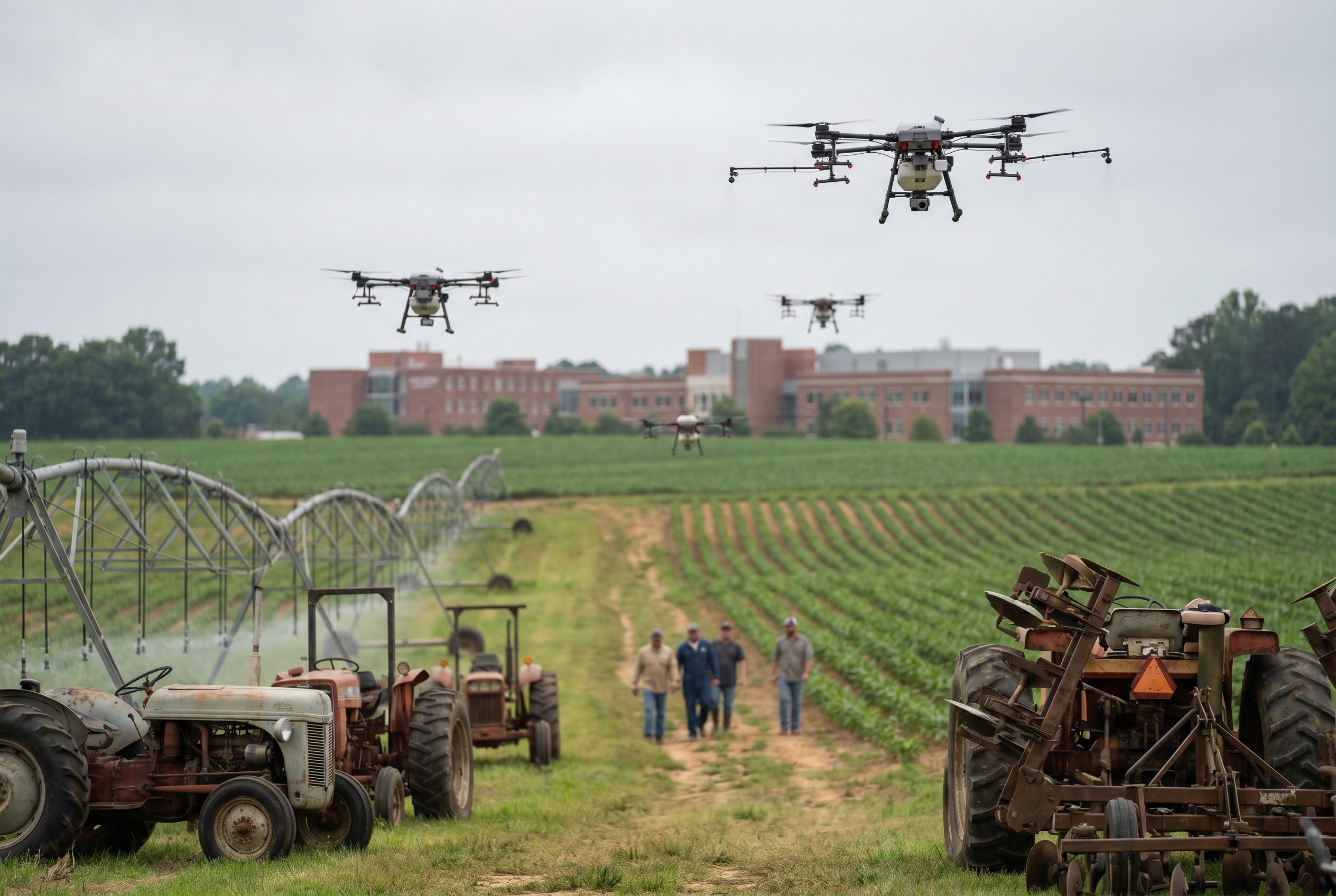
Shoppers and growers are watching a new wave of agtech innovation as H.A.R.V.E.S.T. AgTech, run by The Yield Lab Institute, unveils seven startups focused on biological pest control, nutrient delivery and crop biostimulation , a practical push to get lower‑input, higher‑resilience tools into farmers’ hands.
Essential Takeaways
- Seven startups selected: Agragene, Impetus Agriculture, Invasive Species Corporation, NewLeaf Symbiotics, Pluton Biosciences, Prospect Growth and SugaROx were chosen for technical validation and commercial support.
- University-backed validation: NC State’s North Carolina Plant Sciences Initiative and UC ANR Innovate will host lab work and field trials, offering real‑world testing environments.
- Funded by Breakthrough Energy Discovery: The cohort benefits from funding aimed at moving promising climate and ag solutions toward market.
- Built on a proven model: H.A.R.V.E.S.T. evolves the Wells Fargo IN2 programme’s legacy of accelerating startups through validation, funding and connections.
- Products feel different: Expect biology‑first tools , from sterile insect tech and bioherbicides to microbial nutrient systems and caged sugar biostimulants , that smell mild and integrate with existing farm routines.
A new validation platform that feels like a lab‑to‑field shortcut
H.A.R.V.E.S.T. is set up to fast‑track biological innovations from bench to field, and you can almost picture the labs buzzing with petri dishes and the quiet thrum of field tractors. The Yield Lab Institute is leaning on academic partners to give young companies the tough, practical testing they need, so claims are challenged early and often. That matters because farmers want products that survive sun, soil and stubborn pests, not just good press releases. If you’re picking a trial partner as a startup, look for programmes that offer both lab rigour and on‑farm pilots , that’s exactly what H.A.R.V.E.S.T. promises.
Seven startups, seven different approaches , diversity in biosolutions
The cohort mixes gene‑drive adjacent pest control, microbial nutrient systems and next‑gen biostimulants, so you’re not betting on one horse. Agragene’s CRISPR‑based sterile insect idea aims to cut pest pressure without chemical sprays, while Impetus is rescuing the usefulness of Bt biopesticides against resistant insects. NewLeaf’s PPFM microbes are familiar to growers chasing yield and sustainability gains, whereas Pluton and Prospect are focused on nutrient delivery , one through sun‑powered microbes, the other with nanoscale fertilizer engineering. SugaROx, with its caged T6P activator, is the kind of precision biostimulant that could be a drought‑coping tool. In short, the cohort reflects a clear industry trend: more biological options, less blanket chemistry.
University partnerships give products credibility and practical testing
H.A.R.V.E.S.T. teamed with NC State’s N.C. PSI and UC ANR Innovate for a reason , academic programmes bring controlled experiments, peer expertise and access to diverse cropping systems. That’s useful because a product that performs in a greenhouse can still flop in a Californian vineyard or a Midwestern maize field. These partnerships also help startups understand regulatory and extension pathways; working with Extension specialists gives companies practical, farmer‑facing feedback early. For growers, that means when a product emerges from the programme it’s likelier to be field‑tested, regionally relevant and easier to adopt.
Funding and ecosystem support: why Breakthrough Energy Discovery matters
The cohort’s backing by Breakthrough Energy Discovery sends a clear signal: investors see biological agtech as part of climate mitigation and resilience. Financial support is important, but so is the commercial ecosystem around a programme. H.A.R.V.E.S.T. builds on IN2’s legacy of catalysing follow‑on funding and exits, and pairs technical validation with commercial help from partners like Farmhand Ventures. For founders, that combination reduces the typical “valley of death” between proof‑of‑concept and sales. For farmers and buyers, it increases the chance these tools scale beyond pilots into accessible products.
What farmers and buyers should look for when evaluating these new tools
If you’re considering a biological product, start with evidence: look for replicated field trials across environments and transparent data on yield, pest suppression or nutrient use efficiency. Pay attention to application fit , is the product a one‑off seed treatment, a foliar spray, or something that slots into existing fertiliser programmes? Think also about supply chains and shelf‑life; biologicals can be sensitive to storage and handling, so a company’s distribution plan matters. Finally, ask for compatibility guidance with your crop rotations and agrochemicals , good companies will offer integration advice, not just hopeful promises.
What this means for the future of sustainable farming
We’re seeing a shift from single‑solution chemistry to layered, biology‑enabled systems, and H.A.R.V.E.S.T.’s cohort is a tidy snapshot of that movement. These startups aren’t guaranteed winners, but their mix of technologies and the rigour of university testing make them worth watching. Over time, growers could get more targeted pest control, smarter nutrient delivery and real drought resilience without piling on synthetic inputs. It’s a small revolution that’s quietly practical: better tools, better stewardship, and hopefully better returns.
It's a small change that can make every field a little more resilient.
Source Reference Map
Story idea inspired by: [1]
Sources by paragraph: