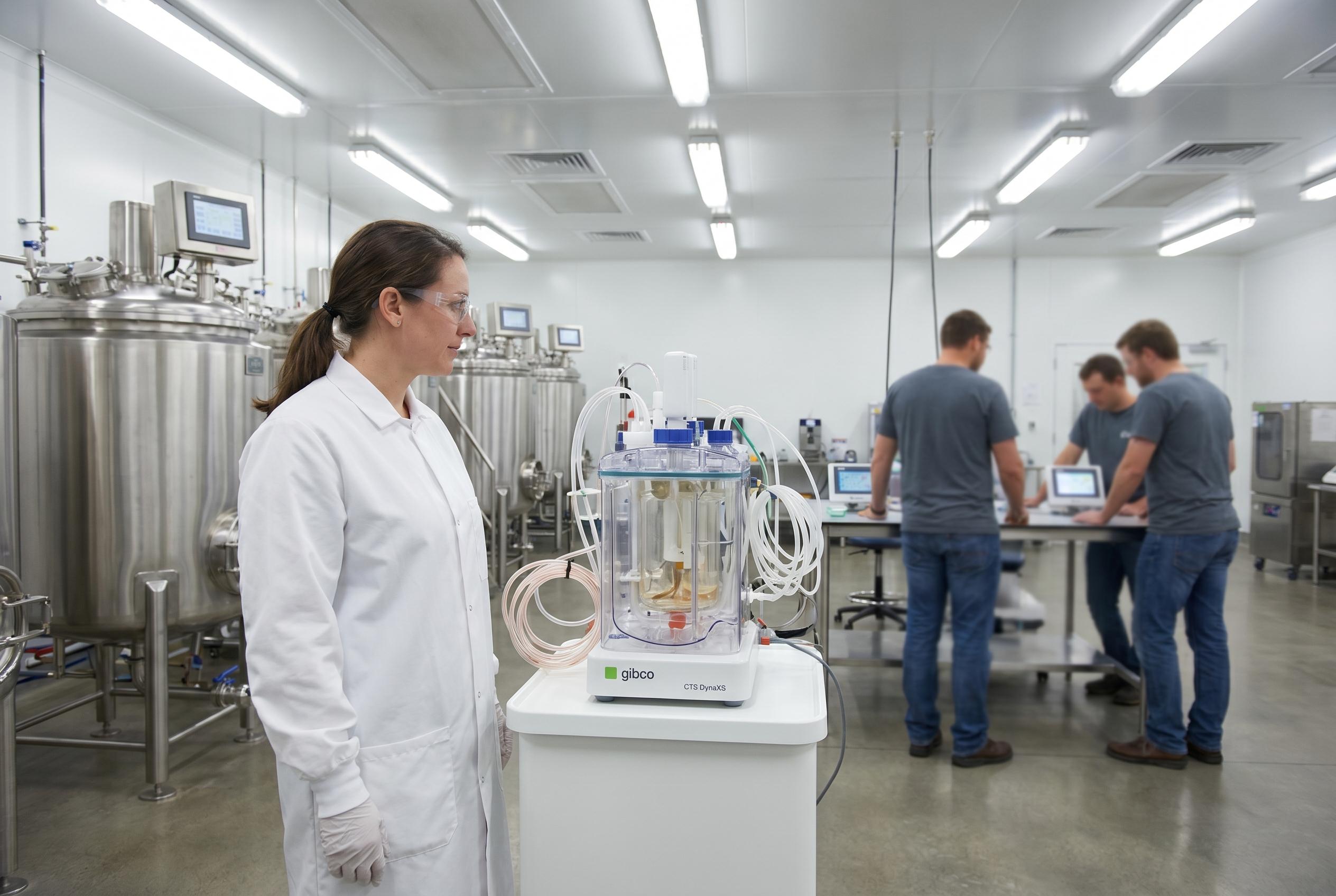
Shoppers are turning to integrated, automation-ready systems as cell therapy developers race to move from lab benches to clinics; Thermo Fisher’s new Gibco CTS DynaXS single‑use bioreactor promises flexibility, space-saving design and regulatory readiness that matter for early clinical and commercial manufacturing.
Essential Takeaways
- Designed for scale: The DynaXS is a stirred‑tank, single‑use bioreactor built to span process development through early clinical volumes.
- Automation friendly: It supports integration into automated workflows, reducing manual touchpoints and contamination risk.
- Space-efficient: Purpose-built to fit constrained facilities while enabling larger batch sizes than static culture.
- cGMP-focused: The platform aims to simplify regulatory compliance with single‑use consumables and defined process controls.
- Operator experience: Thermo Fisher emphasises straightforward set‑up and data capture, with a clean, controlled feel during runs.
Why this matters: moving cell therapy out of the incubator and into manufacture
Cell therapies are no longer curiosity projects; they're real products heading into trials and the market, and that changes everything about how you grow cells. Companies that relied on plates and flasks now face the heat of scaling reproducibly, and the sensory shift is obvious , instead of quiet, fiddly bench work you need predictable, humming equipment that can run under cGMP. Thermo Fisher’s DynaXS is pitched at that inflection point, offering a single‑use stirred‑tank approach that feels more like factory kit than a research rig.
What the DynaXS brings to the bench: features and practical gains
The new Gibco CTS DynaXS is a stirred‑tank, single‑use unit intended to bridge development and early clinical volumes, so you don't have to rewrite your process every time you increase batch size. According to Thermo Fisher, it supports precise control over culture conditions and is designed to be integrated into automated downstream workflows. For teams, that translates to fewer manual interventions, less risk of contamination and cleaner data capture , all things that make regulators and manufacturing leads breathe a little easier.
How it compares with other single‑use options on the market
Single‑use stirred tanks are becoming the default alternative to static cultures and hollow‑fibre or wave systems, because they scale more linearly and fit better with automation. TechTarget and PharmaTech coverage of the launch highlights that DynaXS joins a growing field of closed‑system solutions aimed at reducing open‑handle steps. The practical upshot is choice: some platforms prioritise footprint, others prioritise integration with magnetic separation or closed cell selection modules. DynaXS appears to lean into a balanced offering , compact but automation‑ready.
Choosing the right system for your process: questions to ask
When you evaluate a platform, start with the process map. How much volume do you need for initial trials versus pivotal runs? Can your facility accommodate a larger footprint, or is a compact single‑use solution essential? Ask about consumable sourcing, sensor compatibility, and how the vendor handles tech transfer. If closed processing is a must, check whether the bioreactor integrates with magnetic separation or closed harvest modules without compromising sterility. These practical probes separate shiny demo‑room kit from tools that work in day‑to‑day manufacturing.
What manufacturers and developers are saying , and what comes next
Industry coverage notes that Thermo Fisher positions the DynaXS to smooth the jump from R&D to cGMP runs, with emphasis on regulatory readiness and operational flexibility. Developers welcome devices that reduce manual steps and tighten control, but they also want clear data on performance for different cell types and transparent supply chains for single‑use consumables. Expect more pilots and case studies in the coming months as early adopters report on yield, viability and ease of integration.
It's a small change that can make every run more reliable , and save teams a lot of late‑night troubleshooting.
Source Reference Map
Story idea inspired by: [1]
Sources by paragraph: