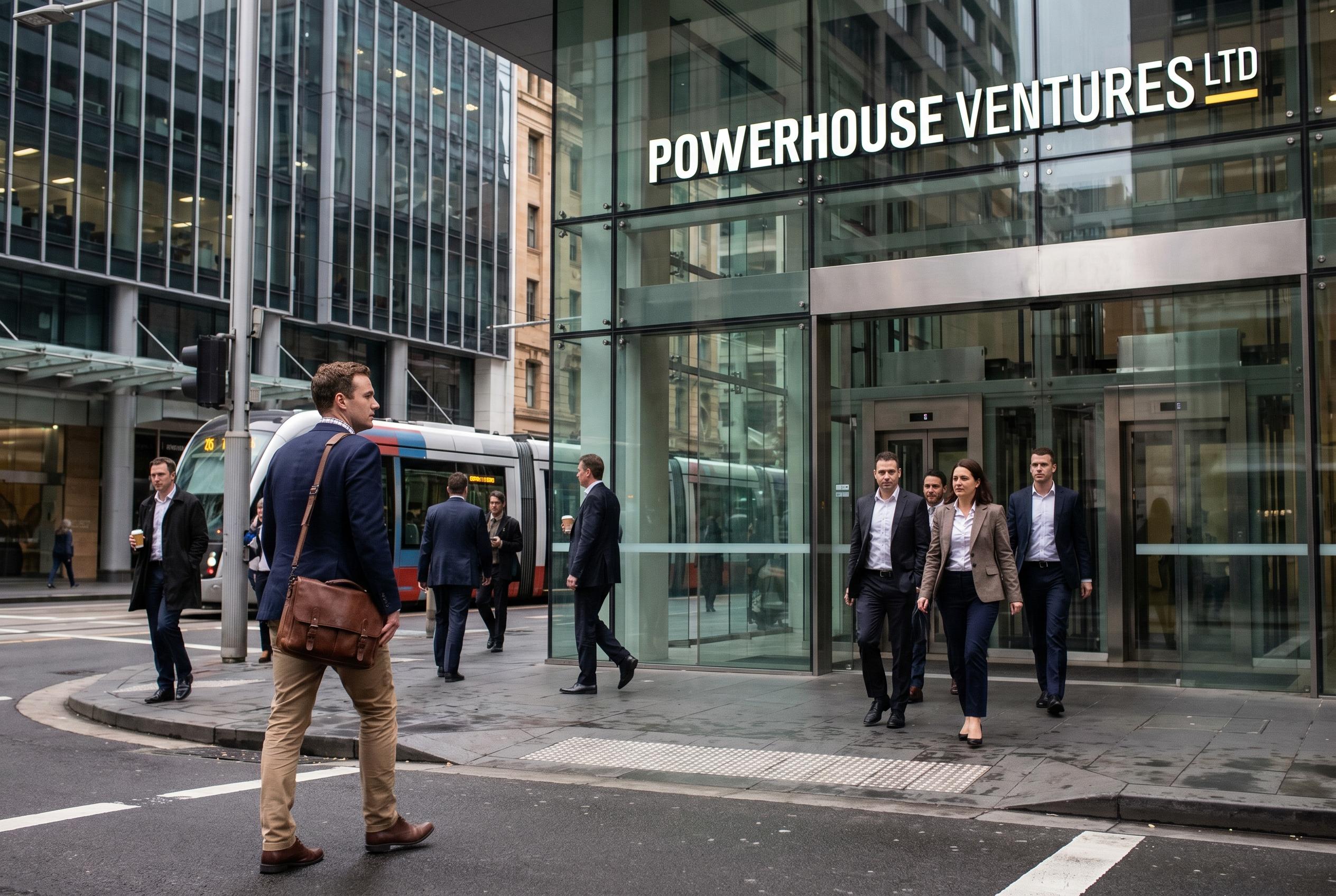
Shoppers of ideas are tuning into Powerhouse Ventures as it reshapes from a pure venture investor into a platform-style business combining deep tech stakes, advisory revenues and funds management , a pivot that matters because it could turn lumpy returns into steadier cashflow for Australian growth investors.
Essential Takeaways
- Platform pivot: Powerhouse is shifting from one-off investment revaluations to a mix of advisory, funds management and direct deep tech exposure.
- Advisory traction: Corporate advisory services are growing, offering recurring-feel income via capital-raising and commercialisation support.
- Funds growth: New fund initiatives and a funds management arm add fee-based revenue potential and scalability.
- Deep tech core: Holdings still focus on AI, quantum, space and advanced materials, keeping the innovation upside.
- Execution watch: Investors should watch recurring revenue growth and the company’s ability to scale institutional interest.
Why the shift from venture-only matters now
Powerhouse Ventures has long been a classic early-stage investor, where returns depend on portfolio exits and periodic revaluations , which can feel volatile and unpredictable. That structure leaves investors on a rollercoaster of headline gains and dry spells, and the company clearly wants off the ride. According to the firm’s public pages, it’s deliberately building advisory and funds capabilities alongside its direct investments to smooth earnings. For shareholders, that could mean fewer surprise swings and a steadier story to pitch to the market.
Advisory services: the steadying force
The advisory arm is more than window dressing; it’s becoming a growth engine. Powerhouse now offers capital-raising, corporate development and commercialisation advice to listed and private clients, which creates repeat work and fee streams that don’t rely on selling an asset. That’s a pragmatic move: advisory fees are smaller than a big exit but far more predictable, and they keep the team close to deal flow and emerging tech founders. If you’re assessing the company, watch revenue mix changes quarter to quarter , rising advisory income is a sign the strategy’s working.
Funds management: scaling fees and market reach
Adding funds management lets Powerhouse monetise its deal pipeline in a new way, via management and performance fees from external capital. Recent moves, including seeding a fund with substantial assets and building out an ALIWA-related capability, suggest management sees an addressable market among micro-cap and deep tech investors. Over time, successful fund products would scale fee revenue and broaden investor appetite beyond retail holders who chase single-stock momentum. The risk, of course, is execution: raising third-party capital and running funds professionally is a different skillset to early-stage dealmaking.
Deep tech exposure still at the heart
Don’t be fooled into thinking the pivot abandons tech. Powerhouse keeps deep technology investments , think artificial intelligence, quantum computing, space and advanced materials , front and centre, which preserves the upside if one of its portfolio companies breaks out. The platform approach is essentially an insurance policy: you keep exposure to big, asymmetrical payoffs while layering on advisory and fee-based models to dampen volatility. For investors who want growth with a touch less drama, that combination is appealing.
What to watch next: metrics that matter
This story will live or die on a few measurable items. First, advisory revenue trajectory and margin expansion: is it growing fast enough to matter? Second, funds under management and the cadence of third-party inflows. Third, board and management hires that bring institutional funds and capital markets experience. And finally, portfolio performance , exits still matter for credibility and upside. If the company can tick these boxes, the market may re-rate it from a pure small-cap venture play to a hybrid tech-platform stock.
It's a small structural change that could make every investor’s exposure to deep tech feel a bit more comfortable.
Source Reference Map
Story idea inspired by: [1]
Sources by paragraph: