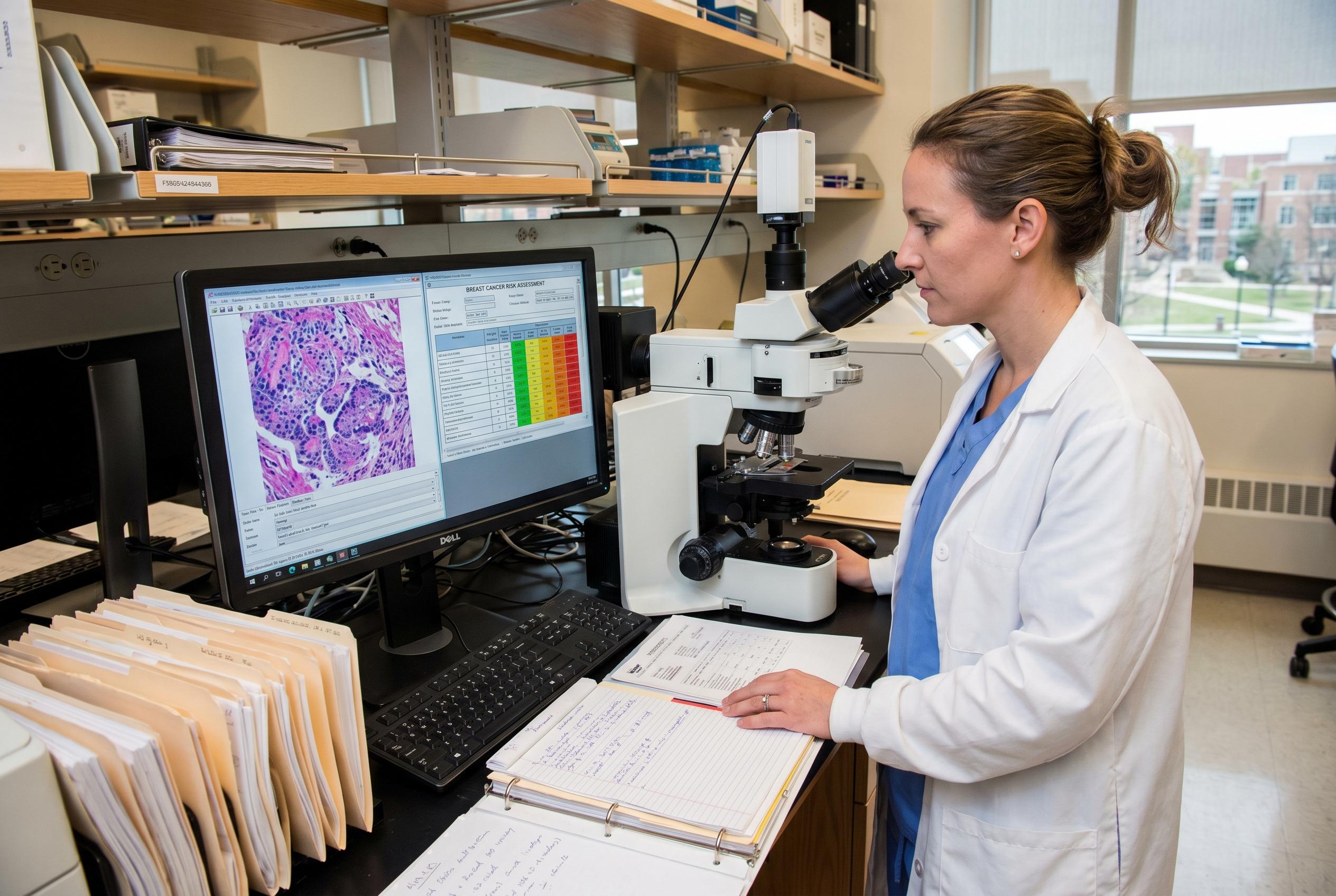
Shoppers of second opinions, take note: clinicians are starting to adopt AI-powered tools like ArteraAI Breast that slot into pathology routines to estimate distant-metastasis risk in early-stage HR+/HER2− breast cancer, promising faster prognostic reads and more personalised treatment discussions.
Essential Takeaways
- FDA clearance: ArteraAI Breast has received US FDA clearance as a diagnostic adjunct for risk stratification in early-stage HR+/HER2− invasive breast cancer, enabling clinical use.
- Multimodal approach: The tool combines digitised histopathology images with clinical data to produce an AI-derived risk score , it looks at slides and patient info together.
- Workflow fit: Designed to integrate into standard pathology workflows, it can deliver same‑day prognostic information and fit into existing lab processes.
- Clinical utility: Data presented at major meetings suggest the score helps separate low- from high-risk patients and may inform decisions on chemotherapy benefit for selected groups.
- Practical feel: Results are digital and immediate , expect a sleek report rather than a long wait; tissue-based cues remain central, so slide quality matters.
Why this clearance matters now
FDA clearance moves ArteraAI Breast from bench to bench-side, meaning pathologists and oncologists can now use an AI-derived risk score in routine care. It’s a practical change , clinicians get a same-day, slide-based read that blends image patterns with clinical facts, so decisions about adjuvant therapy can be faster and more personalised. According to industry reports, the device targets HR+/HER2− early invasive disease, a common subtype where tailoring chemo versus endocrine therapy is often the trickiest call.
How the AI actually works , images plus data
Unlike earlier single-source algorithms, ArteraAI Breast uses a multimodal model: digitised histopathology images are analysed alongside clinical inputs to generate a probability of distant metastasis. That’s important because tissue architecture and cell patterns tell part of the story, while age, grade and other clinical items complete the picture. The integration of both sources tends to improve risk estimates in research settings, and this tool follows that trend.
Fit into the lab: same-day results and workflow benefits
A key selling point is workflow integration. ArteraAI Breast is designed to plug into pathology routes so pathologists don’t need a parallel process or long turnaround. That means a clinician can potentially discuss prognostic information with the patient sooner. For pathology teams, that seamlessness reduces friction , but it also means labs should ensure good slide scanning quality and digital pathology readiness to get reliable outputs.
What clinicians and patients should know about performance
Early presentations of clinical data indicate the score helps stratify patients into low- and high-risk groups and may aid in assessing chemotherapy benefit for some patients. That doesn’t replace multidisciplinary judgement: prognostic scores are one input among tumour biology, patient preference and comorbidities. It’s wise to view the AI output as a sophisticated second opinion rather than an absolute rule.
How this fits with other risk tools and what to watch next
AI pathology tools are now joining genomic assays and clinical calculators in the risk‑assessment toolbox. Some labs already use molecular assays; now image-plus-clinical AI tools offer a faster, tissue-based option. Expect ongoing studies comparing AI-derived scores with established assays and longer-term outcome data. Look for independent validation and practical guidance from oncology societies as adoption grows.
It’s a small technological nudge that could speed up personalised treatment talks , but remember, the slides still have to be good and the clinical team still has to listen.
Source Reference Map
Story idea inspired by: [1]
Sources by paragraph: