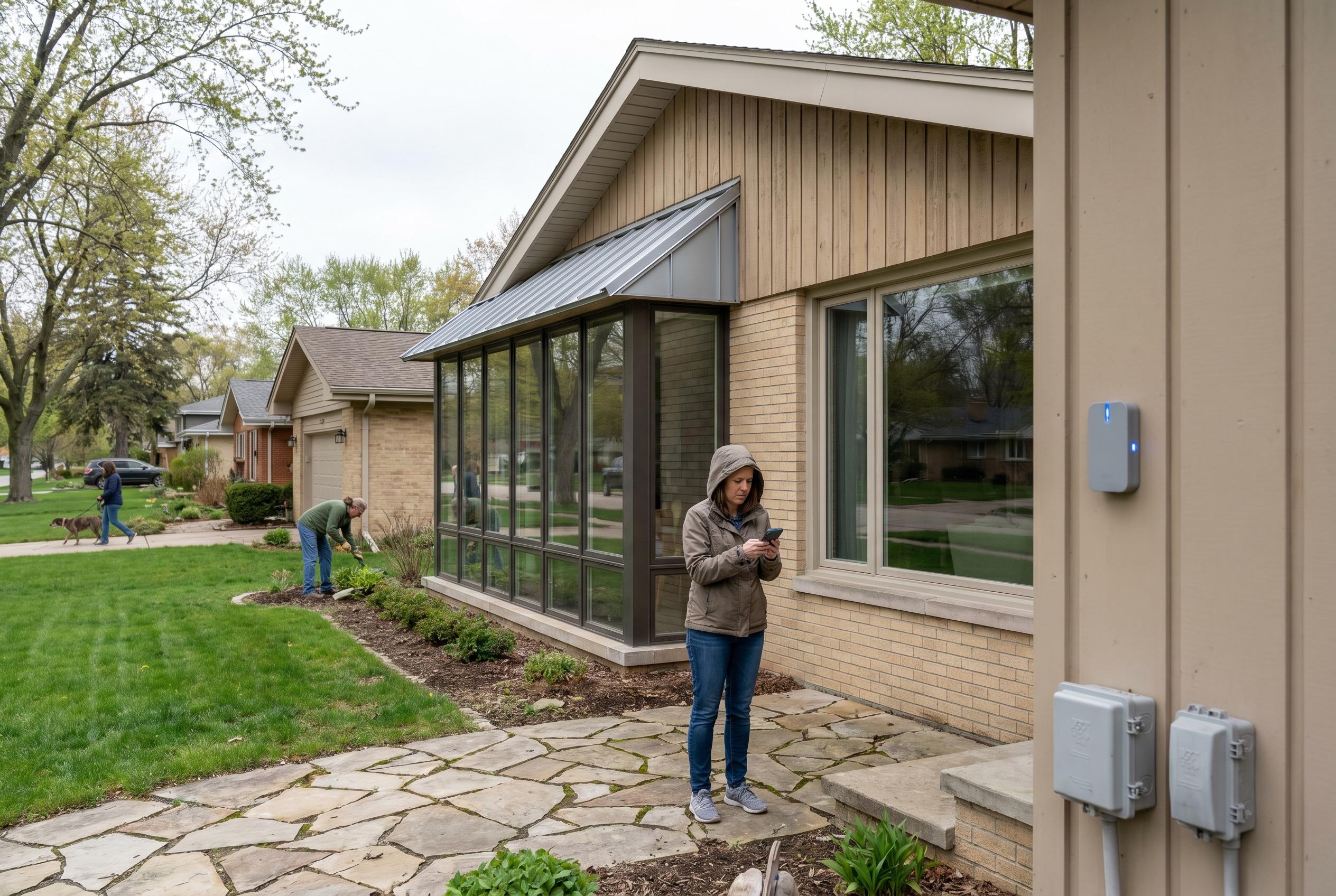
Shoppers are turning to smarter home protection as insurers and tech firms partner to stop disasters before they start; Nationwide and Whisker Labs are offering sensors and AI-driven alerts to spot electrical and freeze risks early, helping homeowners avoid expensive fire and water claims.
Essential Takeaways
- Free or discounted devices: Nationwide partners with Whisker Labs to offer Ting sensors to eligible policyholders, making adoption easier.
- Early-warning saves: Ting’s AI detects electrical arcing and other anomalies; the company reports tens of thousands of prevented hazards.
- Dual benefits: These tools cut claim severity and can influence underwriting, eligibility and discounts when customers engage.
- Simple, everyday use: Ting plugs into a standard outlet and feeds alerts to a smartphone app; activation and engagement are key.
- Broader insights: Aggregated sensor data can flag frozen-pipe risk, grid problems and even help emergency responders.
Why insurers want you to plug in prevention today
Insurers have long paid the bill after disaster; now they’re paying to help stop it. Nationwide’s move to partner with Whisker Labs reflects a wider shift from reactive payouts to proactive protection, and it feels reassuring , like a quiet guard in the corner that smells trouble before you do. According to Nationwide, these programmes start with straightforward alerts , think severe-weather texts and hail warnings , and scale up to continuous monitoring inside the home. For homeowners that means earlier notice and, often, the chance to act before a claim exists.
What the Ting sensor actually does and how it feels to use
Ting is a small plug-in device that sits in the background but listens intently to your home’s electrical signals. Whisker Labs built it after an electrical fire hit the founder’s family, and the device uses AI to detect tiny signatures such as arcing that humans wouldn’t notice. You plug it into an outlet, pair the app and get real-time notifications; users describe the setup as simple and the app alerts as calm but urgent. The crucial point insurers and Whisker Labs stress is activation , a placed device matters only when it’s switched on and monitored.
Claims, underwriting and the new give-and-take with customers
Predict-and-prevent tech changes the customer-insurer relationship into a partnership. Insurers say customers who adopt and use safety devices may see better risk profiles and incentives, because fewer or smaller claims offset the technology cost. From a claims perspective, early detection can mean avoided losses or dramatically reduced repair bills and disruption. In practice, carriers are tracking "saves" , verified incidents stopped by the device , and using those metrics to refine programmes and reward participation.
Partnerships that actually work: what matters behind the scenes
Successful collaborations hinge on aligned incentives, not just hardware distribution. Whisker Labs and Nationwide emphasise that a device dropped into a home is worthless unless it’s activated and producing measurable outcomes. Insurers bring customer relationships and agents who can explain value; technology firms bring sensors, analytics and a product focus. When both sides commit to protecting customers first, the partnership can scale and produce outcomes that resonate with homeowners and carriers alike.
Beyond fires: frozen pipes, grid health and community benefits
Ting started with electrical fire detection, but the same sensor network is being repurposed for other threats. Whisker Labs added frozen-pipe alerts by combining local temperature readings with patterns from its wider sensor network, so homeowners can get nudges before a burst pipe. On a larger scale, aggregated data from hundreds of thousands of devices helps spot grid stress, power quality issues and regional hazards , information that utilities and emergency services can use to prevent wider outages or wildfires. That’s preventive tech with side benefits for whole communities.
Closing line It’s a small change , plugging in a smart sensor , but one that can make every home a bit safer and every claim a little less likely.
Source Reference Map
Story idea inspired by: [1]
Sources by paragraph: