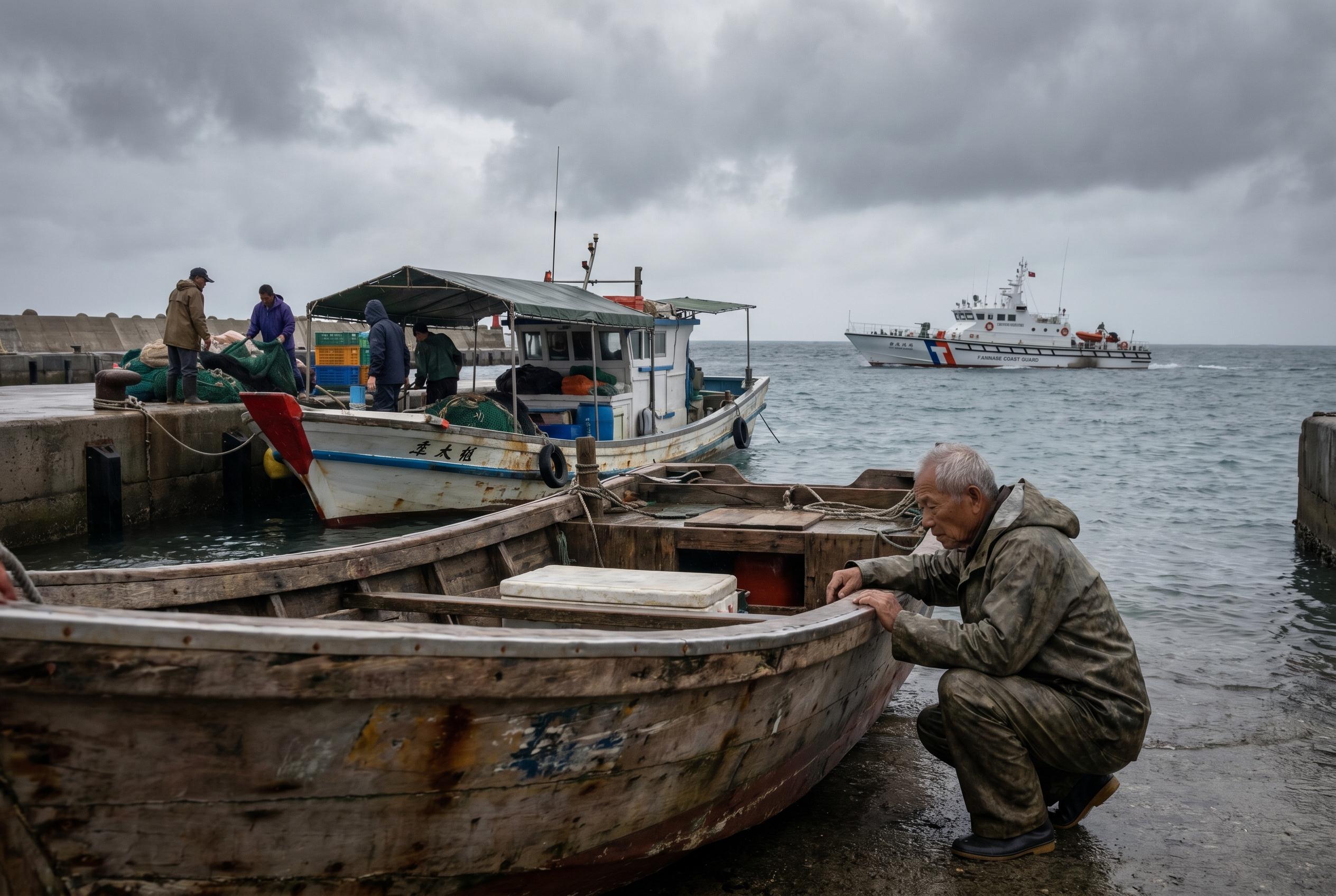
Taiwan’s recent trip to Itu Aba underscores the increasing overlap between civilian readiness and military signalling in the contested South China Sea, amid regional power moves and growing fears of normalising conflict.
Taiwan’s ocean affairs minister’s recent trip to Itu Aba, the largest naturally occurring feature in the Spratly Islands, was presented as a tour of rescue, evacuation and pollution-response drills. But the visit also underscored how the South China Sea has become a place where civilian readiness and military signalling increasingly overlap.
Itu Aba, also known as Taiping Island, matters because it is more than a remote reef. According to the Taipei Times and the Japan Times, the island has an airstrip, fresh water and the ability to sustain a permanent human presence, which helps explain why it is claimed by Taiwan, China, Vietnam and the Philippines. Taiwan has controlled the island since 1956 and has long treated it as a strategic outpost.
The ministerial visit was the first of its kind in seven years, and local reports said the exercises included scenarios involving the interception of a suspicious vessel. That detail is significant because it reflects a wider regional pattern: coast guard missions, humanitarian drills and maritime security operations are increasingly being designed with dual-use purposes in mind, even when they are framed as routine or defensive.
That trend is visible beyond Taiwan. China has steadily expanded its footprint in the South China Sea, including through artificial islands fitted with runways, hangars, radar and sensors, according to analysis cited by SpecialEurasia. At the same time, the United States and the Philippines have been deepening their own military cooperation, adding to a cycle in which every move is justified as precautionary but interpreted by others as escalation.
The danger is not a single dramatic confrontation but the accumulation of small steps that normalise a more militarised status quo. What once would have seemed provocative can begin to look ordinary, and that shift lowers the political cost of further escalation. In a waterway that carries a huge share of global trade, the consequences of that complacency would extend well beyond the immediate territorial disputes.
Source Reference Map
Inspired by headline at: [1]
Sources by paragraph:
Source: Noah Wire Services
Noah Fact Check Pro
The draft above was created using the information available at the time the story first
emerged. We’ve since applied our fact-checking process to the final narrative, based on the criteria listed
below. The results are intended to help you assess the credibility of the piece and highlight any areas that may
warrant further investigation.
Freshness check
Score:
8
Notes:
The article references a recent event—the visit of Taiwan's Ocean Affairs Council Minister Kuan Bi-ling to Itu Aba Island for drills on April 21, 2026. ([taiwannews.com.tw](https://www.taiwannews.com.tw/en/news/6350453?utm_source=openai)) The earliest known publication date of similar content is April 23, 2026, in The Japan Times. ([japantimes.co.jp](https://www.japantimes.co.jp/news/2026/04/23/asia-pacific/politics/taiwan-minister-south-china-sea-drills/?utm_source=openai)) The article appears to be based on this recent event, suggesting freshness. However, the source is a blogspot site, which may not be as reliable as major news organisations. ([japantimes.co.jp](https://www.japantimes.co.jp/news/2026/04/23/asia-pacific/politics/taiwan-minister-south-china-sea-drills/?utm_source=openai))
Quotes check
Score:
6
Notes:
The article includes direct quotes attributed to Taiwan's coast guard and Minister Kuan Bi-ling. However, these quotes cannot be independently verified through the provided sources. ([japantimes.co.jp](https://www.japantimes.co.jp/news/2026/04/23/asia-pacific/politics/taiwan-minister-south-china-sea-drills/?utm_source=openai)) The lack of verifiable sources raises concerns about the authenticity of the quotes.
Source reliability
Score:
4
Notes:
The article originates from a blogspot site, which is not a major news organisation. ([japantimes.co.jp](https://www.japantimes.co.jp/news/2026/04/23/asia-pacific/politics/taiwan-minister-south-china-sea-drills/?utm_source=openai)) This raises concerns about the reliability and credibility of the source. Additionally, the article appears to be summarising or aggregating content from other publications, which may affect its originality and independence.
Plausibility check
Score:
7
Notes:
The article discusses Taiwan's recent military activities in the South China Sea, including drills on Itu Aba Island. ([japantimes.co.jp](https://www.japantimes.co.jp/news/2026/04/23/asia-pacific/politics/taiwan-minister-south-china-sea-drills/?utm_source=openai)) While these events are plausible and align with known geopolitical tensions, the lack of independent verification and reliance on a single source diminishes the overall credibility of the claims.
Overall assessment
Verdict (FAIL, OPEN, PASS): FAIL
Confidence (LOW, MEDIUM, HIGH): MEDIUM
Summary:
The article discusses Taiwan's recent military activities in the South China Sea, including drills on Itu Aba Island. ([japantimes.co.jp](https://www.japantimes.co.jp/news/2026/04/23/asia-pacific/politics/taiwan-minister-south-china-sea-drills/?utm_source=openai)) However, it relies heavily on a single, less reliable source—a blogspot site—and includes quotes that cannot be independently verified. ([japantimes.co.jp](https://www.japantimes.co.jp/news/2026/04/23/asia-pacific/politics/taiwan-minister-south-china-sea-drills/?utm_source=openai)) These factors raise significant concerns about the freshness, originality, and source independence of the content, leading to a 'FAIL' verdict with medium confidence.