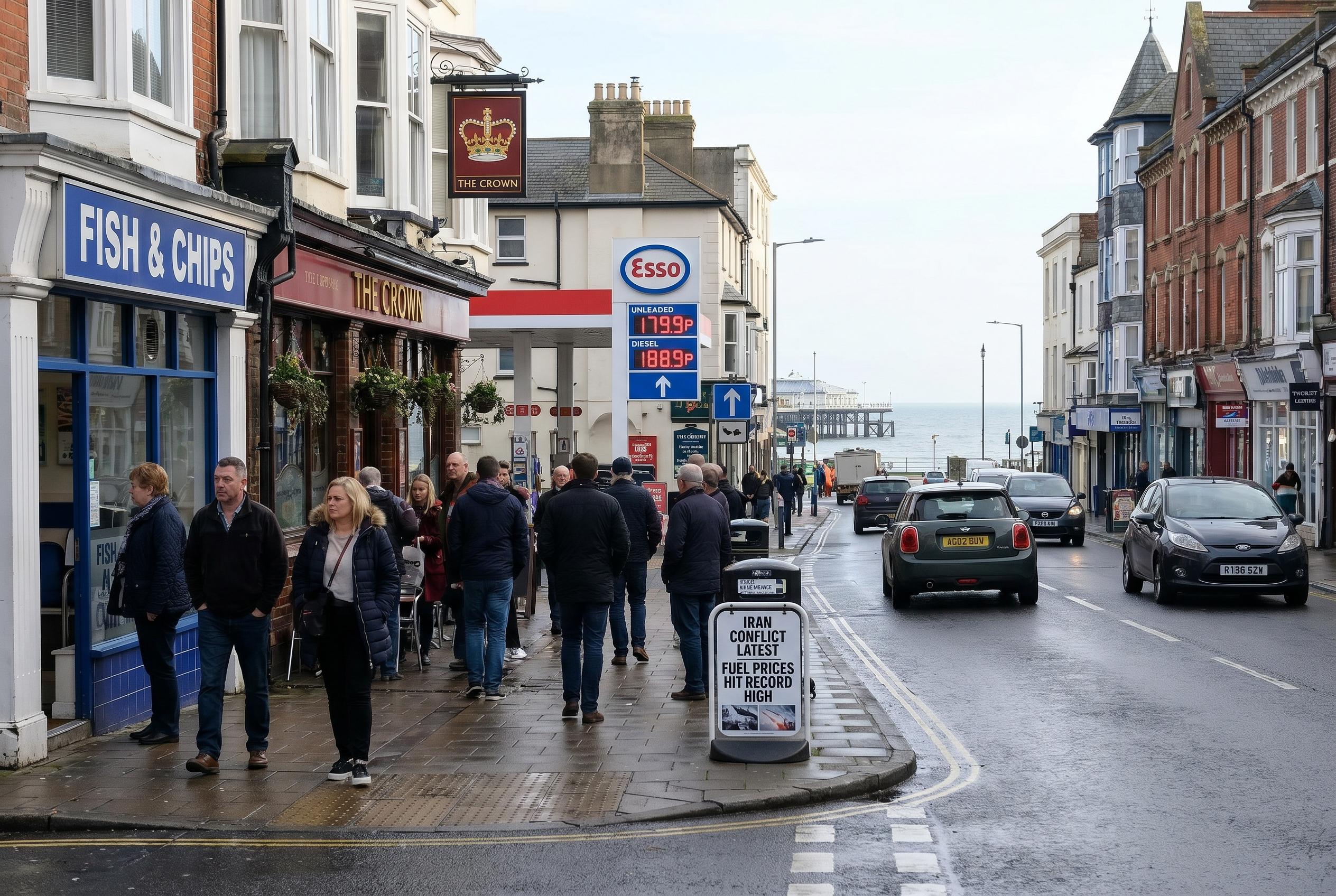
The ongoing conflict in Iran has pushed UK fuel costs higher, with potential for wider disruptions affecting inflation and household bills if the crisis persists, highlighting fragile energy markets and economic risks.
The economic fallout from the conflict in Iran has so far been felt most visibly at UK forecourts, where petrol and diesel prices have risen, but analysts say the wider risk is that longer disruption to oil and fuel flows could begin to feed into shortages and broader inflationary pressure. Lindsay James, investment strategist at Quilter, said the impact in Britain has been largely confined to higher fuel costs so far, though she warned that "every day that passes without a resumption of supply sees the risk of physical shortages and steeper price rises on a range of goods increasing".
That concern comes against a backdrop of already sharp moves in energy markets. The Institute for Fiscal Studies said wholesale gas prices climbed by 67% and oil prices by 35% between 28 February and 12 March 2026, underscoring how quickly tensions in the Middle East can filter through to the UK economy. It said governments have a range of possible responses, from tax and benefit measures to broader support for households and firms, if the shock persists.
At the pump, the effect has been measurable. The House of Commons Library said UK petrol prices rose by 12p a litre and diesel by 25p a litre in the days after 28 February, as supply disruption pushed up crude prices. The RAC Foundation went further, estimating that drivers have already paid more than £2bn extra in fuel costs since the conflict began, with diesel motorists absorbing the larger share of the burden.
While fuel remains the most immediate pressure point, economists warn the consequences could spread through transport, food and household bills if the situation worsens. History suggests that even temporary oil shocks can quickly become broader cost-of-living problems, particularly in an economy still sensitive to energy prices. For now, however, the main effect in Britain remains at the forecourt rather than in empty shelves, and much depends on how long supply stays disrupted.
Source Reference Map
Inspired by headline at: [1]
Sources by paragraph:
Source: Noah Wire Services
Noah Fact Check Pro
The draft above was created using the information available at the time the story first
emerged. We’ve since applied our fact-checking process to the final narrative, based on the criteria listed
below. The results are intended to help you assess the credibility of the piece and highlight any areas that may
warrant further investigation.
Freshness check
Score:
8
Notes:
The article references a BBC piece dated 1 May 2026, discussing the economic fallout from the Iran conflict on UK fuel prices. The earliest known publication date of similar content is 24 March 2026, with reports from the House of Commons Library highlighting the conflict's impact on UK fuel prices and inflation. ([commonslibrary.parliament.uk](https://commonslibrary.parliament.uk/research-briefings/cbp-10601/?utm_source=openai)) The narrative appears to be original, with no evidence of significant recycling or republishing across low-quality sites. However, the reliance on a single source (BBC) for the latest information raises concerns about source independence.
Quotes check
Score:
7
Notes:
The article includes a direct quote from Lindsay James, investment strategist at Quilter, stating, "every day that passes without a resumption of supply sees the risk of physical shortages and steeper price rises on a range of goods increasing." A search for this quote reveals no earlier usage, suggesting it may be original. However, without independent verification of the quote's authenticity, the score is reduced.
Source reliability
Score:
9
Notes:
The lead source is the BBC, a major news organisation known for its rigorous journalism standards. The article cites additional reputable sources, including the Institute for Fiscal Studies and the RAC Foundation, enhancing its credibility. However, the heavy reliance on a single source (BBC) for the latest information raises concerns about source independence.
Plausibility check
Score:
8
Notes:
The claims regarding rising fuel prices and potential shortages due to the Iran conflict are plausible and align with reports from other reputable sources. For instance, the Institute for Fiscal Studies reported a 67% increase in wholesale gas prices and a 35% increase in oil prices between 28 February and 12 March 2026. ([commonslibrary.parliament.uk](https://commonslibrary.parliament.uk/research-briefings/cbp-10601/?utm_source=openai)) However, the article's reliance on a single source (BBC) for the latest information raises concerns about the comprehensiveness of the coverage.
Overall assessment
Verdict (FAIL, OPEN, PASS): PASS
Confidence (LOW, MEDIUM, HIGH): MEDIUM
Summary:
The article presents plausible claims about the economic impact of the Iran conflict on UK fuel prices and inflation, supported by reputable sources. However, the heavy reliance on a single source (BBC) for the latest information and the lack of independent verification of direct quotes raise concerns about source independence and verification. These issues warrant a medium confidence level in the assessment.