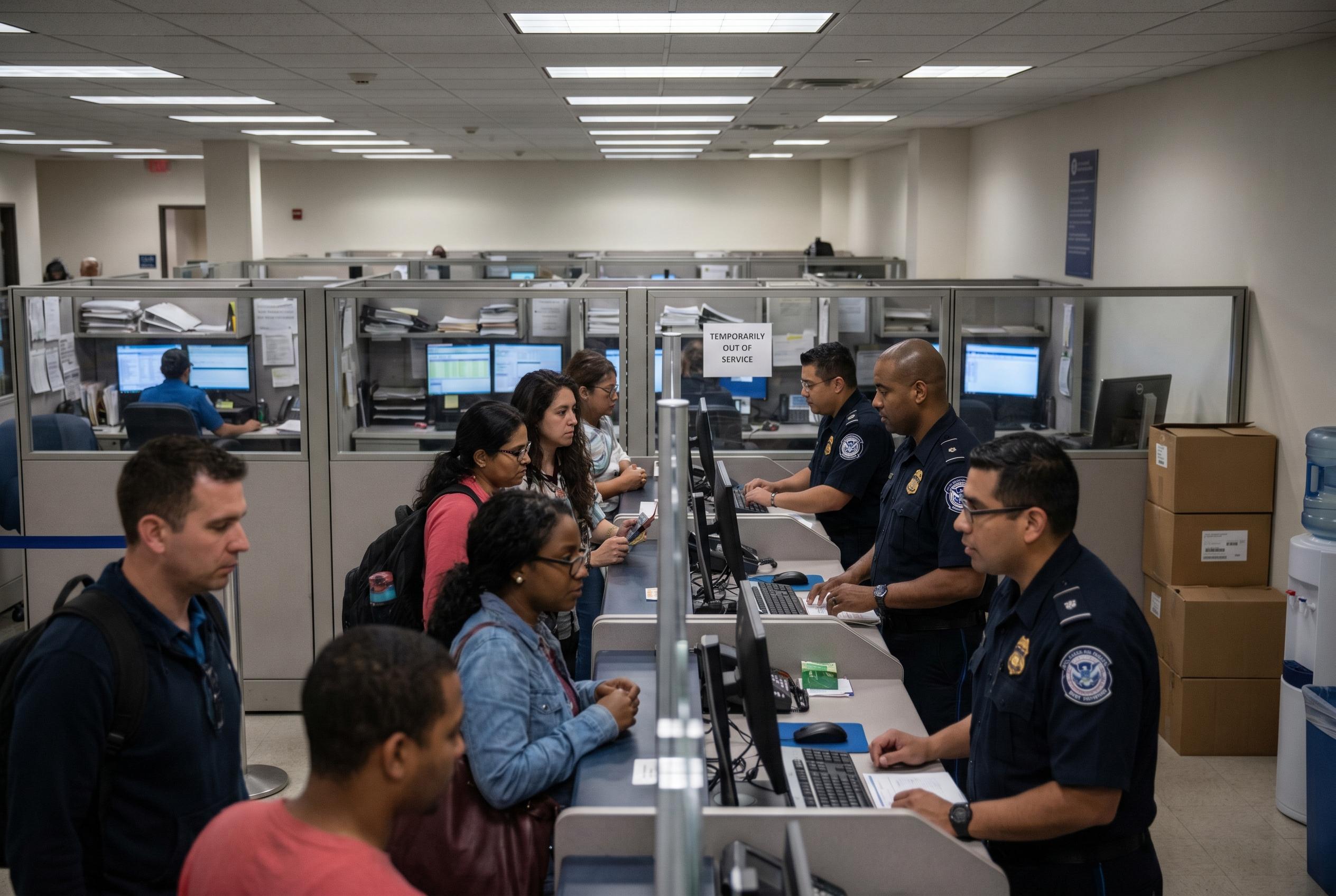
The House of Representatives has approved funding to end the longest partial government shutdown in US history, restoring pay and services for Homeland Security agencies amid ongoing border and immigration disputes.
The House of Representatives has approved funding for most of the Department of Homeland Security, bringing an end to a 75-day partial shutdown that became the longest funding lapse in US history, according to Axios. The vote, passed by voice, clears the way for airports, disaster-response services and other core security functions to resume stable financing once President Donald Trump signs the measure.
The move is expected to restore pay and operating certainty to agencies including the Transportation Security Administration, the Federal Emergency Management Agency, the Secret Service and the Coast Guard. TSA staff had been working without pay during the shutdown, and reports in February and March said airports were warning of disruption as officers continued screening passengers while missing regular pay packets. Federal law provides back pay once a shutdown ends, but that does little to ease the immediate strain on workers forced to keep showing up without salary.
The compromise follows weeks of pressure on lawmakers after emergency funding was running down and airport operations were under strain. Axios reported that House Speaker Mike Johnson and Senate Majority Leader John Thune agreed to a two-track approach: one bill to reopen much of Homeland Security, and another effort to fund immigration enforcement separately. That split left unresolved the money for Immigration and Customs Enforcement and Customs and Border Protection, which remain at the centre of the broader political fight.
According to Axios, the House also approved a budget blueprint aimed at advancing funding for ICE and CBP, but that process is expected to take weeks and could prolong the wider dispute into May or beyond. For now, the immediate result is relief for travellers and federal workers alike, even as the clash over border enforcement and immigration spending remains unsettled.
Source Reference Map
Inspired by headline at: [1]
Sources by paragraph:
Source: Noah Wire Services
Noah Fact Check Pro
The draft above was created using the information available at the time the story first
emerged. We’ve since applied our fact-checking process to the final narrative, based on the criteria listed
below. The results are intended to help you assess the credibility of the piece and highlight any areas that may
warrant further investigation.
Freshness check
Score:
10
Notes:
The article was published on April 30, 2026, coinciding with the House's approval of DHS funding, marking the end of a 75-day partial shutdown. This timing indicates high freshness.
Quotes check
Score:
8
Notes:
The article includes direct quotes attributed to Axios, The Guardian, and The Independent. While these sources are reputable, the absence of direct links to the original articles raises concerns about the verifiability of the quotes. ([axios.com](https://www.axios.com/2026/04/30/homeland-security-government-shutdown-dhs-funding?utm_source=openai))
Source reliability
Score:
6
Notes:
The Bulkhead Seat is a niche publication with limited reach. The article references reputable sources like Axios, The Guardian, and The Independent, but the lack of direct links to these sources diminishes the overall reliability. ([axios.com](https://www.axios.com/2026/04/30/homeland-security-government-shutdown-dhs-funding?utm_source=openai))
Plausibility check
Score:
9
Notes:
The article's claims align with reports from major news outlets about the House's approval of DHS funding and the end of the 75-day partial shutdown. However, the absence of direct links to these sources raises questions about the article's originality and the accuracy of its claims. ([axios.com](https://www.axios.com/2026/04/30/homeland-security-government-shutdown-dhs-funding?utm_source=openai))
Overall assessment
Verdict (FAIL, OPEN, PASS): FAIL
Confidence (LOW, MEDIUM, HIGH): MEDIUM
Summary:
The article's freshness is high, and its claims are plausible, aligning with reports from major news outlets. However, the lack of direct links to original sources and the reliance on secondary sources without direct citations raise significant concerns about the article's reliability and independence. These issues prevent the article from meeting our verification standards, leading to a FAIL verdict with MEDIUM confidence.