Culture & Influence Copy RSS link Link copied to clipboard!

Anthropic expands Claude AI capabilities with new creative connectors for Adobe and Blender

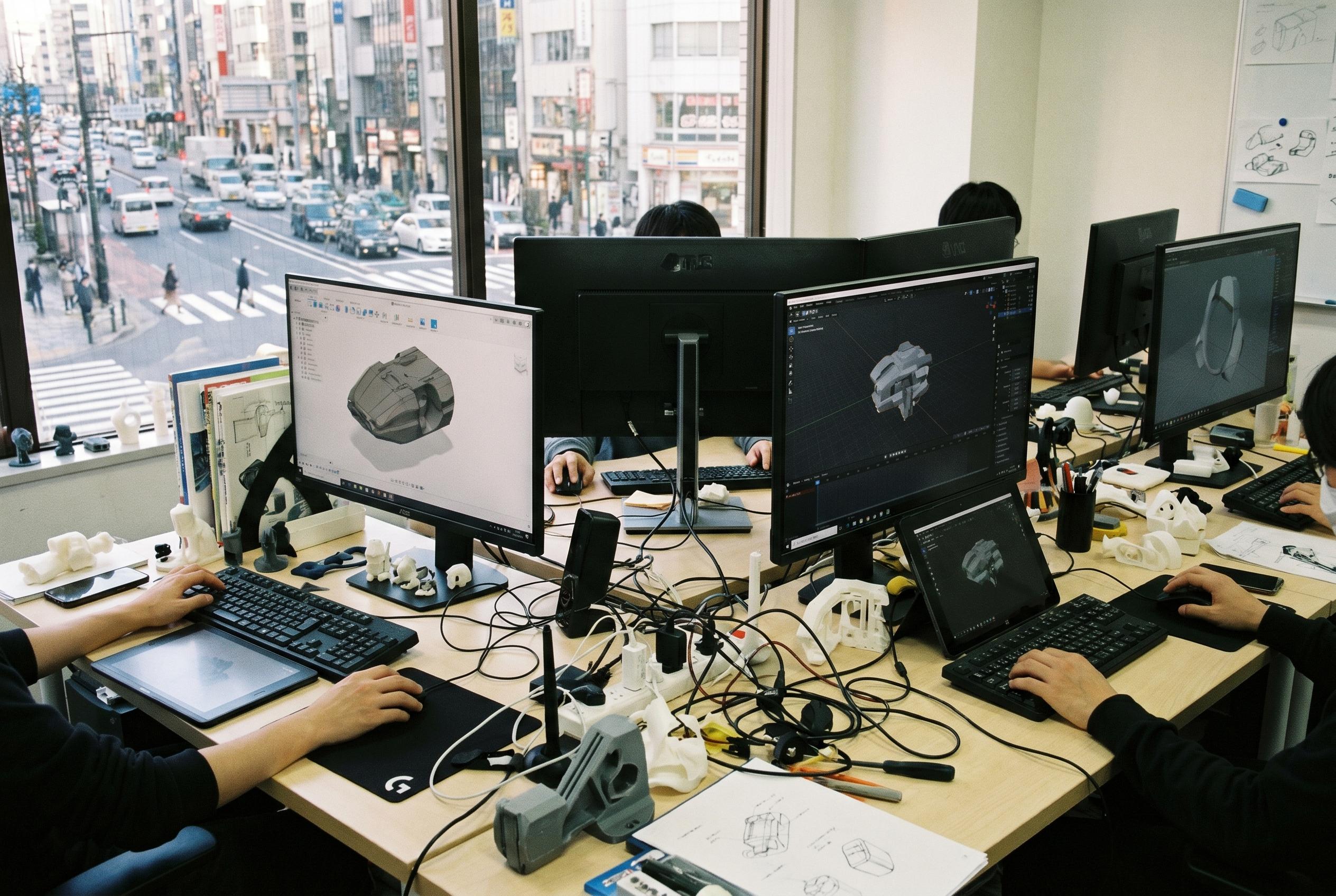
Anthropic has launched new connectors enabling its Claude AI model to integrate with creative software including Adobe Creative Cloud, Affinity, Blender, Ableton, and Autodesk. These tools allow the AI to access applications, retrieve data, and perform actions to automate repetitive tasks in the creative process. This update complements the existing Claude Design feature, which generates visual content from text prompts. The new connectors aim to assist creatives with ideation and workflow efficiency across various fields.

Minnesota passes first US ban on nudification apps

The Minnesota Senate passed a bill banning nudification apps that use generative AI to digitally undress individuals without consent. The legislation, House File 1606, allows survivors to sue app owners for damages and empowers the state attorney general to impose fines of $500,000 per violation. Advocates, including RAINN, introduced the measure to address the rise in nonconsensual deepfakes, which federal laws currently fail to adequately cover. The bill now requires the governor's signature to become law.

Jimmy Kimmel files trademarks to protect voice and image from AI

On April 30, Jimmy Kimmel filed new trademark applications to protect his voice and image from AI-generated content. The filings include a sound mark covering specific voice phrases and visual images of Kimmel on his show set. This move reflects a growing trend among public figures, including Taylor Swift and Matthew McConaughey, to use trademark law to control identity usage in the AI era. While the USPTO must first approve these applications, the strategy aims to allow legal teams to send demand letters to AI platforms to remove infringing content before potential litigation.

Spotify rolls out Verified by Spotify badge to identify human artists

Spotify has launched a new 'Verified by Spotify' badge to distinguish human artists from AI-generated content on its platform. Eligible for artists in good standing with real-world presence, the badge will appear on profiles and search results. Over 99% of actively searched artists are expected to be verified at launch. This transparency-focused approach contrasts with rivals like Deezer, which prioritises removal of AI tracks. Spotify is also testing a new context section for artist profiles to provide career snapshots.

Hollywood studios announce AI can write scripts faster than human writers

Major Hollywood studios announced that AI tools can now generate screenplay content faster than human teams. The Writers Guild of America noted this development aligns with their 2023 strike concerns, emphasizing that script quality, not speed, is the primary industry issue. While the announcement is contractually compliant, writers argue it overlooks the need for creative authority and adequate compensation to produce successful films.

Meta ends contract with Sama after Kenyan workers report viewing intimate footage from Ray-Ban smart glasses

Meta terminated its contract with Nairobi-based contractor Sama following reports from Kenyan data annotation workers who viewed intimate footage captured by Meta's Ray-Ban smart glasses. Workers described seeing sexual activity, undressing, and private moments while labelling data for AI training. On 16 April, Meta issued redundancy notices to 1,108 employees, citing Sama's failure to meet standards. The termination follows a Swedish investigation and subsequent UK and Kenyan regulatory inquiries, alongside a class action lawsuit and an Electronic Frontier Foundation advisory regarding privacy concerns.

Author argues humanising AI content requires a system not a tool

The author states that post-generation tools cannot effectively humanise AI content because the issue lies in the model's predictive nature. Instead, a system involving three pillars—Consistency Stack, Output Rules, and Input Rules—is required to prevent robotic output. The article recommends a four-tool stack including Perplexity, ChatGPT, Claude, and Copilot Cowork, while explicitly advising against using dedicated humaniser applications like Quillbot or Undetectable AI.

Delhi High Court orders takedown of deepfakes targeting Bhuvan Bam

The Delhi High Court granted interim relief to content creator Bhuvan Bam, restraining the circulation of deepfake content and unauthorised use of his persona. Justice Jyoti Singh issued the order on April 28, 2026, following a surge in misleading content including fake promotions and betting advertisements. The court passed an ex parte ad interim injunction against unknown entities and directed platforms including Google LLC, Meta Platforms Inc, Flipkart, and Spotify India to remove identified URLs within 36 hours. The ruling addresses public harm and consumer protection in the digital ecosystem.

Trevor Paglen releases new book on how AI is rewriting the function of images

Artist Trevor Paglen has released his new book, How to See Like a Machine: Images After AI, which argues that the mainstream understanding of images is outdated. The work posits that a new operational paradigm exists where machines generate images to shape reality rather than merely represent it. Paglen explores how computer vision and generative AI create a 'machine realism' that normalizes surveillance and cognitive warfare, altering human perception and the causal links to truth. The book synthesizes his art practice and research into UFOs and psyops to address the media literacy gap in the age of neural media.

China blocks Meta acquisition of Manus AI citing national security

The Chinese government blocked Meta's attempt to acquire the artificial intelligence startup Manus AI, citing national security and technology export control concerns. The deal, valued in billions of dollars, was interrupted as AI has become a strategic asset in geopolitical disputes between nations. Economist Roberto Kanter analysed the decision on the Canaltech Podcast, highlighting the complex role of technology companies in international rivalry.

Evangeline Lilly criticises Marvel over staff cuts and AI replacement

Actress Evangeline Lilly publicly criticised Marvel Studios and Disney following recent staff reductions. In a video on Instagram, Lilly expressed frustration that artists, including veteran Andy Park, were being replaced by artificial intelligence. She accused the company of disregarding the human creativity that built the Marvel Cinematic Universe and urged them to feel ashamed for turning their backs on the creators. Marvel Studios has not issued an official statement regarding the matter.

Spotify launches Verified badge to identify human artists amid AI music rise

Spotify has introduced a new certification tool called 'Verified by Spotify' to distinguish human-created music from AI-generated content on its platform. The badge appears on artist profiles vetted by the company to ensure an identifiable human presence, such as concert dates or social accounts. Profiles representing 'AI-persona' artists are ineligible. This move addresses criticism regarding the proliferation of AI music and aims to provide listeners with transparency and trust in the authenticity of the music they discover.

Groupe M6 launches streaming service M6+ within ChatGPT

Groupe M6 has integrated its free, ad-supported streaming service M6+ into ChatGPT, enabling users to discover content via natural language queries. This partnership allows viewers to search for programmes by genre, mood, or title, with links directing them to the M6+ platform. The integration aggregates content from M6, W9, 6ter, and Gulli. As one of the first European broadcasters to utilise ChatGPT for content discovery, the move aims to improve discoverability and extend the reach of the AVOD platform beyond its native app environment.

UN report warns online violence against women journalists doubles since 2020

A new UN Women report reveals that online violence against women journalists has doubled since 2020, driven by AI technologies. The study, based on a 2025 global survey of 641 respondents from 119 countries, indicates that 12% experienced non-consensual image sharing and 6% were targeted by deepfakes. Consequently, self-censorship has risen from 30% to 45%, severely impacting mental health and press freedom. While reporting to law enforcement has increased, legal protections remain weak globally.

Five free AI video generators lead market in 2026

In 2026, five free AI video generators—Kling AI 3.0, Luma Dream Machine, Google Veo 3.1, Pika Labs, and Hailuo AI—offer high-quality output to creators. Kling leads in realism, Luma in creativity, Veo in reliability, Pika in speed, and Hailuo in balanced performance. Tools provide daily or monthly free credits, though watermarks and duration limits apply. The sector sees a democratizing shift in video production, allowing individuals to create professional content without expensive equipment.

AI XR and cloud tech dominate NAB Show 2026

NAB Show 2026 in Las Vegas highlighted the integration of artificial intelligence, extended reality, and cloud technologies into media production workflows. Exhibitors including Ross Video, Vizrt, Sony, and Blackmagic Design demonstrated how these tools automate tasks, enable virtual sets, and support remote production. The event signalled a shift from hardware-focused upgrades to smarter, interconnected systems that democratise access for broadcasters and creators globally.

LEGO named world's most reputable company despite AI-generated geopolitical propaganda

On 8 April 2026, LEGO was named the world's most reputable company for the fourth consecutive year. Simultaneously, a state-linked studio known as Explosive Media began releasing AI-generated content depicting LEGO minifigures in geopolitical conflicts. This phenomenon, termed 'slopaganda', exploits LEGO's distinctive brand assets and emotional disarming effect to spread political narratives at scale. The article highlights the irony that LEGO's strong brand equity, built on universal recognition and play, makes it a prime target for such operations, despite the company's strict policies against realistic military imagery. This case serves as a warning to marketers about the vulnerability of iconic brands in the age of generative AI.

States use AI-generated memes for official wartime communication

The article reports that states, including Iran and the USA, are employing artificial intelligence to generate memes such as Lego animations and pop culture references for official communication during wartime. These contents, termed 'slop' or calculated instruments, bypass cognitive resistance to reach millions via social media algorithms. The text highlights the challenge of distinguishing between entertainment and state influence, noting that traditional media literacy is insufficient against this new form of warfare.

Major news publishers block Internet Archive to stop AI training

Over 241 news organisations across nine countries, including The New York Times, CNN, and USA Today, have restricted the Internet Archive's crawlers. The move aims to prevent AI companies from using archived content for model training without permission. While publishers argue this protects their intellectual property, the Internet Archive's director describes the action as collateral damage, warning it undermines the preservation of the public record and hinders the ability to track post-publication edits.

European Parliament calls for stronger Digital Markets Act enforcement

On 30 April, the European Parliament urged the European Commission to strengthen enforcement of the Digital Markets Act (DMA). The resolution demands timely and consistent application of rules regarding gatekeepers, with specific focus on AI-driven search and cloud services. Parliament argues current penalties are insufficient and calls for rigorous supervision to ensure real-world market changes, following a Commission review that deemed the regulation fit for purpose but noted a short practical assessment period.

Next