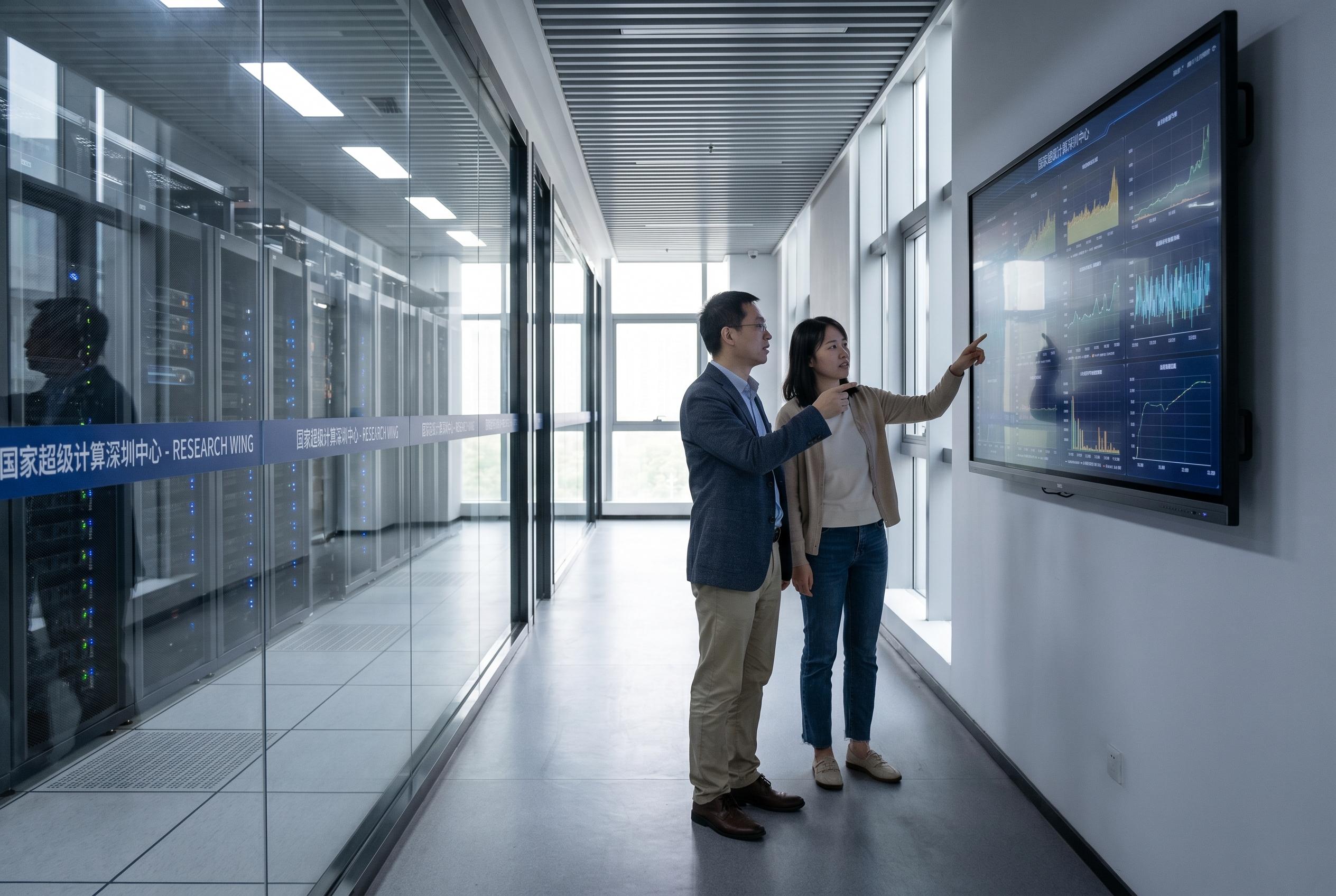
China’s National Supercomputing Center in Shenzhen has unveiled LineShine, a fully domestic, CPU-only supercomputer projected to reach 2 exaflops, signalling a shift towards self-reliance in advanced computing and AI infrastructure.
China’s National Supercomputing Center in Shenzhen has unveiled LineShine, a new high-performance computing project that is expected to reach 2 exaflops once fully built out. The system is being promoted as a fully domestic stack, with Chinese-designed processors, storage and networking at its core, as Beijing continues to push for greater self-reliance in advanced computing.
According to reporting by HPCwire and DatacenterDynamics, the first stage of the rollout includes 100 Huawei Kunpeng servers, which provide 12,800 CPU cores. The larger second phase is intended to add many more processors, more capable interconnects and denser storage, with DatacenterDynamics saying the full system is slated to use about 47,000 CPUs across 92 compute cabinets, alongside a large-scale network and storage fabric.
Technical descriptions of the project suggest that LineShine is being built as a distributed ARM-based machine designed to combine strong memory bandwidth with rapid internal communication. That matters because the platform is meant to serve two increasingly important demands at once: conventional scientific modelling and AI training. In that sense, the project reflects a broader shift in supercomputing towards systems that can handle both simulation and machine learning on the same infrastructure.
One of the more notable aspects of LineShine is its CPU-only approach. While many leading supercomputers in the United States and elsewhere depend heavily on GPUs, Shenzhen’s centre is presenting this as an all-CPU alternative built around domestic hardware. Chinese officials have not said when the full installation will be finished or when it will begin operating at its expected peak.
Source Reference Map
Inspired by headline at: [1]
Sources by paragraph:
Source: Noah Wire Services
Noah Fact Check Pro
The draft above was created using the information available at the time the story first
emerged. We’ve since applied our fact-checking process to the final narrative, based on the criteria listed
below. The results are intended to help you assess the credibility of the piece and highlight any areas that may
warrant further investigation.
Freshness check
Score:
8
Notes:
The LineShine supercomputer project was announced on April 24, 2026, with the earliest known publication date of April 27, 2026. ([wccftech.com](https://wccftech.com/chinas-lineshine-supercomputer-2-exaflops-47000-cpus-zero-reliance-on-foreign-chips/?utm_source=openai)) The article in question was published on April 28, 2026, indicating timely reporting. However, the content heavily relies on information from other sources, raising concerns about originality and potential recycling of news. ([hpcwire.com](https://www.hpcwire.com/2026/04/28/china-unveils-2-exaflop-all-cpu-lineshine-supercomputer/?utm_source=openai))
Quotes check
Score:
6
Notes:
The article includes direct quotes attributed to Lu Yutong, director of the Shenzhen Supercomputing Center. However, these quotes are not independently verifiable through the provided sources, as they appear to be paraphrased or summarised from other reports. ([hpcwire.com](https://www.hpcwire.com/2026/04/28/china-unveils-2-exaflop-all-cpu-lineshine-supercomputer/?utm_source=openai)) This lack of direct verification raises concerns about the authenticity and accuracy of the quotes.
Source reliability
Score:
5
Notes:
The primary source of the article is Electronics For You, a niche publication with limited reach. The article heavily references other sources, including HPCwire and DatacenterDynamics, which are more reputable. ([hpcwire.com](https://www.hpcwire.com/2026/04/28/china-unveils-2-exaflop-all-cpu-lineshine-supercomputer/?utm_source=openai)) However, the reliance on a single, less-known source for the initial publication raises questions about the overall reliability and independence of the information presented.
Plausibility check
Score:
7
Notes:
The claims about the LineShine supercomputer's specifications and performance targets are consistent with reports from other reputable sources. ([hpcwire.com](https://www.hpcwire.com/2026/04/28/china-unveils-2-exaflop-all-cpu-lineshine-supercomputer/?utm_source=openai)) However, the article lacks specific details about the project's timeline and operational status, which are crucial for assessing the feasibility and current status of the project. The absence of these details diminishes the overall plausibility of the claims.
Overall assessment
Verdict (FAIL, OPEN, PASS): FAIL
Confidence (LOW, MEDIUM, HIGH): MEDIUM
Summary:
The article presents information about the LineShine supercomputer project but relies heavily on paraphrased content from other sources, lacks independently verifiable quotes, and provides limited details about the project's timeline and operational status. These factors raise significant concerns about the originality, accuracy, and reliability of the information presented.