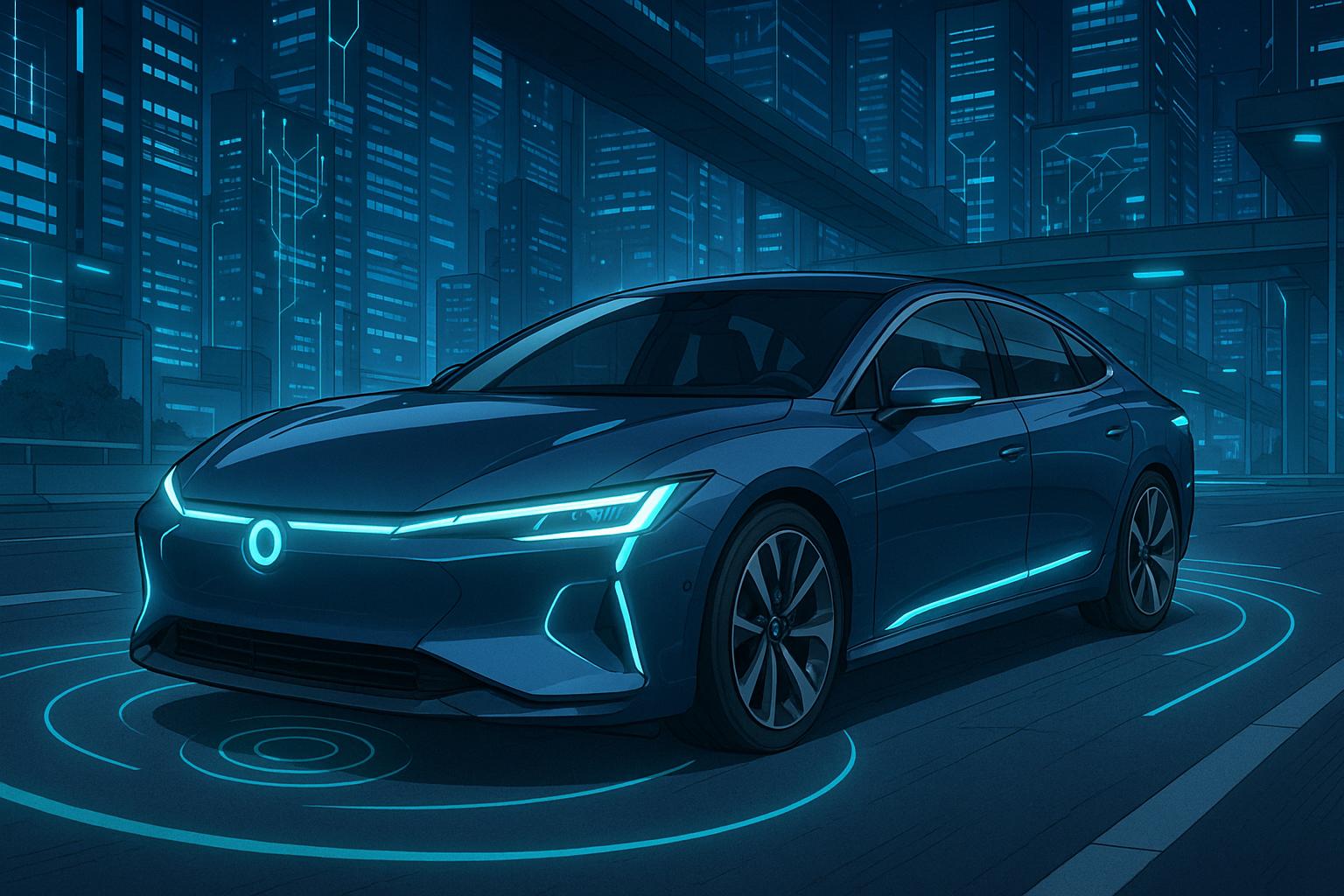
Applications for artificial intelligence (AI) within the automotive industry have surged past mere projections, fundamentally shifting the way we drive and interact with vehicles. In recent years, the landscape has evolved significantly, showcasing AI as a transformative force capable of redefining the entire driving experience. From smart manufacturing to connected vehicles, AI stands at the forefront of innovation, promising improvements in safety and efficiency across all aspects of automotive technology.
The implementation of AI throughout the vehicle lifecycle is not just a trend; it is reshaping safety standards and operational efficiency. The technology enhances vehicle performance through advanced manufacturing techniques and smart AI tools, resulting in vehicles that are not only equipped with self-driving capabilities but can also predict maintenance needs. This predictive maintenance is crucial, as it fosters not only safer driving experiences but also extends the lifespan of vehicle components.
AI is increasingly recognised as the backbone of autonomous and connected transportation systems. Its key applications span predictive maintenance, vehicle design, performance improvement, and operational efficiencies. For instance, HERE HD Live Map operates as a digital super-sensor, enabling autonomous vehicles to anticipate road conditions, such as turns and complex intersections, with remarkable precision. Algorithms driven by AI are now capable of processing data from an array of sensors to detect potential hazards, thereby facilitating advancements like autonomous emergency braking (AEB) and lane departure warnings (LDW) that alert drivers to imminent dangers.
A substantial dimension of AI’s impact is evident in supply chain management within logistics. By optimising routing, managing inventory, and accurately predicting demand, AI addresses inefficiencies inherent in traditional supply chains, which often suffer from manual errors and lack real-time data. With capabilities in predictive analytics, companies can navigate complex logistics challenges more effectively, streamlining operations and reducing costs.
Financial projections for the automotive AI market indicate explosive growth, emphasising the accelerating adoption of AI technologies. According to estimates from Consegic Business Intelligence, the market is poised to reach over USD 27.04 billion by 2032, a dramatic increase from USD 4.73 billion in 2024. Key growth drivers include soaring demand for autonomous driving solutions and an increasing consumer push for advanced safety features. Advances in automotive software, which encompass systems like advanced driver assistance systems (ADAS), enhance not just safety but also user experience — a trend that is becoming non-negotiable for modern consumers.
Innovation trends within automotive AI highlight several exciting advancements. Companies are increasingly developing sophisticated technologies that prioritise real-time data processing. For instance, DynamoEdge has introduced a scalable, secure platform that leverages 5G technology for efficient data transmission and maintenance predictions. Smart sensors, including LiDAR and temperature sensors, play a vital role in ensuring that vehicles can operate optimally under diverse conditions. Furthermore, the integration of Human Machine Interfaces (HMIs) allows for enhanced user interaction, making it possible for drivers and passengers to engage in productive activities, even amidst traffic congestion.
AI's applications extend beyond driving enhancements into areas like vehicle insurance and traffic management. Automated assessments of insurance claims, facilitated by telematics data, can create personalised premiums that reflect actual driving behaviours, offering safer drivers reduced costs. Additionally, the role of AI in optimising traffic flow through autonomous vehicles holds promise for improved commuting experiences and reduced congestion.
In conclusion, AI is set to redefine the automotive landscape, integrating smart navigation, advanced safety systems, and connected technology to streamline vehicle production and costs. As AI continues to advance, it holds the potential to create personalised, sustainable, and safer transportation solutions, reshaping how consumers travel and interact with vehicles on a monumental scale.
📌 Reference Map:
- Paragraph 1 – [1], [2]
- Paragraph 2 – [1], [3], [5]
- Paragraph 3 – [4], [6]
- Paragraph 4 – [1], [7]
- Paragraph 5 – [1], [2]
- Paragraph 6 – [1], [3]
- Paragraph 7 – [5], [6]
- Paragraph 8 – [1]
Source: Noah Wire Services