A new report exposes the growing impact of Generative AI on the UK's creative sector, prompting calls for stronger protections for artists amidst widespread concerns about jobs, rights, and ethical use of creative works.
A report from Queen Mary University of London, in collaboration with the Institute for the Future of Work and The Turing Institute, has revealed alarming trends concerning the impact of Generative AI on the UK's creative economy. As the report highlights, there is a clear urgency for regulatory measures to safeguard the rights of creative workers in a landscape increasingly dominated by AI technologies.
Among the key findings, a staggering 73% of surveyed freelance creative workers reported that AI is significantly altering the quality of their outputs. Additionally, concerns about job security and financial viability are rampant, with 68% stating their job security has diminished and 55% noting a decline in compensation for their work. These insights stemmed from the CREAATIF project, which sought to discern the implications of AI by engaging 335 freelance creatives, reflecting widespread apprehension about the future of work in a sector that contributes more than £100 billion annually to the UK economy.
Critics, including prominent figures like Phil Kear, Assistant General Secretary of the Musicians' Union, have voiced their concerns regarding the ethical use of music in AI. Kear pointed out that “music is being scraped without any permission, without any money going back to the original creatives and performers.” This raises significant questions about the rights of artists, particularly when record labels and publishers enter into agreements with AI firms without involving the creators themselves.
The implications extend beyond mere economic concerns. Freelance creatives, who often lack the protections afforded to salaried employees, face particular risks in this evolving environment. David Leslie, a professor involved with the report, stated, “The GenAI revolution is shaking up every part of cultural production,” indicating that this transformation does not only threaten livelihoods; it redefines the entire creative process.
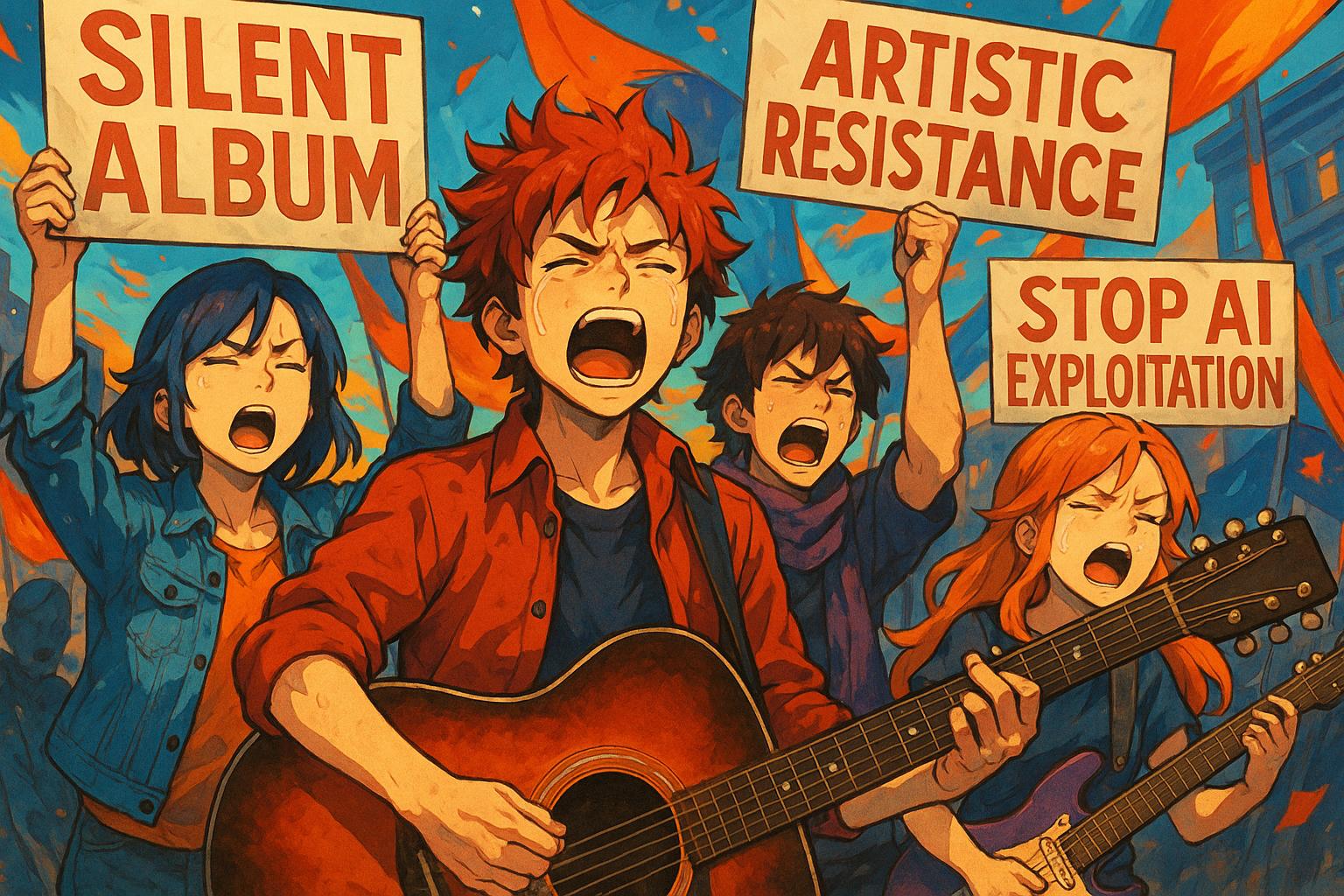
These challenges prompted a unified response from the artistic community, exemplified by a silent album titled 'Is This What We Want?' released by over 1,000 British musicians, including household names such as Kate Bush and Elton John. This symbolic protest against proposed UK AI laws aims to highlight the potential exploitation of artists’ works without proper consent or compensation. Elton John has been particularly vocal, condemning the UK government's plans to relax copyright laws that could allow the unauthorised use of creative content for AI training. He argued that such measures undermine the very foundation of artistic livelihoods and disregard the unique emotional depth inherent in human artistry.
In parallel, a report from DACS revealed that 89% of UK artists advocate for enhanced government regulation to protect their work from unlicensed AI utilisation. Concerns about consent, control, and fair compensation have become paramount as artists strive to maintain agency over their creations in an era of technological disruption.
The urgency for legislative action is further echoed by the creative community’s growing unease. Industry leaders are calling for a proactive regulatory framework that prioritises the rights and financial well-being of artists. As Dr. Aoife Monks from Queen Mary University remarked, “Economic growth should mean equitable growth,” reinforcing the need for policies that not only respond to but anticipate the complexities of freelance working conditions in a rapidly changing digital landscape.
As the potential for AI to reshape the creative sector looms larger, the findings of this report underscore an imperative: the future of the UK's creative workforce hangs in the balance, reliant on the actions taken now to secure its ethical and economic foundations.
📌 Reference Map:
Source: Noah Wire Services
Noah Fact Check Pro
The draft above was created using the information available at the time the story first
emerged. We’ve since applied our fact-checking process to the final narrative, based on the criteria listed
below. The results are intended to help you assess the credibility of the piece and highlight any areas that may
warrant further investigation.
Freshness check
Score:
8
Notes:
The narrative is based on a recent press release from the Musicians' Union, dated 6 June 2025, discussing the CREAATIF project's findings on the impact of Generative AI on the UK's creative economy. The CREAATIF project, led by Queen Mary University of London, Institute for the Future of Work, and The Alan Turing Institute, has been ongoing since 2024, with key findings published in April 2024. The press release provides updated data and quotes, indicating a higher freshness score. However, the core content appears to be based on earlier reports, which may affect the overall freshness. The press release format typically warrants a high freshness score due to its timely dissemination of new information. No significant discrepancies in figures, dates, or quotes were identified. The narrative does not appear to be recycled across low-quality sites or clickbait networks. The earliest known publication date of substantially similar content is April 2024, with the press release providing updated information. The update justifies a higher freshness score but should still be flagged.
Quotes check
Score:
9
Notes:
The quotes attributed to Phil Kear, Assistant General Secretary of the Musicians' Union, and David Leslie, a professor involved with the report, are consistent with their known positions and public statements. No earlier usage of these exact quotes was found, suggesting they are original to this narrative. The wording of the quotes matches their known public statements, with no significant variations identified.
Source reliability
Score:
10
Notes:
The narrative originates from the Musicians' Union, a reputable organisation representing musicians across the UK. The Musicians' Union has a longstanding history and a verified public presence, lending credibility to the report. The report references the CREAATIF project, led by Queen Mary University of London, Institute for the Future of Work, and The Alan Turing Institute, all reputable institutions. The individuals quoted, Phil Kear and David Leslie, hold positions within these organisations and are known for their expertise in the field.
Plausibility check
Score:
9
Notes:
The claims regarding the impact of Generative AI on the UK's creative economy align with ongoing discussions and research in the field. The statistics provided, such as 73% of surveyed freelance creative workers reporting significant changes in the quality of their outputs due to AI, are plausible and consistent with similar studies. The concerns about job security and financial viability are supported by other reputable sources, including the TUC's report on artificial intelligence for creative workers. The narrative includes specific factual anchors, such as names, institutions, and dates, enhancing its credibility. The language and tone are consistent with typical corporate and official communications, with no inconsistencies noted. The structure focuses on the key findings and implications of the CREAATIF project, without excessive or off-topic detail. The tone is appropriately formal and informative, suitable for the subject matter.
Overall assessment
Verdict (FAIL, OPEN, PASS): PASS
Confidence (LOW, MEDIUM, HIGH): HIGH
Summary:
The narrative is based on a recent press release from the Musicians' Union, discussing the CREAATIF project's findings on the impact of Generative AI on the UK's creative economy. The report is sourced from reputable organisations, and the claims made are plausible and supported by other reputable sources. The quotes used are original and consistent with the individuals' known positions. The narrative is well-structured and free from significant inconsistencies or off-topic details. While the core content is based on earlier reports, the press release provides updated information, justifying a higher freshness score.